Advanced Reader Copy: How to Get Books before They're Published
Contents
What is an advance reader copy?
An advanced reader copy, also known as a galley or an ARC, is a pre-published version of a book meant to be sent out to reviewers and book buyers in advance of publication. By getting the book out into the world, traditional publishers, independent publishers, and authors are able to build early buzz around a book. That early buzz can help improve a book launch and make for stronger sales across the life of a book!
Although the story in an advanced reader copy has been edited and all the plot points are in place, the book may still have typos or incomplete illustrations. An advanced reader copy is usually released as a paperback book, even when publishers and self-publishers plan to print a hardcover book. That’s because paperback books are less expensive to produce, so the same budget can create even more copies. But what is the purpose of an advanced reader copy and how do you release one.
Let's dive into what is an advanced reader copy, how to get books before they're published, how to create an Advanced Reader Copy and how to release an ARC digitally, and how ARCs can help drive early book reviews.
At Charge Mommy Books, my independent children's publishing company, we create paperback ARCs so that we can approach news outlets, book reviewers, book stores, libraries, and schools in anticipation of the release of our full line of decodable books, early readers, and picture books.
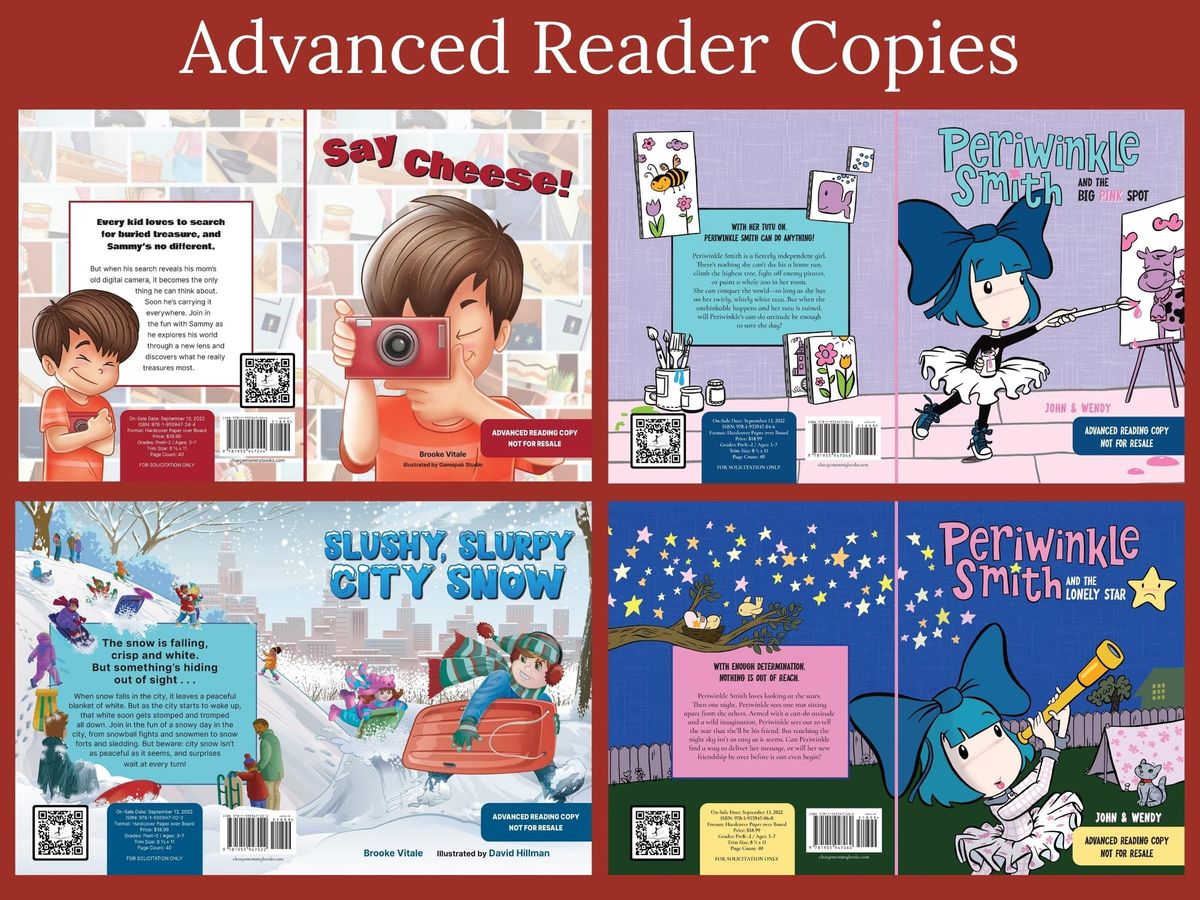
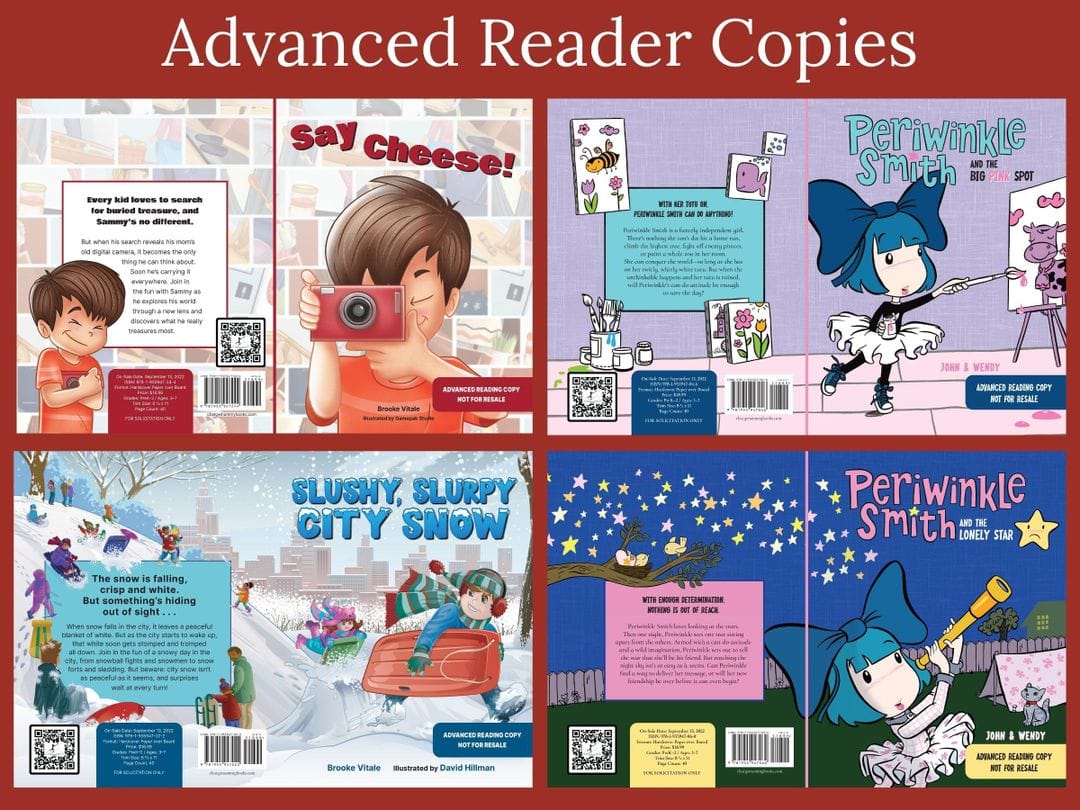
Below is a picture showing the four picture book advance reader copies we designed and ordered through Amazon KDP.
How to design an advanced reader copy?
An advanced reader copy should be the most complete version of your book available at the time of printing. On the first page of the book, include a note to potential reviewers or book sellers. This can be a personal note from you the author, or it can be a general note. Either way, make sure to call out that the book is incomplete.
Advanced Reader Copy Disclaimer Example: ATTENTION: READER, PLEASE NOTE THAT THIS IS NOT A FINISHED BOOK. This advanced review copy has not been corrected by the author. The design, artwork, page length, and format are subject to change, and typographical errors will be corrected during the course of production. If you quote from this copy, please indicate that your review is based on an uncorrected text. Thank you!
An advanced reader copy is a chance to get book reviews and let booksellers get a sneak peak at the book. Include a page that tells anyone who receives a reading copy, what the publication date is, what the book price and format will be, and the age range for the book. Use the book back cover to include a book summary, publication plan and marketing plan.
 Related articleBook Back Cover: 6 Steps to a Back Cover that ConvertsHow to write and design a book back cover, featuring a step-by-step guide, free book back cover design templates, and back cover examples for all genres.Read the article →
Pro Tip: Do you have a website? Do you have any ad campaigns planned or interviews booked? Will you be doing a tour, virtual or in person? This is your moment to share that information.
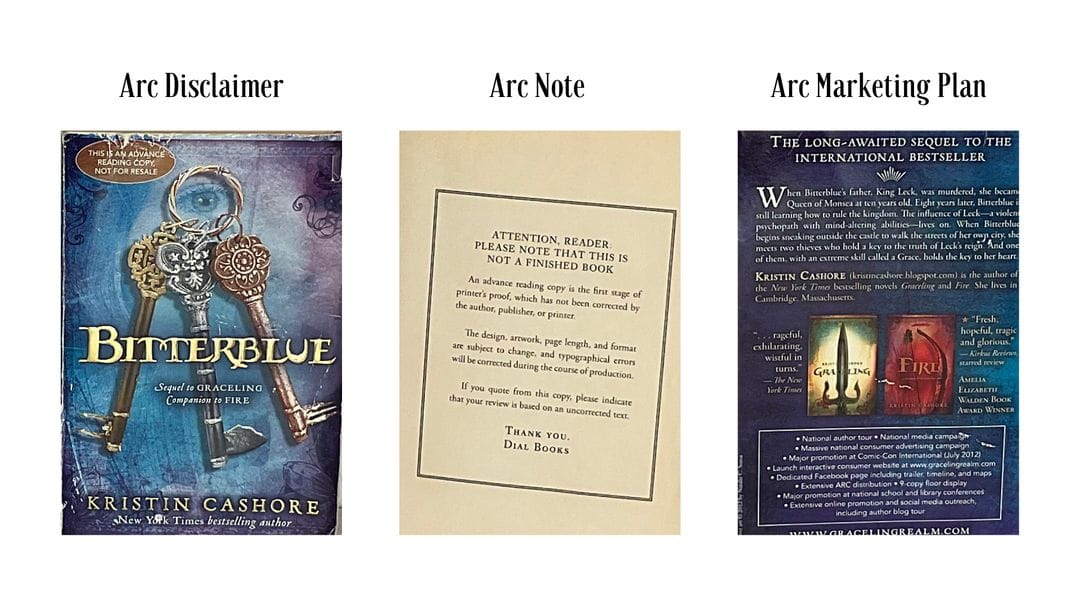
Here is an example of an advanced reader copy from Bitterblue, a YA novel by Kristin Cashore. Note that the book cover calls out that the book is an advance reading copy, and is not for resale. The second image is an example of an advance copy note which tells the reader that the book is not finished. And the back cover details the full marketing plan for the book.
A picture book advanced reader copy is more simplistic, offering information on book specs and price point. The reason for this is that middle grade books, YA, and novels usually only get sent out as ARCs for books with a big planned release, while many picture books will get them to drive early reviews, even if a big marketing plan isn't tied to the book.
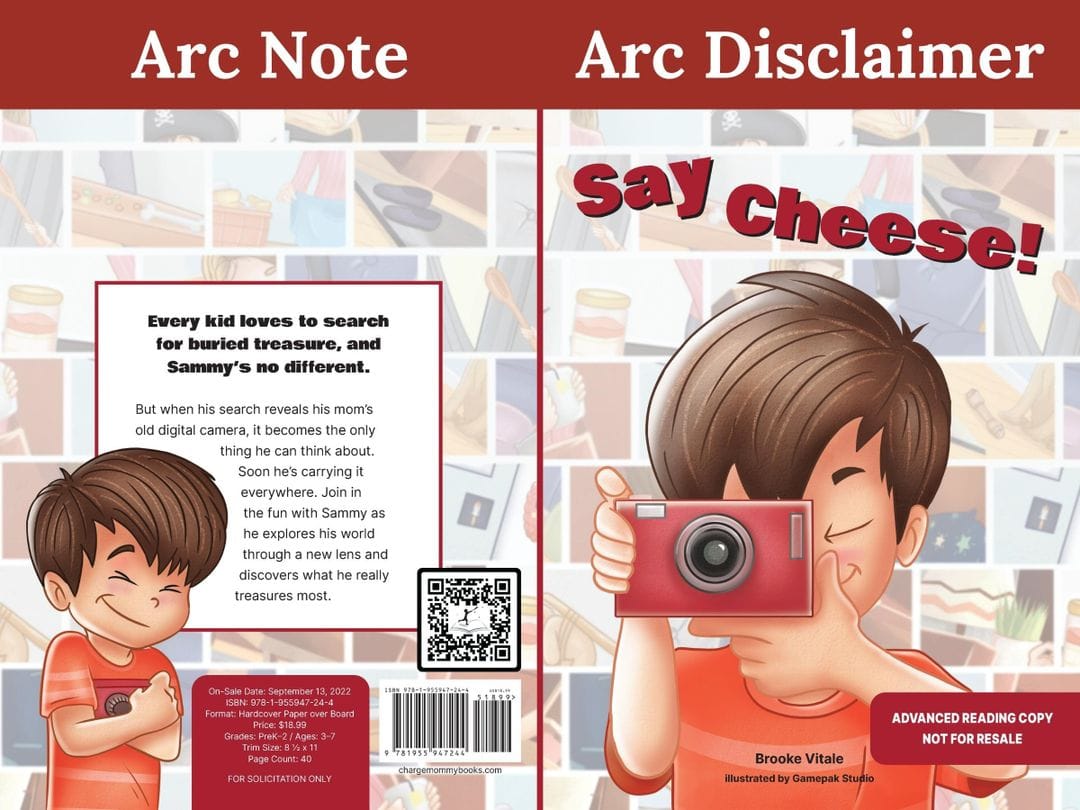
For a downloadable advanced reader copy disclaimer, click below:
advance reader copy disclaimer - word
advance reader copy disclaimer - pdf
How to create an advanced reader copy?
Advanced reader copies can be distributed either physically or digitally. Which method is used will depend on where books are being sent and the preferences of the reviewers, so it is best to have both options available.
Printed advanced reader copies
Offset and digital printing
Traditionally, publishers will print a small run of books through an offset printer. Even if a book is being sold as a hardcover, the ARCS will be produced as paperbacks using a poor quality paper and offering minimal printing enhancements, if any at all. Unfortunately, while printing early copies of a book is cost-effective for publishers, it is not for self-publishers who do not have long-standing relationships with printers. I tried pricing paperback copies of my books with the printers who are printing my hardcover books, and the price ranged from $7 to $11 dollars for a run of under 100 books. So how can an independent author print ARCs in a cost efficient manner?
Amazon KDP
For authors self-publishing a book, one option is to upload the book to Amazon Kindle Direct Publishing (KDP) and print out proof copies of the book. This will result in a "Not for Resale" banner running across the cover of the book. I printed this book through Amazon as an ARC. Note the banner across the cover and the added barcode to indicate that the book is a proof dummy. If you are in the market for picture books, early reader books, or decodable readers, order them today at Charge Mommy Books online shop.
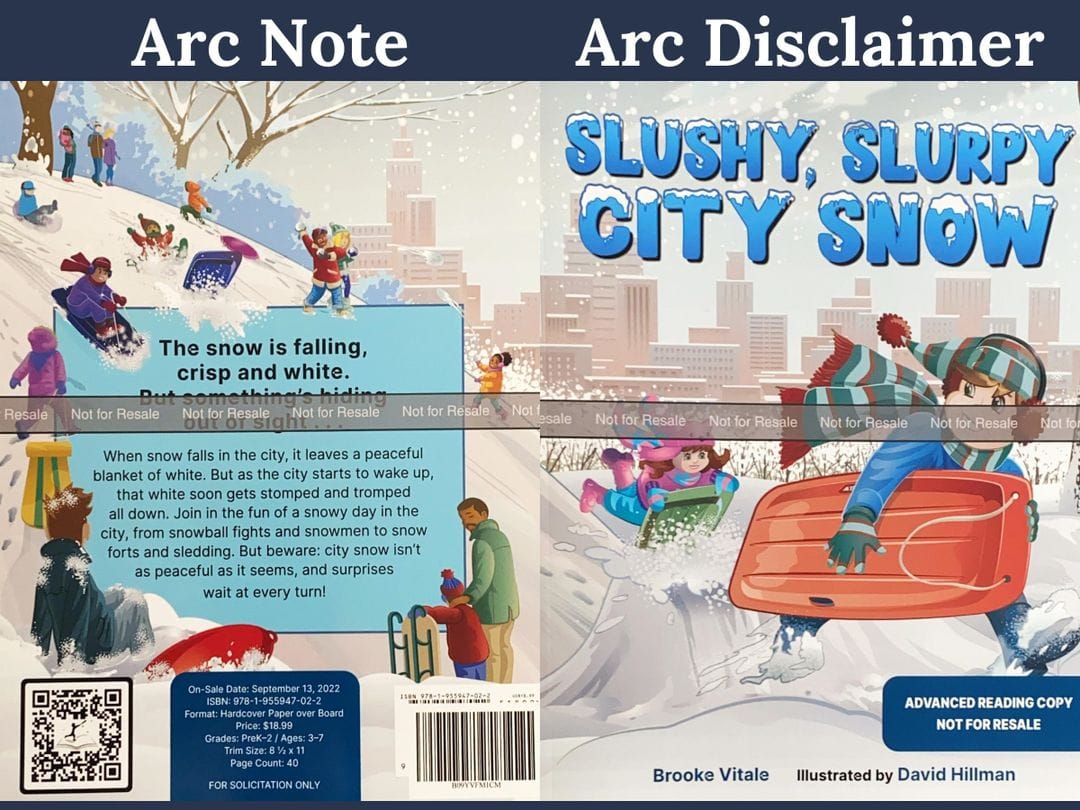
My books are 40-page self-ended hardcover picture books. To create the ARC, I published a 39-page book—ending with the last page of my printed end sheets. By removing the pastedown page from the end of my book, I created space for Amazon's barcode page. In place of the pastedown page at the front of the book, I included the following disclaimer language, which now appears on page 1 of my ARC.
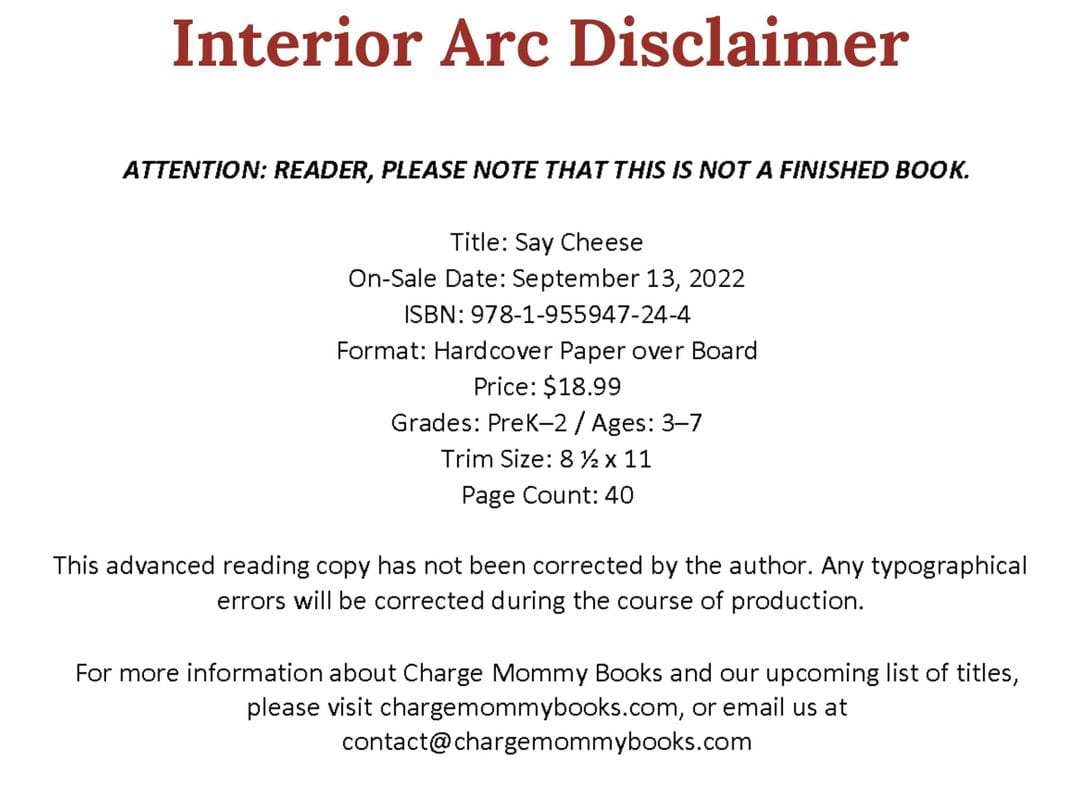
Keep in mind if printing a hardcover book that your ISBN will be tied to that hardcover book. In order to upload your paperback ARC to KDP, you will need a separate paperback ISBN. If you don't plan to print a paperback version, you can either assign an ISBN that will only go on the ARC, or you can allow Amazon to assign an ISBN. If you plan to also print a paperback version of the book, you can simply assign that ISBN to the ARC. In either case, just be careful not to hit "publish" on the book that contains the ARC language.
Pro Tip: It is also possible to "publish" the book through Amazon at the lowest possible price point and then order author copies. This removes the "Not for Resale" banner, but it is a risker approach, though, as that puts a book on sale and therefore on Amazon's website, possibly before an author is ready for it to go live. If this option is used, be sure to unpublish the book as soon as the order for author copies is placed.
KDP allows authors to order up to 5 proof dummies at a time. A standard 32- or 40-page children's book will cost roughly $3.65 to print, plus the cost of shipping. (Note, shipping cost per book goes down as the quantity of books ordered goes up.) I ordered 5 copies of 4 different books and paid $4.55 per book. The books were delivered in four days. Printing in this way saves a lot of money and time over doing a short run with an offset printer.
Once books are in-hand, you will be ready to send out to book reviewers, newspapers, and influencers.
Pro Tip: Make your mistakes work for you. If you've printed copies of your books and then found typos inside, call it an advanced reader copy and send it out to book reviewers. Who knows, maybe your big mistake will result in big sales!
Digital advanced reader copies
Some reviewers prefer to read books digitally. This is especially true when trying to secure early reviews to feed to sites such as Amazon or Goodreads. In order to distribute digital advanced reader consider joining either NetGalley or Edelweiss. Both are digital review platforms that allow users to request books in advance of publication in exchange for leaving reviews on the books. NetGalley is geared more toward consumers while Edelweiss is geared toward booksellers and librarians. Both services enable readers to download eBooks directly from their site, typically as ePub files.
Another way to use digital ARCs is to build a launch team for a book. A launch team is a group of people who receive a free copy of the book in advance of publication in exchange for an honest review when the book is published. For launch teams, it is best to send out a watermarked PDF of the book about a week prior to publication.
How to get books before they are published?
As a reader, the thought of getting a book early is exciting. Publishers will never release a big book early for fear of leaking its secrets, but they do put out a lot of books as Advanced Reader Copies, and there are a lot of ways to get them.
Use NetGalley and Edelweiss
One of the best ways to get ARCs of books is by joining NetGalley or Edelweiss and requesting them directly from the publisher. Because each book request has to be approved, you will need to prove why you want a copy. Usually access is granted to book reviewers who post reviews on their websites or on social media, or those who have a strong history of reviewing books on Amazon. Both platforms are free to join, but they do track your ratio of books downloaded to books reviewed on their site, so don't download unless you intend to post a review. While books are reviewed directly on these sites, it is understood that you will also post your reviews to your own sites. I review books on both of these platforms and because I have been able to grow the traffic to this website, I am now approved most of the time to review books before they're published. Check out my picture book reviews and my top children's book lists to see what are my favorite picture book new releases and favorite picture book classics.
Attend book conferences and exhibits
Another great way to get advanced reader copies is to attend book shows. Years ago, when I was first starting out in the industry, I would go to Book Expo America (BEA) and come home with BAGS full of ARCS. Some were great and others I read a few pages of and then put down. But that's the point of an ARC: to try something out without having spent a lot of money to buy it. These days, books aren't given out as freely at book shows, and when they are, they are often given out electronically. But they are still given out. And if you're able to register for the days open to the general public, you could go home with some great author-signed copies—if you're willing to wait in the long lines for them. If you live in a large city, check to see if any book conferences are being held nearby. And if you happen to be a teacher or librarian and are looking for children's books, definitely keep your eyes out for teacher and librarian conferences such as the annual TLA (Texas Library Association) conference and YALSA (Young Adult Library Services Association) conference. The cost of admission can by high, but between the free books and the guest speakers, it's usually worthwhile.
Review journals
Many of the magazines and journals that offer editorial book reviews are in need of reviewers. If you're interested in getting ARCS, consider signing up to do book reviews for these magazines. Some of the top ones to reach out to are Library Journal and School Library Journal, Kirkus, and Publishers' Weekly.
Ask your friends
Do you have any friends who work as indie booksellers or librarians? Because people in both fields need to review books before deciding to purchase them, they are always being given ARCs by the publishers. But once they've read an ARC, they likely don't need their copy anymore, which means they may be willing to share their advanced reader copies with you!
Join Goodreads
Goodreads loves to promote authors, and one way they do so is by hosting giveaways. The more coveted a book is, the more people will enter a giveaway, but someone has to win, so why not give it a try?
Become a book blogger
While it doesn't happen regularly, book bloggers do sometimes get asked to review books. This is particularly true if you review in a particular niche. I personally have been doing book reviews on my site for several months and have received emails from several publishers and publicists asking if I'd be interesting in reviewing their new picture book. Just beware, some publicists will ask you to follow their guidelines for reviewing a post and will ask for approval over anything you post, which means you may not always be able to give an honest review. Look for partners who are confident enough in their books to let you review as you see fit.