Book Genres: 85 Genres & Subgenres of Fiction & Nonfiction
Contents
Book Genres
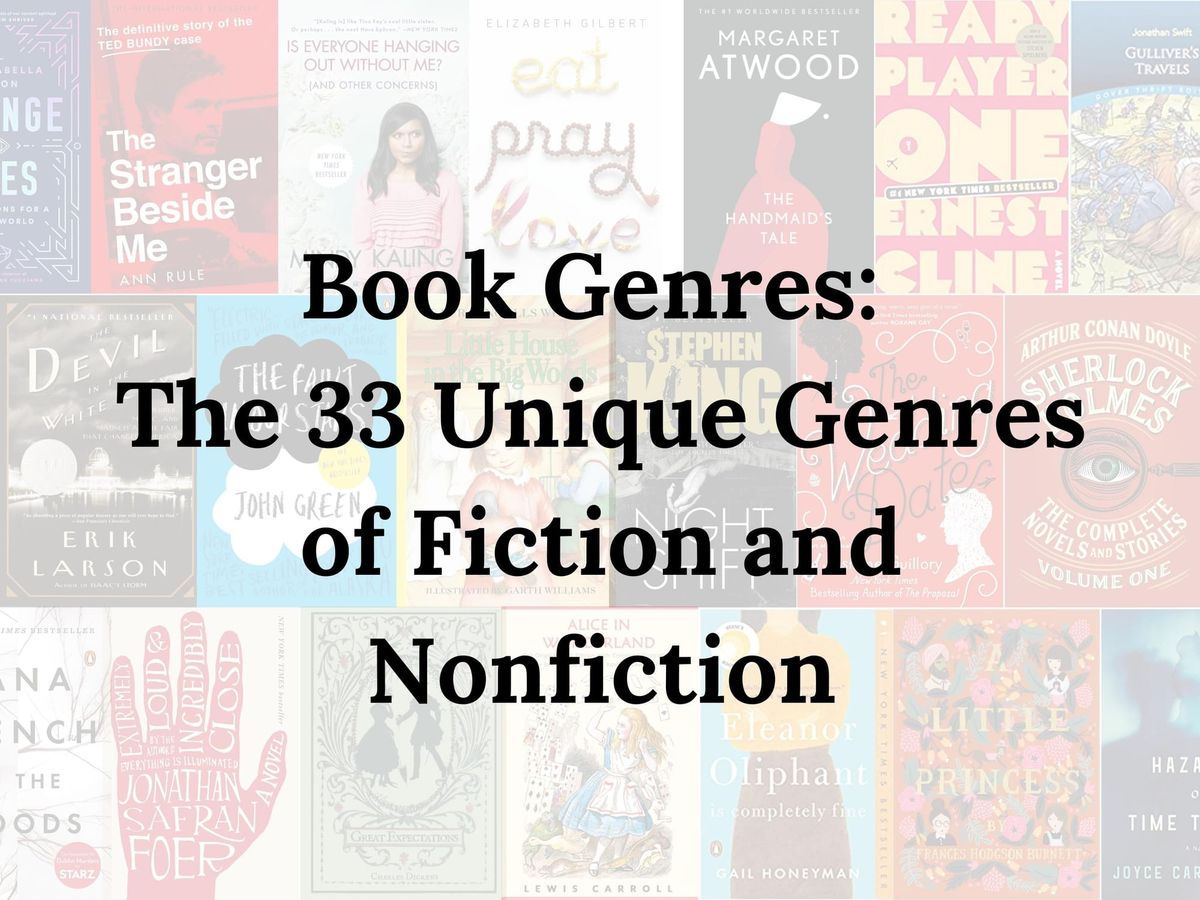
Whether you are a reader or a writer, navigating the world of books can sometimes be tricky. You like a book, but what genre is it, and how can you find more like it? Or how can you write one like it? Often genres seem to overlap. Is it historical fiction with a twist of romance or romance with a twist of historical fiction? Here we break down the top 33 book genres across fiction and nonfiction, with a look at their 52 subgenres.
Action and Adventure Fiction
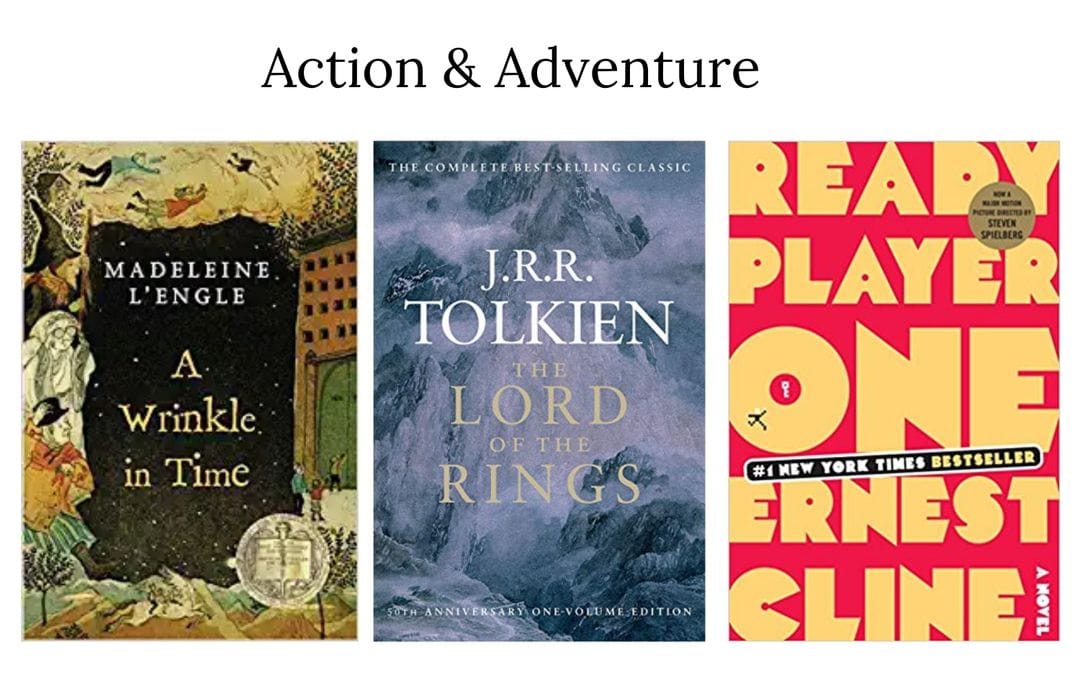
Action and adventure books often follow a structure known as the Hero’s Journey, in which the protagonist has a goal to achieve, but is put in risky, often dangerous situations order to achieve said goal. In short, the protagonist is going to spend an awful lot of time fighting for survival before finally beating the odds and succeeding in their mission. These books are characterized by edge-of-your-seat tension, leaving readers wondering from page to page how the protagonist can possibly extract himself (or herself!) from their latest obstacle. The fast-paced action keeps the pages moving along, rarely giving the reader a moment to catch their breath before diving into the next challenge.
Action and adventure typically crosses over into many other genres, including mystery, sci-fi, crime, and fantasy.
Classic Fiction
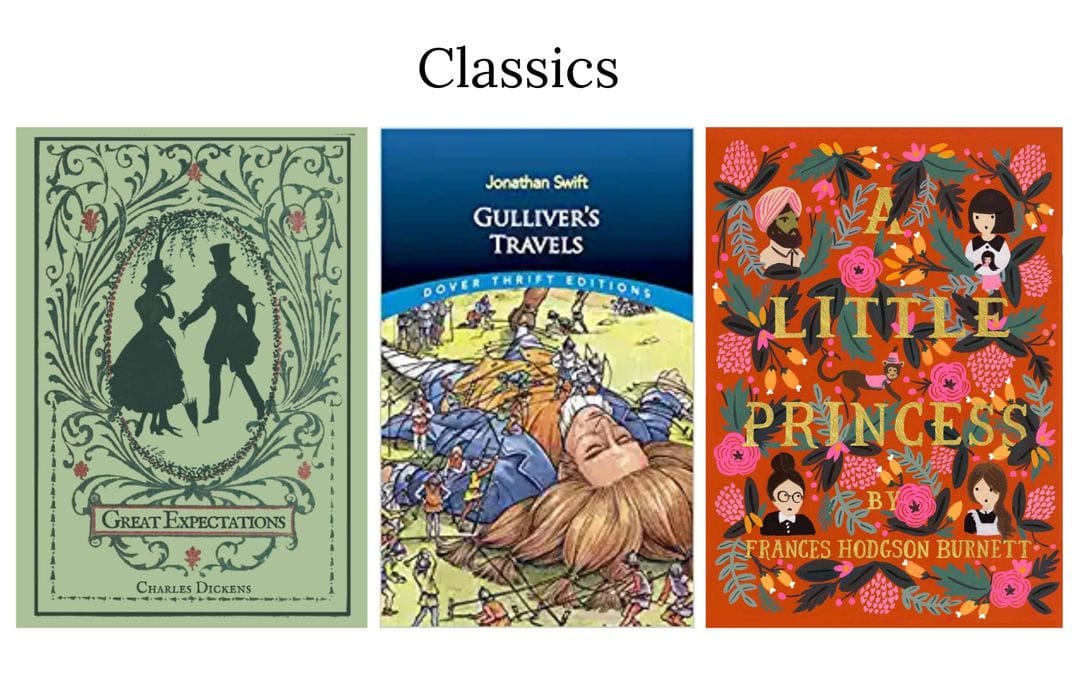
Classic books are typically considered noteworthy or exemplary. These are books that stand the test of time. Love them or hate them, they are the ones often taught in schools. These books span a variety of genres. Classics are often those books that readers are aware of, and may even know the plot of, even if they’ve never read the books. Some examples of classics include Frankenstein, The Secret Garden, and Great Expectations.
Contemporary Fiction
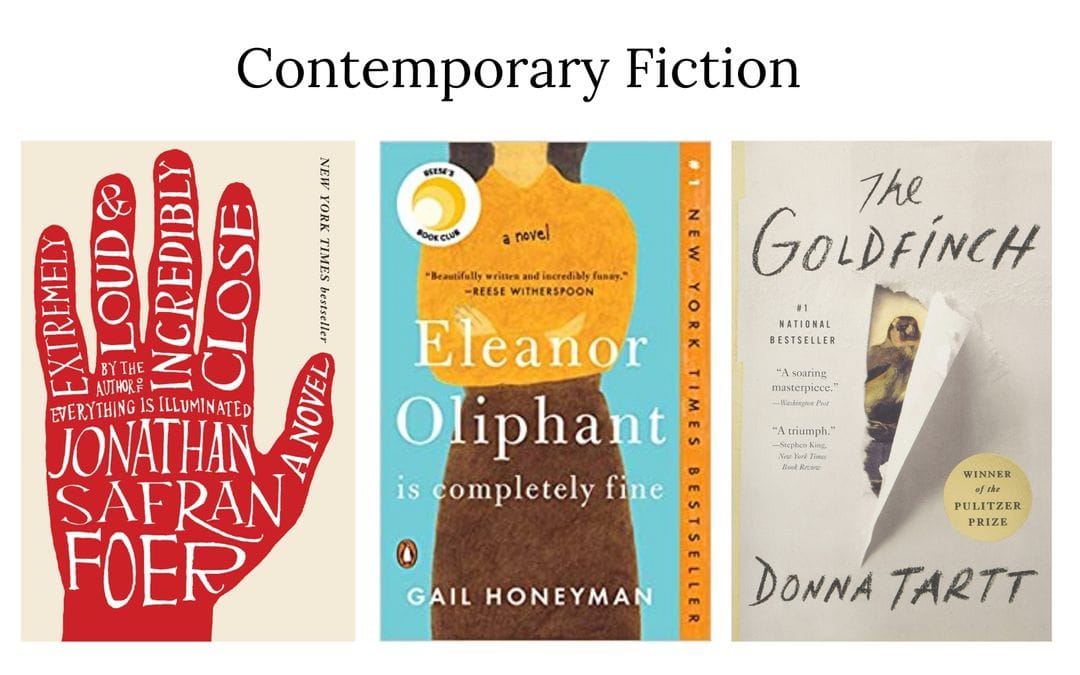
Contemporary fiction is one of those genres for books that don’t fit in any other bucket. The one overarching element here is that these books take place in present day. Contemporary fiction features ordinary people going about their ordinary lives. The story’s conflict often revolves around a problem in the protagonist’s everyday life.
Dystopian Fiction
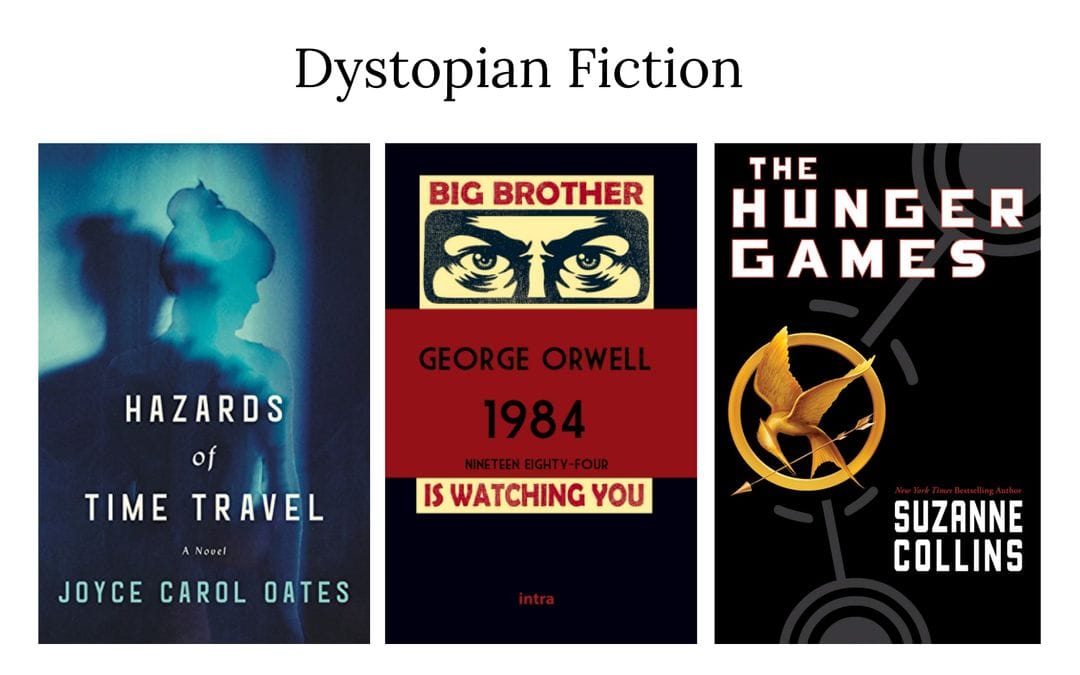
Dystopian fiction typically centers around a grim society in which everything is as bad as can possibly be. Most often, dystopian novels take place in an alternate future in which our world has been ravaged by such calamities as war, apocalypse, plague, or environmental disaster. At the heart of most dystopian literature is an oppressive government that the protagonist must fight against. Dystopian novels offer a frightening vision of the future, and are frequently written as a “warning” of what may come if we do not change our ways. Although traditionally categorized under science-fiction, Dystopian literature has become so prevalent that it now stands as a genre of its own.
Fantasy Fiction
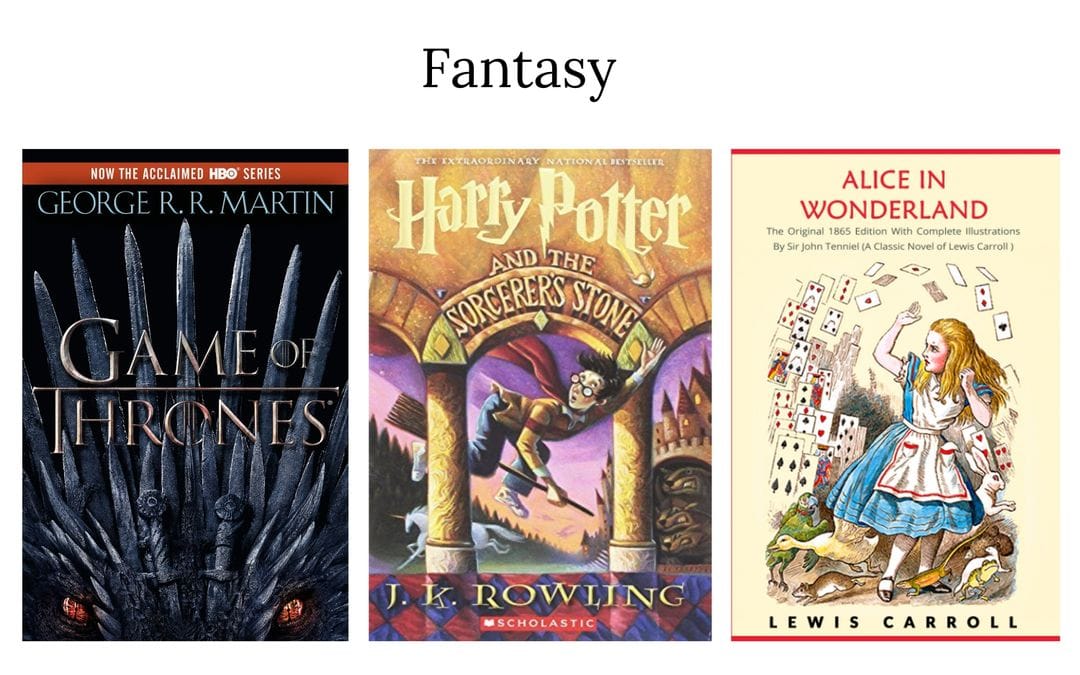
Fantasy novels are characterized by the inclusion of magic or supernatural elements. The characters in fantasy novels are often drawn in part or in whole from mythology or folklore. While some fantasy is set in our own world with a magical element, other fantasy novels feature entirely made up worlds and creatures. Fantasy novels are purely speculative, and are often not tied to reality or science.
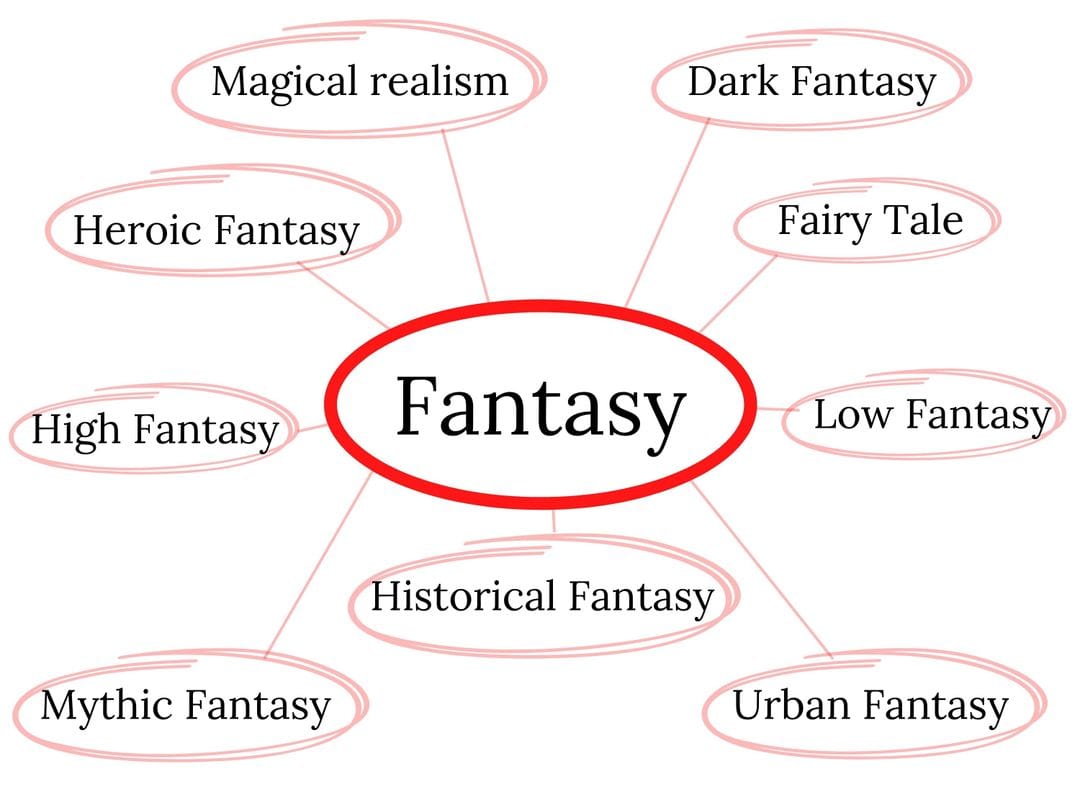
Fantasy comes in many forms and includes many different and varied subgenres.
Magical Realism
Sometimes considered a genre unto itself, magical realism focuses on magical elements at play within our world. In magical realism, the magical and the mundane peacefully coexist. These books do not feature such magical creatures as vampires or sorcerers, but rather focus on supernatural happenings within our world. This underpinning of magic flows like a current through the book, and is easily accepted by the characters within it. Some examples of magical realism include Like Water for Chocolate by Laura Esquivel and A Hundred Years of Solitude by Gabriel García Márquez.
Dark Fantasy
A subgenre of fantasy, dark fantasy often presents a gloomier world. The supernatural occurrences in dark fantasy often have a dark, brooding tone meant to infuse terror or dread, and there is an obvious lack of heroes. Frequently these stories incorporate elements of horror. As opposed to straight horror in which the villain might be a serial killer, in dark fantasy, the villain might be a werewolf, vampire, other monster. It is not uncommon in dark fantasy for the story to be told through the monster’s point of view. Some examples include Interview with the Vampire by Anne Rice and The Dark Tower: The Gunslinger by Stephen King.
Fairy Tale
Fairy Tale fiction is often a reimagined version of classic Hans Christian Anderson and Grimm Brothers fairy tales. Set in the modern world, these books rely heavily on the motifs and plots of folklore. Some examples of fairy tale fantasy include Ella Enchanted by Gail Carson Levine, Cinder by Marissa Meyer, and Beauty by Robin McKinley.
Heroic Fantasy
A subgenre of fantasy, heroic fantasy often takes place in a world filled with magic, in which modern technology does not exist. Focusing heavily on the themes of good versus evil, these books typically feature a large cast of characters led by the “hero” who is on a quest to set something right. The protagonists in heroic fantasy often come from low upbringings or are viewed as underdogs who have little chance of success, but who must nevertheless prevail and complete their quest. Some examples of heroic fantasy include The Hobbit by J.R.R. Tolkien and The Hero and the Crown by Robin McKinley.
High Fantasy
High fantasy, also called epic fantasy, focuses on stories set in an entirely fictional world. Magical elements are usually at the forefront of the plot, and the characters typically find themselves on a quest with global stakes. When most people think of fantasy, this is what they are considering. High fantasy includes book such as Game of Thrones by George R. R. Martin, and His Dark Materials by Phillip Pullman. High fantasy novels tend to be longer than most other subgenres of fantasy due to the rich world-building associated with the genre.
Pro Tip: High fantasy takes place in made-up worlds, while low fantasy takes place in our world. These genres do cross at times, when characters begin in our world and journey to another world, such as in The Magicians by Lev Grossman, Harry Potter by J.K. Rowling, and The Chronicles of Narnia by C.S. Lewis.
Historical Fantasy
Historical fantasy features stories set in a historical period, with an added element of magic. Typically these stories are set it pre-20th century. Stories such as The Once and Future King by T.H. White qualify as historical fantasy.
Low Fantasy
Low fantasy, also known as intrusion fantasy, is categorized by magical elements that appear in—or intrude on—an otherwise normal world. Such stories as talking animals or inanimate objects coming to life would be considered low fantasy. One example includes The Indian in the Cupboard by Lynne Reid Banks. These books often cross genres with magical realism.
Mythic Fantasy
As its name implies, mythic fantasy relies heavily on mythology, often introducing characters from Greek or Roman mythology. These gods and goddesses may factor directly into the book, or the focus may be on their descendants. Some example of mythic fantasy include The Lightning Thief series by Rick Riordan and Circe by Madeline Miller.
Urban Fantasy
Urban fantasy typically includes the involvement of magical elements or beings in a city setting. These stories are typically set in the real world and may focus on either the peaceful coexistence of humans and supernatural beings or a conflict between them. Some examples include The Dresden Files by Jim Butcher, American Gods by Neil Gaiman, and Blue Bloods by Melissa de la Cruz.
Graphic Novel
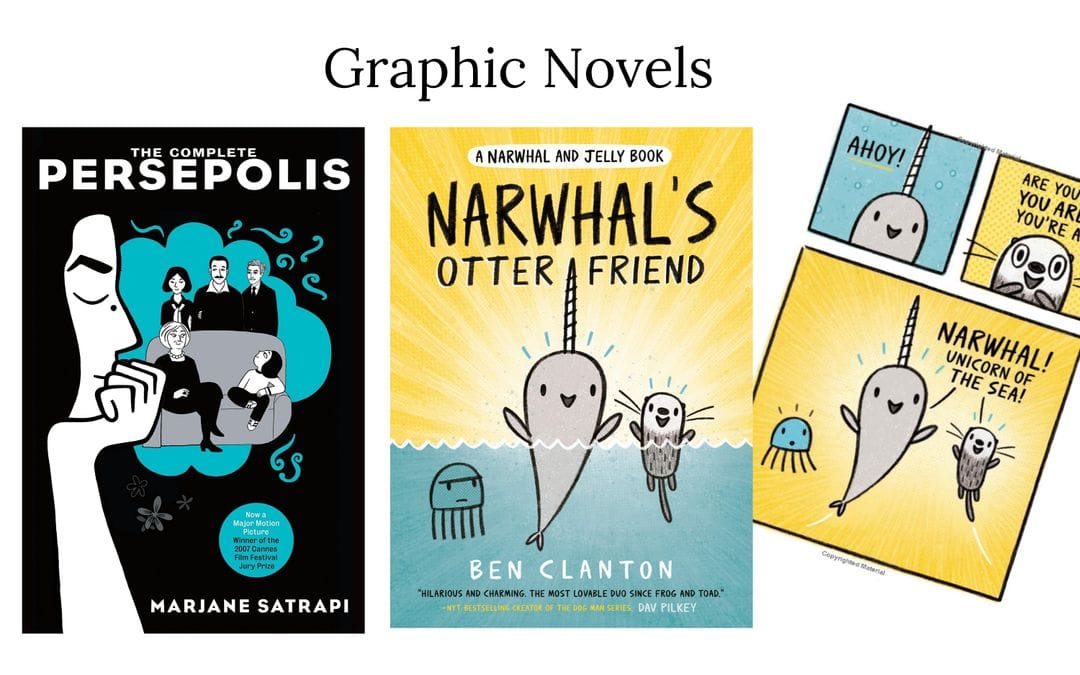
Graphic novels aren’t defined so much by their content, but by their appearance. Graphic novels are highly illustrated books, with the story being told through speech bubbles and a series of comic panels. These books have gained popularity in recent years for children ages 6-10, though many classics are also now being made into graphic novels. Some examples of graphic novels include Persepolis by Marjane Satrapi and Narwhal and Jelly by Ben Clanton.
Historical Fiction
Historical fiction refers to books that take place in the past. These books typically center around imaginary characters experiencing real historical events. Historical fiction is often enriched by historically accurate details from the specific time period. The goal of historical fiction is to maintain authenticity around the time period, with a focus on accurately portraying customs, traditions, and events of the time. It is not uncommon in historical fiction for fictional characters to interact with real-life figures. One of the best examples of historical fiction is the wealth of World War II-era books that have been released in recent years.
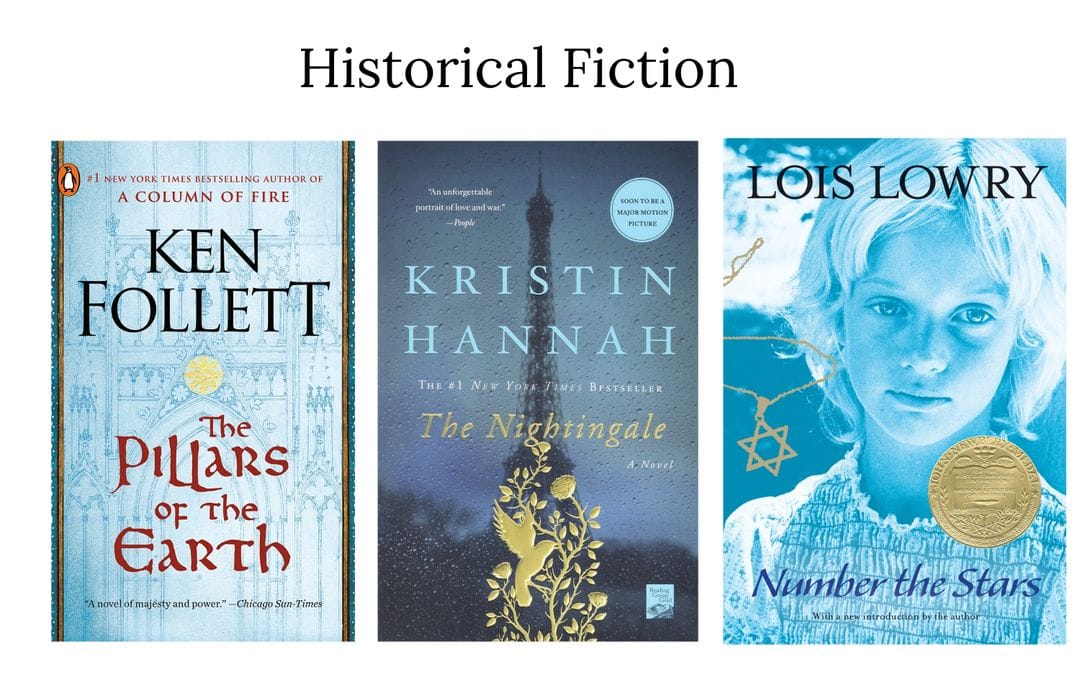
Historical fiction often covers a single time period, but there are a few subgenres of historical fiction.
Multi-period epics or sagas
A subgenre of historical fiction, multi-period epics tend to follow families or events over several generations. These books may be written as single volume or may stretch across several volumes. Some examples of multi-period epics include The Thorn Birds by Colleen McCullough, Salt Houses by Hala Alyan, and Gilead by Marilynne Robinson.
Historical romance
A subgenre of historical fiction, historical-romance is often a love story between two characters, set against the background of real-life historical events. While these books could also fall easily into the romance category, true historical romance tends to focus more heavily on history, using it as an essential element of the storytelling, rather than simply a setting for the book. One example of such a book is the Outlander series by Diana Gabaldon.
Horror Fiction
Horror books do one thing: they cause discomfort and fear for a reader. The whole point of a horror book is to scare readers—to make you jump out of your skin at every page turn and feel trepidation at what’s coming next. Sometimes infused with paranormal elements, sometimes based on straight reality, a good horror book makes you feel like your skin is crawling and keeps you up at night wondering what’s waiting to jump out and get you.
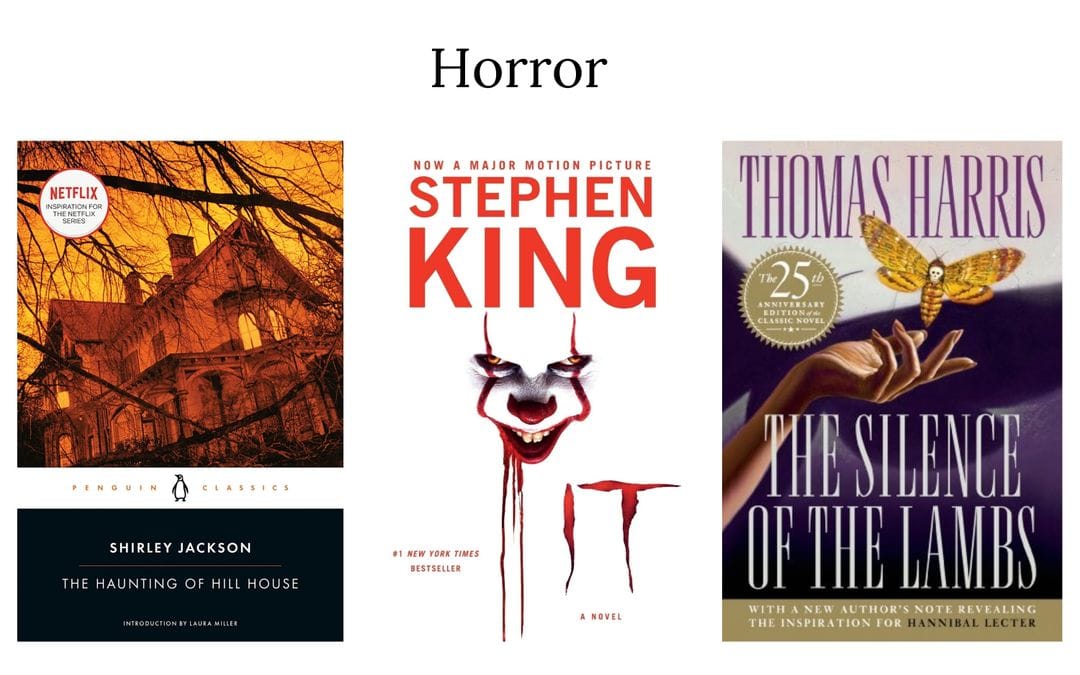
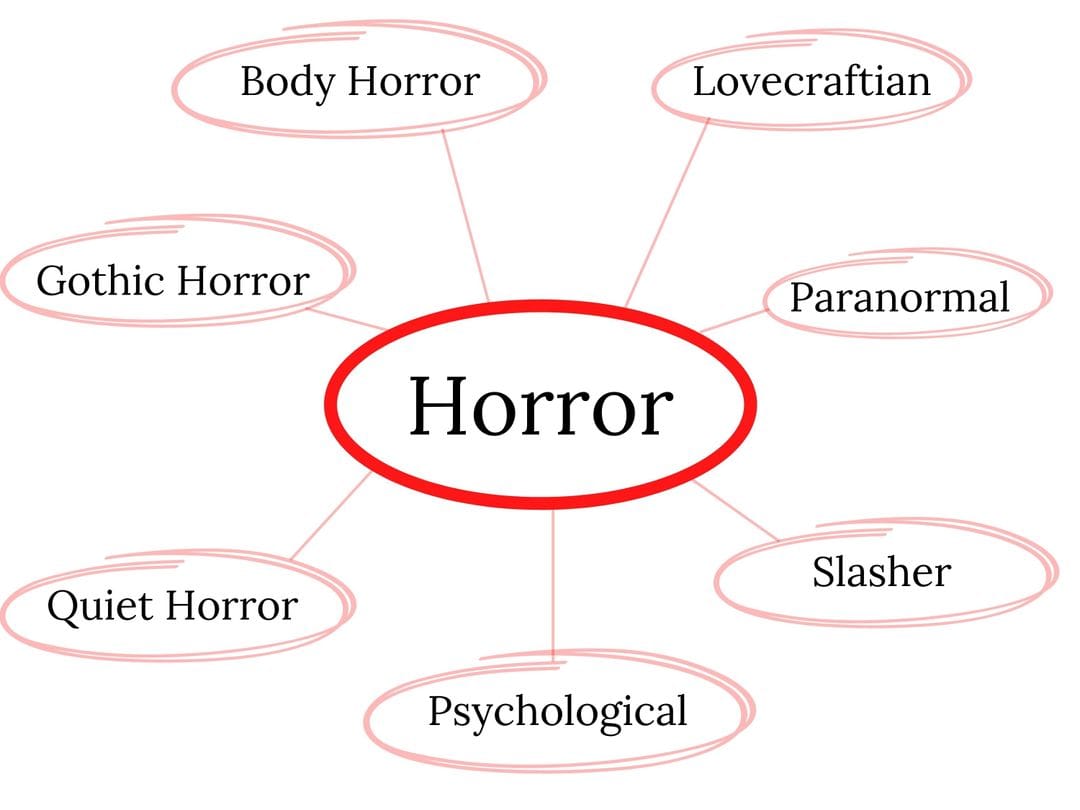
Like many genres, horror can be broken into several subgenres.
Body Horror
Body horror is a specific subgenre of horror that offers vivid depictions of graphic violations or mutilations of the body. Often the story centers on a graphic disfiguration or destruction of the human body. Examples of body horror include Mary Shelley’s Frankenstein and The Troop by Nick Cutter.
Gothic Horror
A subgenre of horror, gothic horror is often categorized by a battle between humanity and an unnatural force of evil (whether manmade or supernatural.) These books often take place in gloomy environments with bleak landscapes and can regularly center around mysteries, castles, spirits and hauntings, madness, and even some romance. Some examples of gothic horror include Dracula by Bram Stoker and The Picture of Dorian Gray by Oscar Wilde.
Lovecraftian Horror
Lovecraftian horror, popularized by American author H.P. Lovecraft, begins with the assumption that otherworldly beings once ruled our planet and that they will return to destroy all of humanity. One such example is The Ballad of Black Tom, by Victor LaValle
Paranormal Horror
Paranormal horror introduces elements of the supernatural. Common themes in paranormal horror include hauntings, possessions, and curses. Some examples include Firestarter by Stephen King and The Exorcist by William Peter Blatty.
Psychological Horror
Psychological horror contains no monsters. Instead, it plays on a reader’s mind and their innermost thoughts. Psychological horror is categorized by suspicion, self-doubt, paranoia, and distrust of self and others. Some examples of psychological horror include Rosemary’s Baby by Ira Levin and Silence of the Lambs by Thomas Harris.
Slasher Horror
Slasher horror is categorized by the presence of madmen: slashers, cannibals, sociopaths. In these books, the villains are physically after the protagonists. The horror comes from the suspense of never knowing when they will pop up. Given the nature these stories, they can often cross over with psychological horror. Examples of slasher horror include Psycho by Robert Bloch and American Psycho by Bret Easton Ellis.
Quiet Horror
Quiet horror, also known as soft horror, relies on a reader’s imagination to make a story scary. Rather than graphic depictions of horror, quiet horror uses atmosphere and mood to set the tone, leaving most of the graphic details to the reader’s imagination. One example of quiet horror is The Sound of Midnight by Charles L. Grant.
LGBTQ+ Fiction
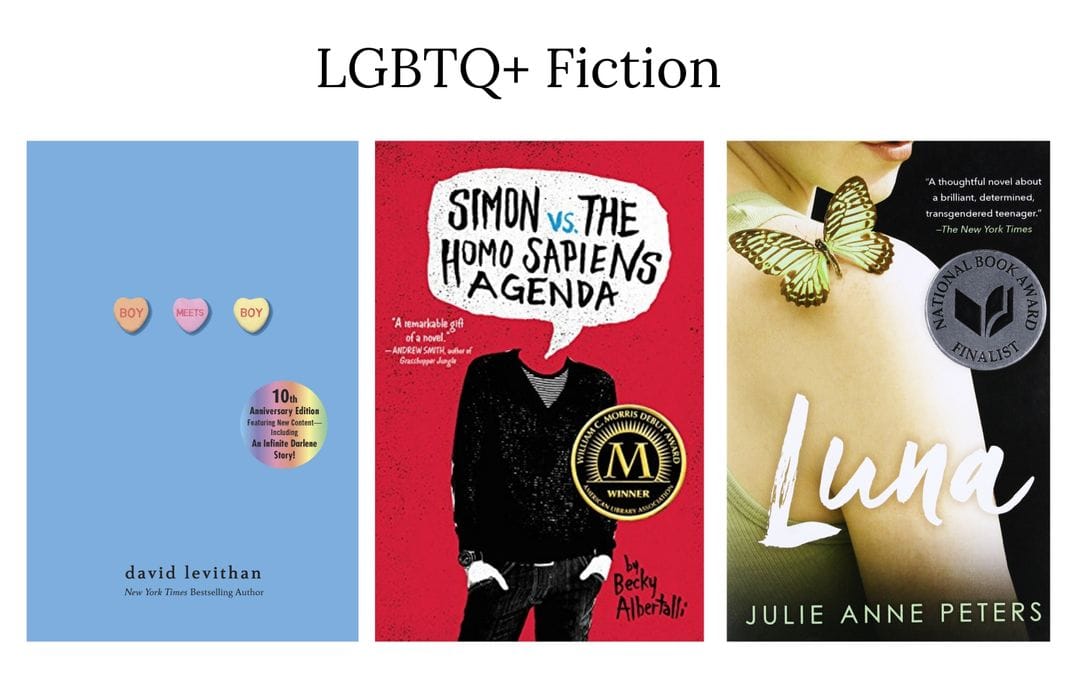
LGBTQ+ features strong representation of LGBTQ+ characters as the protagonists of the book. Any book featuring such a representation can be considered LGBTQ+, regardless of what genre it otherwise falls into.
Literary Fiction
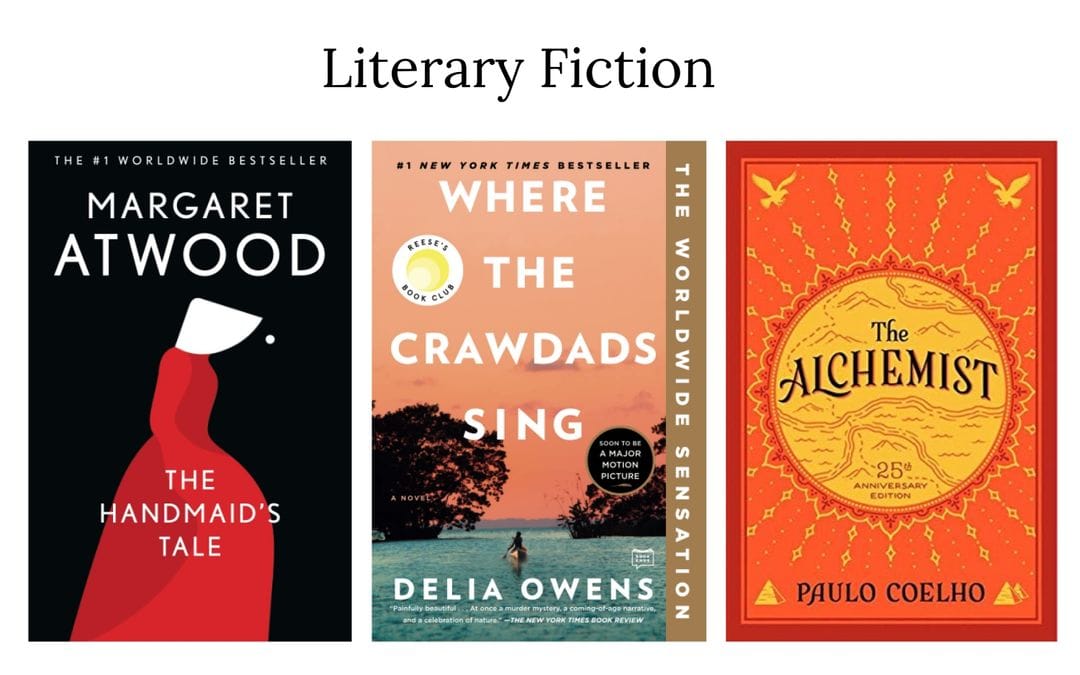
Literary fiction is similar to contemporary fiction, in that it doesn’t typically fit into any specific genre. Rather, literary fiction is characterized by what is considered to be the highly artistic value of the writing. Literary fiction is meant to make a reader really stop and think, often offering a personal or social commentary on the book’s theme. Literary fiction also tends to be more on the serious side, and to touch on more serious topics.
Mystery Fiction
Mystery fiction, also known as detective fiction, always revolves around a mystery that must be solved. Mystery fiction always features several elements: a crime, an investigator, witnesses, clues, suspects, and of course a perpetrator. These mysteries may vary from a missing item to a murder, depending on the genre.
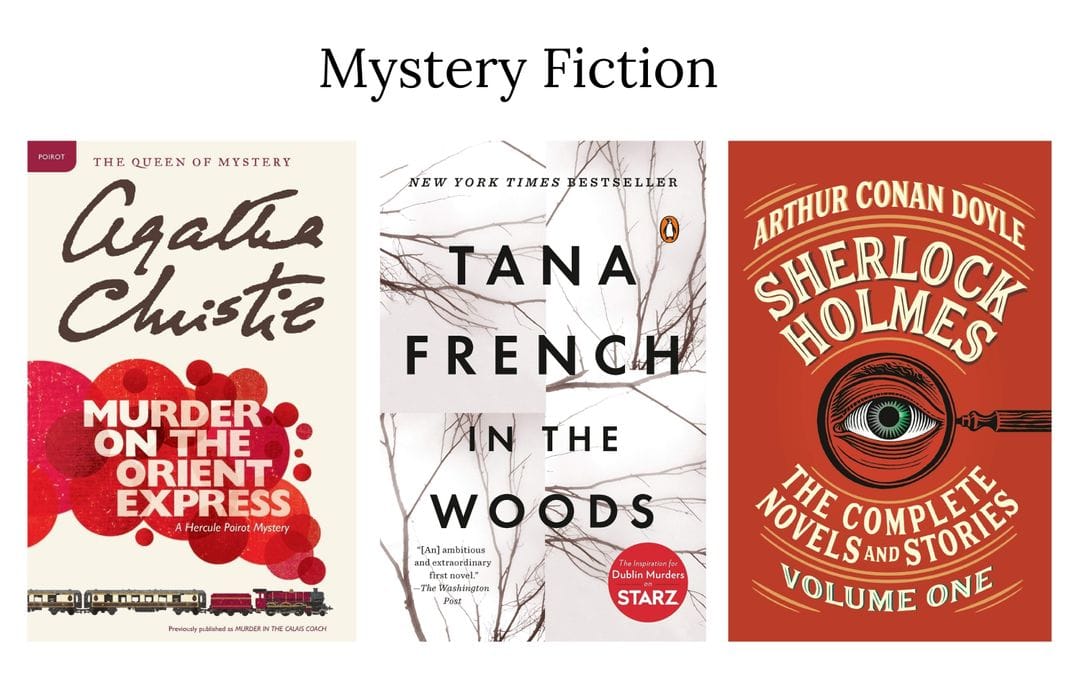
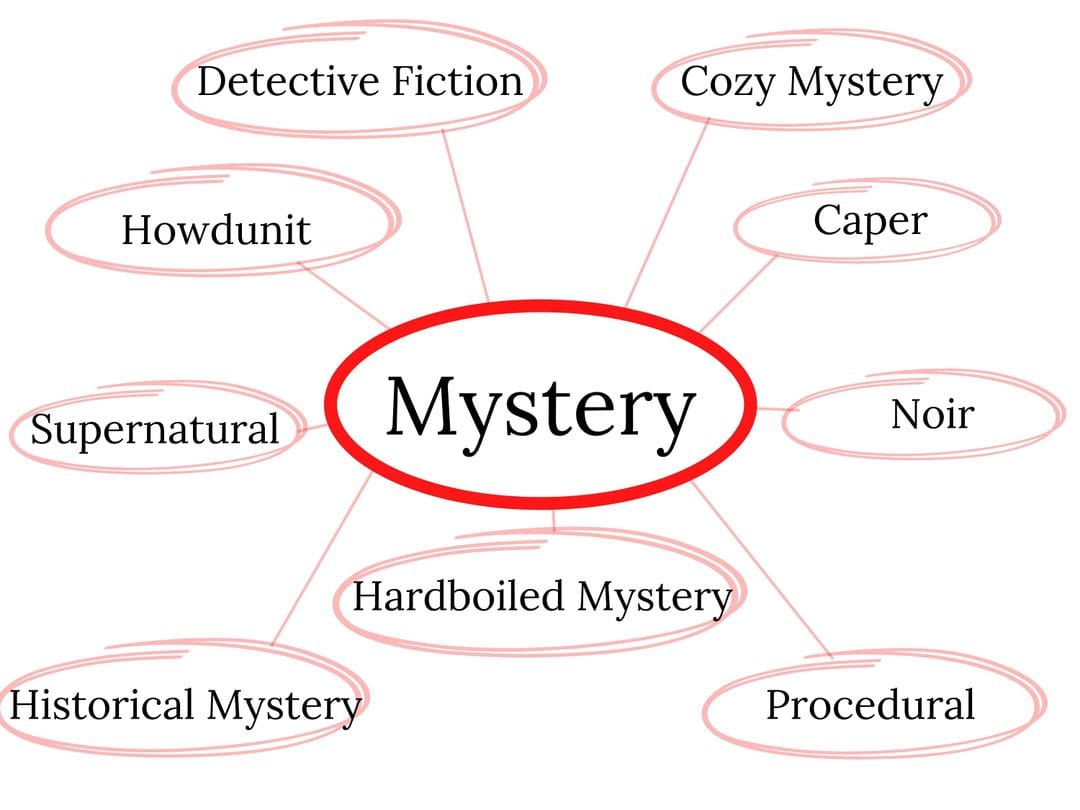
Mystery fiction often crosses over with thriller and suspense, but mystery comes in a variety of genres.
Detective Fiction
Detective fiction is characterized by an investigator—whether professional or amateur—who is trying to solve a mystery. The key distinction between detective fiction and police procedurals is a lack of direct ties to the police. Often detective fiction showcases an investigator who runs a detective agency of sorts, and who may work with the police, but not for them. Some examples of detective fiction include Sherlock Holmes, Nancy Drew, and the Hardy Boys.
Caper
Capers are light-hearted mysteries in which the protagonist is typically the thief. Infused with humor, these books typically focus more on how (and if!) the culprit will get away with the crime. One such example is The Lies of Locke Lamora by Scott Lynch.
Cozy Mystery
Cozy mysteries tend to be lighthearted. Although murder may occur, it is never presented in grim detail. In cozy mysteries, crimes are typically solved by amateur detectives rather than professionals. Crimes typically occur in small towns where everyone knows everyone else. One example of a cozy mystery is Triple Chocolate Cheesecake Murder by Joanne Fluke.
Hardboiled Mystery
A subgenre of mystery, hardboiled mystery is exactly as it sounds: hardcore. These books often feature overworked professional detectives who are fighting their own demons. Hardboiled mysteries may include violence, sex, or graphic details. One example of a hardboiled mystery is The Maltese Falcon by Dashiell Hammett.
Historical Mystery
Mystery often crosses over with other genres, and this is one such case. Historical mystery is simply a mystery novel set in a historic time period, such as The Service of the Dead by Candace Robb.
Howdunit
Howdunit mysteries answer the question of who committed the crime immediately. Instead, these books focus on solving the question of how a crime was committed. One example of a Howdunit is A Kiss Before Dying by Ira Levin.
Noir
Like film noir, noir mystery focuses on the classic detective trope: a tragically flawed detective in a trench coat attempting to solve a crime. One example includes Thieves Like Us by Edward Anderson.
Police Procedural
Police procedurals focus on police investigations. These books tend to be highly researched to mimic how actual police investigations function. They often include autopsy reports and forensic science. Such books may switch points of view between the detectives and the perpetrator of the crime. Two examples of police procedurals include The Law of Innocence by Michael Connelly and Killer Instinct by James Patterson.
Supernatural Mystery
Supernatural mystery crosses over with horror and fantasy. These books, which may cross over with other mystery genres such as detective mystery or police procedurals, typically feature a mystery that involves some form of supernatural occurrence. Often the investigator finds a non-supernatural, logical solution to the mystery, but this is not always true. In some cases, the mystery is solved, but a supernatural element remains unexplained. One example of a supernatural mystery is In the Woods by Tana French.
Romance Fiction
Romance novels are typically about a romantic relationship. Typically the would-be lovers are faced by a series of obstacles that keep them apart for most of the book. In romance novels, all typically ends well with the two partners getting together. Romance novels are characterized by sensual tension and desire, and in many cases include intensely described sex scenes.
Pro Tip: romance novels for kids usually revolve around school crushes. Middle grade romance is clean, going no farther than kissing. YA and New Adult will both include sex scenes but not in as much detail as adult romance.
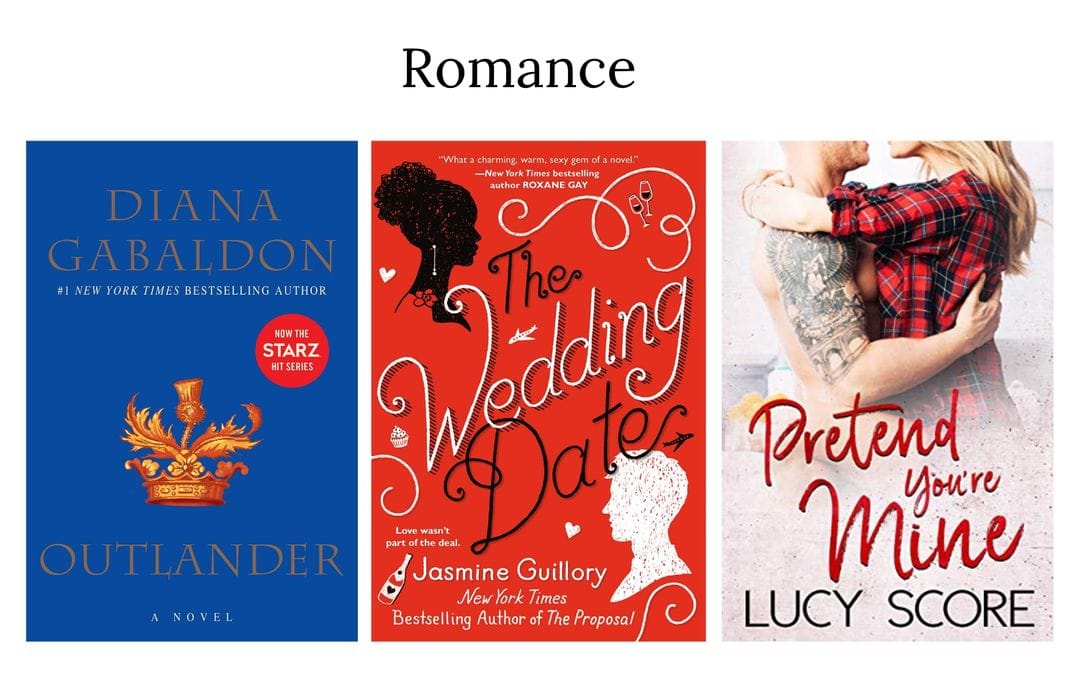
Romance fiction can be broken into multiple subgenres.
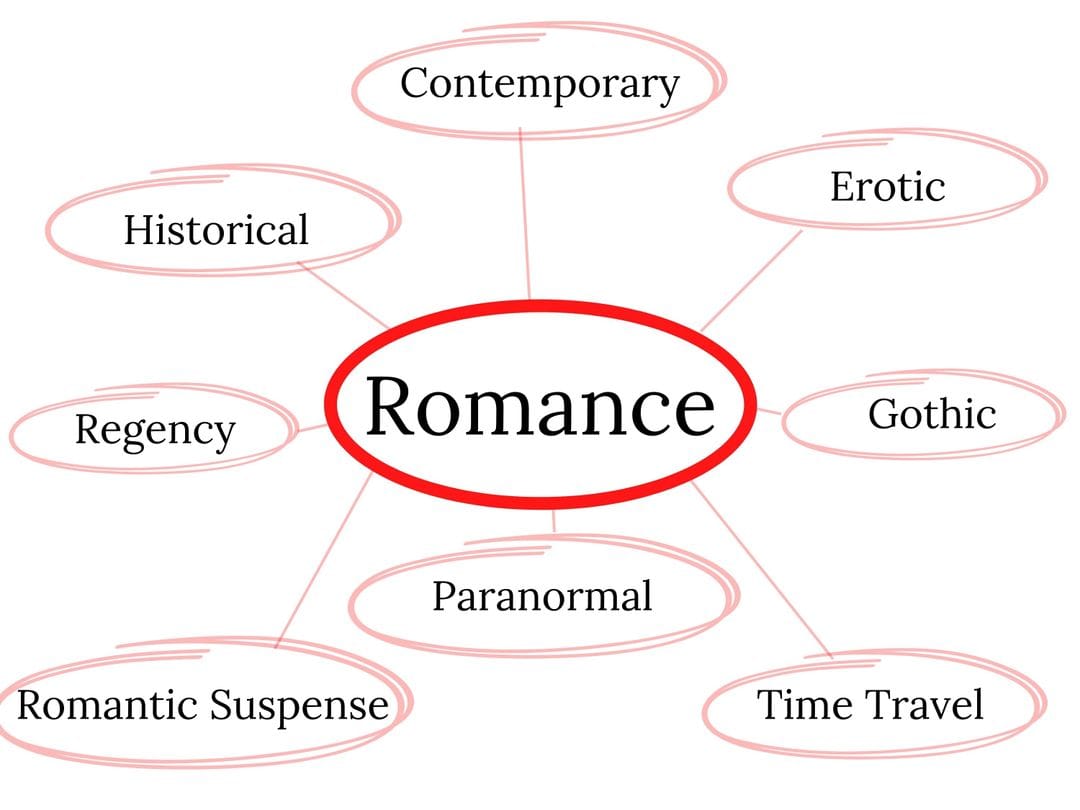
Contemporary romance
Contemporary romance takes place in modern day and features women trying to find love amid modern technology and social situations. These books tend to be more relatable than other books in the romance genre as readers may have experienced similar situations. Examples of contemporary romance include The Proposal by Jasmine Guillory and Ghosted by Rosie Walsh.
Erotic Romance
Erotic romance focuses on the development of a relation through sexual interactions. In erotic novels, the buildup to the sexual interaction is as important to the plot as is the actual sex scenes. Both serve to further the relationship between two characters and the intimate nature of the relationship they are building. While some might view sex scenes in such books as graphic, they are in fact integral to relationship building and to cut them from the story would be to severely damage plot development. One example of erotic romance is Fifty Shades of Gray by E.L. James.
Gothic Romance
Dark, gloomy, and atmospheric, gothic romance typically showcases women battling through terrifying ordeals to be with the ones they love. Gothic romance is filled with secrets and mystery, and often takes place in old crumbling manors or mansions. Jane Eyre is a perfect example of gothic romance.
Historical Romance
A subgenre of both historical fiction and romance, historical romance mixes the best of both worlds to create a sweeping romance set in a particular historic era. Often these books take place during real-life historical events and feature fictionalized versions of real historical figures. One example of historical romance is Outlander by Diana Gabaldon.
Paranormal Romance
A subgenre of romance, paranormal romance follows the rules of typical romance with one twist: at least one of the romantic partners is typically some sort of supernatural creature. This may include angels, vampires, werewolves, or demons, to name just a few. While paranormal fantasy focuses heavily on the action of the story, paranormal romance focuses heavily on the development of the romantic relationship between two people, and the ups and downs they face in finally coming together. One example of paranormal romance is Twilight by Stephanie Meyer.
Regency Romance
A very specific subgenre of romance, regency romance is typically set between 1795 and 1837, known as the Regency Era in England. Regency romance offers a heavy focus on society and societal norms for women at the time. Such events as dinner parties, balls, and marriages are often at the forefront of regency romance. One example of a regency romance is Not the Duke’s Darling by Elizabeth Hoyt.
Romantic Suspense
Romantic suspense goes beyond typical romance, blending with suspense and thriller books. These books tend to be more fast-paced and suspenseful, featuring such elements as stalkers, kidnapping, and even murder. One example of romantic suspense is Something About You by Julie James.
Time Travel
Time travel romance features a protagonist who must travel through time in order to find her true love. Often these books flip between present day and the past, with some confusion occurring between the protagonists two timelines and relationships during each one. A common conflict in such books is the decision about whether to stay in the past or to return to a protagonist’s own time. One example of time travel romance is The Time-Traveler’s Wife by Audrey Niffenegger.
Satire Fiction
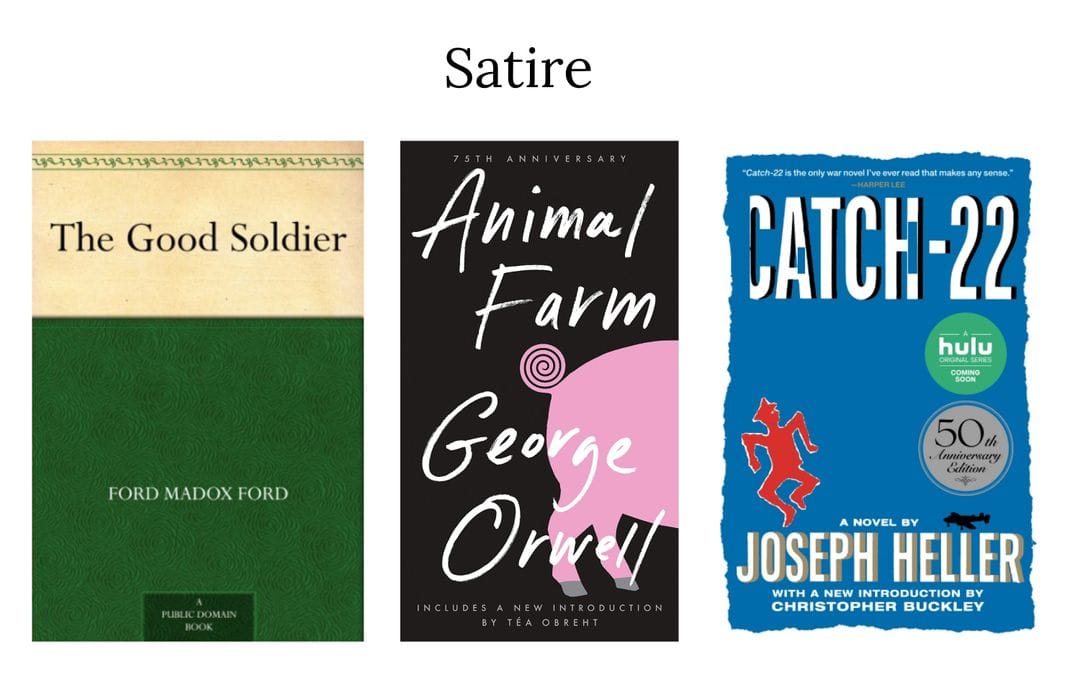
Satire is the use of humor, exaggeration, irony, or ridicule to criticize, humble, or discredit the target of a book. Typically satire offers a political commentary of sorts. One example of satire is George Orwell’s Animal Farm.
Science Fiction
Science fiction often feels similar to fantasy in that it is characterized by new worlds and made-up species of characters. Where science fiction differs from fantasy is its heavy reliance on science at technology, both of which lay at the root of all science fiction stories. The worlds portrayed in science fiction stories are not made up of fantastical creatures, but rather of those created or discovered through science.
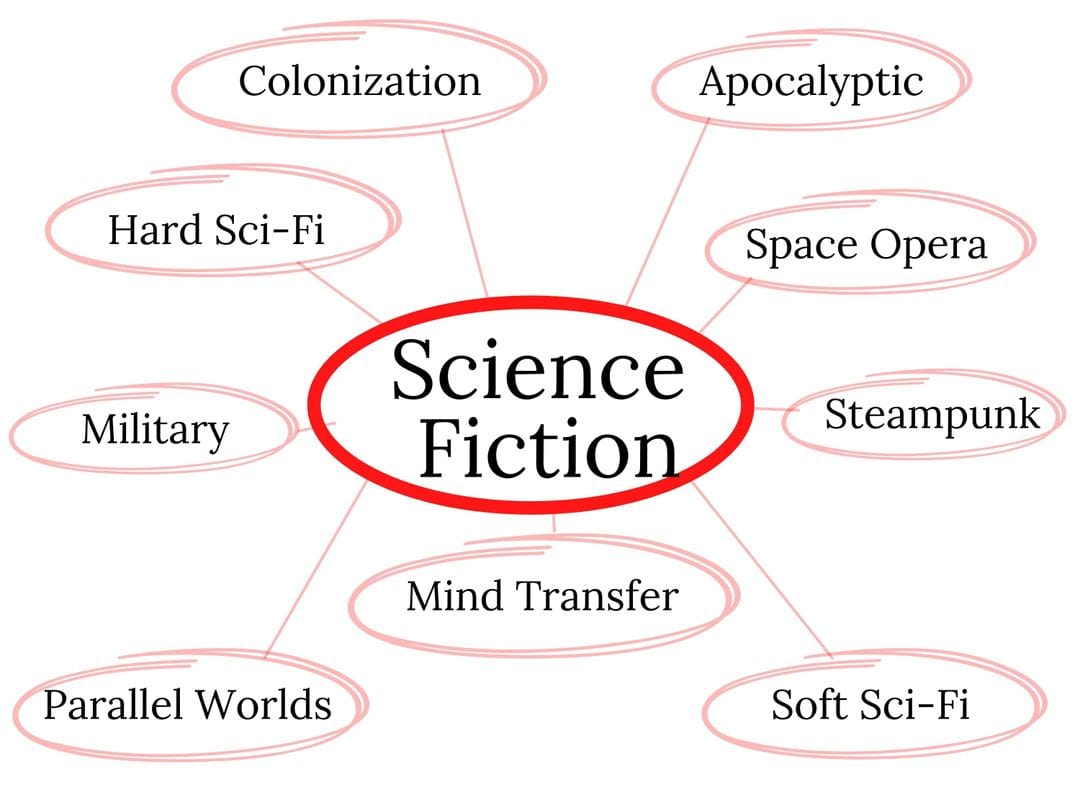
Like fantasy, science fiction can be broken into a variety of specific genres.
Apocalyptic Science Fiction
Apocalyptic science fiction typically takes place following a major calamity such as apocalypse, pandemic, or environmental disaster. Often such books include the decline or destruction of the human race and the attempts of the remaining humans to survive. Examples of apocalyptic science fiction include The Road by Cormac McCarthy and The Passage by Justin Cronin.
Colonization
Colonization science fiction typically focuses on a world in which the earth has been destroyed and humans must colonize a new planet or form a new settlement. Some examples of colonization science fiction include The Last Colony by John Scalzi and The Martian Chronicles by Ray Bradbury. These books often cross over with the subgenre of dying earth.
Hard Science Fiction
Hard science fiction offers a strong focus on technology. Scientific concepts are often explained in great detail, often to the detriment of plot and character development. Examples of hard science fiction include Dragon’s Egg by Robert L. Forward and Foundation by Isaac Asimov.
Military Science Fiction
Military science fiction tends to focus on armed conflict between two groups. This may be an interstellar or interplanetary conflict, or it may be more localized to a single planet. Themes such as bravery, sacrifice, and duty factor heavily into military science fiction, and the protagonists are typically members of a local military. Some examples of military science fiction include Starship Troopers by Robert A. Heinlan and the Red Rising series by Pierce Brown.
Mind Transfer
Mind transfer is a subgenre of science fiction in which a human’s consciousness is uploaded or downloaded into either a computer or another human brain. This may occur through computer, alien intervention, physical brain transplant, or the use of a psychic power. Some examples of mind transfer science fiction include Neuromancer by William Gibson and Accelerando by Charles Strauss.
Parallel/Alternate Worlds
Parallel/alternate worlds science fiction typically focuses on the idea that there are multiple versions of the world with identical people living very different lives. These books are the epitome of the butterfly effect theory, in which a single change sets off a new world. Often characters in these books reach alternate worlds by traveling through a wormhole. One example of alternate world fiction is The Gods Themselves by Isaac Asimov.
Soft Science Fiction
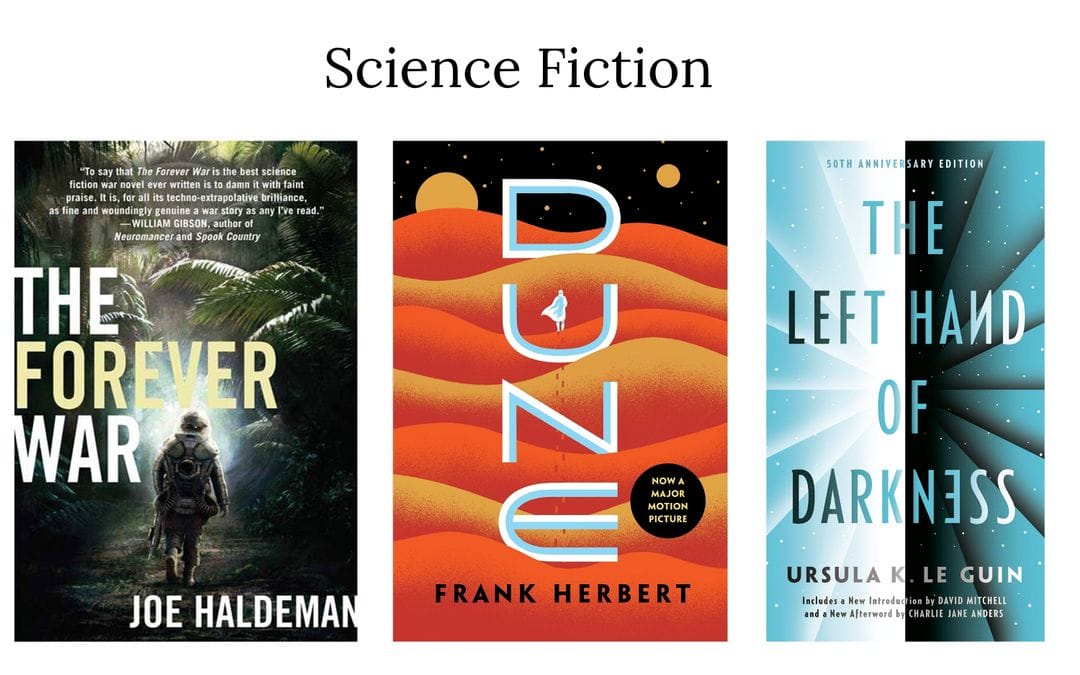
Soft science fiction focuses less on the “how” and the actual science behind how a world came to be ad more on the actual characters. These stories tend to deal more with the “soft” or social sciences, focusing heavily on humans and not technology. One example of soft science fiction is Left Hand of Darkness by Ursula K. LeGuin.
Space Opera
Space operas often feature swashbuckling action set against the backdrop of outer space. Space operas tend to be long-running series with a continuing story arc. Some examples of space operas include the Dune series by Frank L. Herbert and Enders Game by Orson Scott Card.
Steampunk
Steampunk blends the technology of the future with the design and aesthetic of the 19th and early 20th centuries. Steampunk typically features steam-powered technology rather than modern-day technology. One example of steampunk fiction is Leviathan by Scott Westerfeld.
Short Story
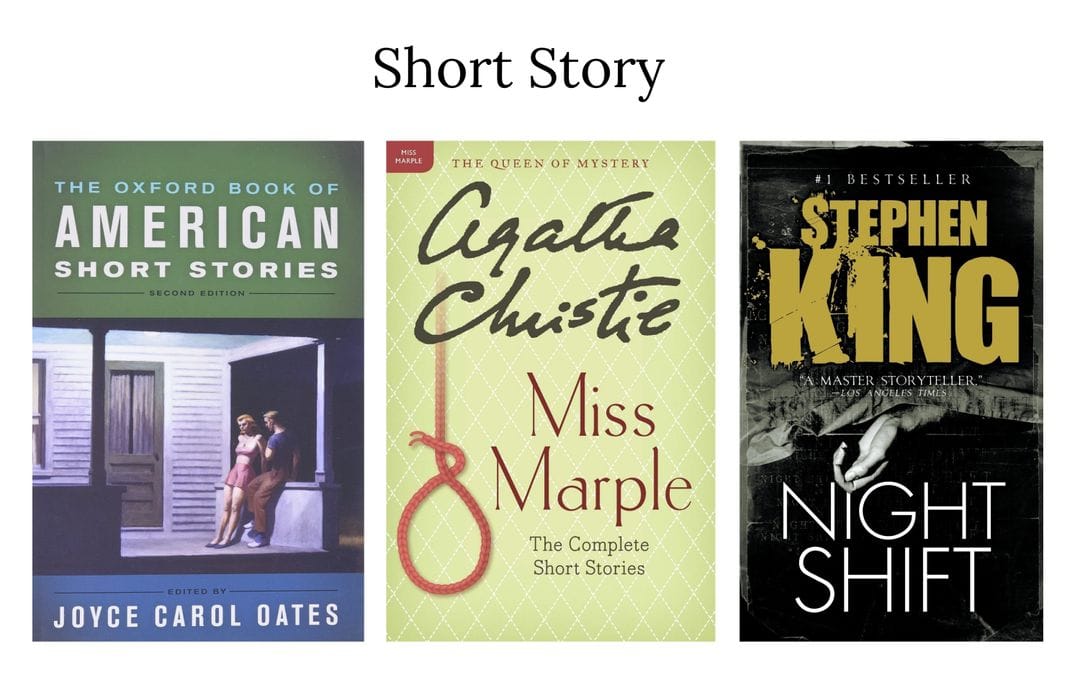
Short stories can appear in any genre. What binds them together as a genre of their own is their length. Anywhere between 1,000 and 15,000 words, these stories are shorter than typical novels. Often several short stories along a common theme appear together in a book. Some examples of short story collections include Everything Ravaged, Everything Burned by Wells Tower and Pastoralia by George Saunders.
Thriller Fiction
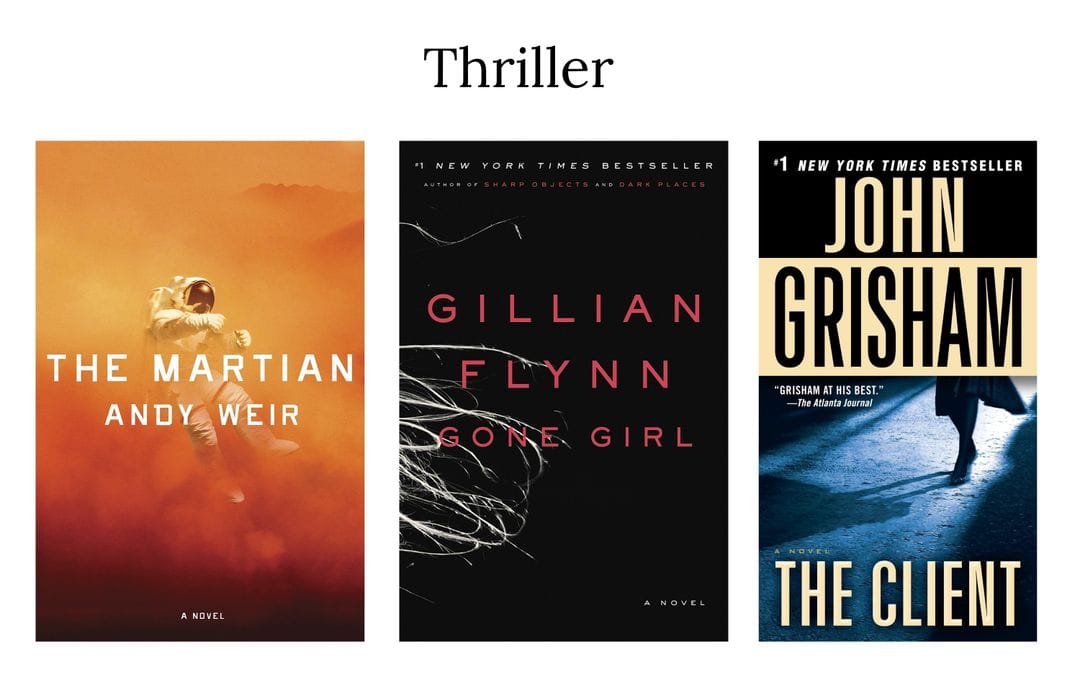
Thriller, also known as suspense, often crosses paths with mystery and crime fiction. Thriller fiction, however, typically revolves around a protagonist trying to save themselves rather than trying to save someone else. Fast-paced and action-packed, thrillers often include deception and plenty of cliffhangers. These books are meant to evoke feelings of anxiety, tension, fear, and lots of curiosity!
Thriller fiction can be divided into multiple genres.
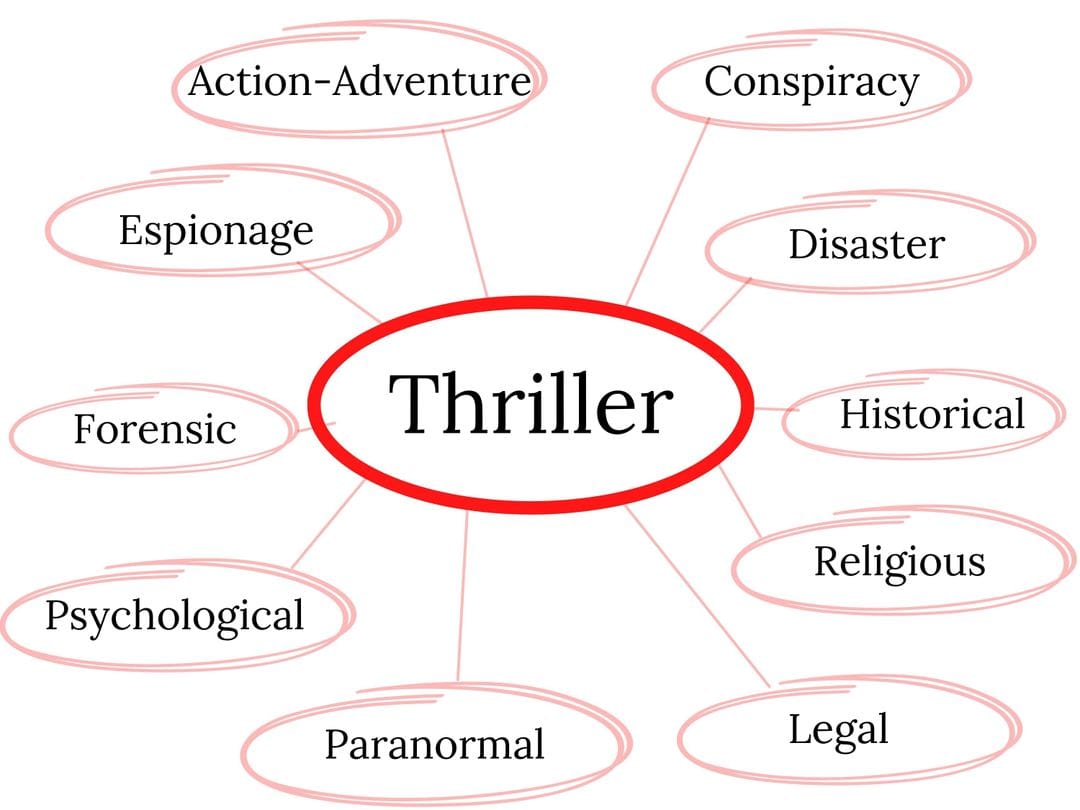
Action-Adventure
Action thrillers typically focus on a protagonist’s need to struggle through a life-changing journey. This may be a quest they set for themselves or one they find themselves unwillingly a part of. Action thrillers are fast, bold, and loud. Often categorized by multiple locations, violence, and high-speed chases, these books bring about a rush of adrenaline with every turn of the page. Some examples of action thriller include The Martian by Andy Wier and The Bourne Identity by Robert Ludlum.
Conspiracy
A subgenre of thriller and suspense, conspiracy thrillers typically involve a protagonist facing off against a large, powerful organization. The protagonists in conspiracy thrillers are often journalists of amateur sleuths who inadvertently stumble upon a conspiracy, setting off a chain of events in which they end up fighting for their lives. Conspiracy thrillers are typically filled with rumors and lies that the protagonist must wade through on their way to uncovering the truth. Some examples of conspiracy thrillers include The Manchurian Candidate by Richard Condon and The Firm by John Grisham.
Disaster
Disaster thrillers revolve around some sort of environmental disaster or Armageddon-type situation. In disaster thrillers, the protagonist typically finds himself racing against time either to stop a disaster or to escape from an oncoming disaster. The disasters may include natural ones such as earthquakes, tsunamis, or meteor strikes, or may be man-made disasters such as nuclear attacks. Some examples of disaster thrillers include The Andromeda Strain by Michael Crichton and The Virus by Stanley Johnson.
Espionage
Espionage thrillers are often set during war time and feature spies or secret agents as the protagonists. Espionage thrillers are typically categorized by corruption at the highest levels of government or a need to infiltrate a foreign government or crime organization. Espionage thrillers come with high stakes—often the livelihood of an entire country! Some examples of espionage thrillers include Blowback by Brad Thor and One Rough Man by Brad Taylor.
Forensic
Forensic thrillers rely heavily on forensic scientists to solve a crime. Often in forensic thrillers, catching the perpetrator rests on finding evidence such as blood splatter, DNA, fingerprints, or bone fragments. Forensic thrillers are typically a race against time to catch the bad guy before he strikes again. Some examples of forensic thrillers include Shattered Mirror by Iris Johansen and Trace Evidence by Elizabeth Becka.
Historical Thriller
As with most historical books, historical thrillers are set in a specific time-period and often include characterizations of real-life events or people. Historical thrillers often include real historical documents, mysteries, or conspiracies. It is not uncommon for a historical thriller to feature a contemporary protagonist trying to solve an old mystery. Some examples of historical thrillers include The Terror by Dan Simmons and The Confessions of Frannie Langton by Sara Collins.
Legal Thriller
Legal thrillers often center around courtroom drama or legal dilemmas. The protagonists in legal thrillers are most often lawyers who find themselves thrust into the middle of a dangerous case and racing against time to save their clients—or themselves. Some examples of legal thrillers include The Client by John Grisham and Confessions of an Innocent Man by David R. Dow.
Paranormal Thriller
Paranormal thrillers follow the same rules as a typical thriller with the addition of paranormal elements to the story. The paranormal elements may appear as conflicts for the protagonist to overcome or it may be the protagonist himself who displays paranormal tendencies. Some examples of paranormal thrillers include The Outsider by Stephen King and The 7 ½ Deaths of Evelyn Hardcastle by Stuart Turton.
Psychological Thriller
Psychological thrillers rarely find in physical peril. Rather, protagonists often end up in a situation where their own sanity is at risk. The protagonists of psychological thrillers are often mentally unstable to begin with, which tends to make them unreliable narrators. Some examples of psychological thrillers include Gone Girl by Gillian Flynn and The Guest List by Lucy Foley.
Religious Thriller
Religious thrillers typically revolve around a religious artifact or a secret held by a religious organization. In some thrillers the artifact has been stolen and must be recovered, while in others the artifact is surrounded by a mystery that must be unraveled. The protagonists of religious thrillers tend to be highly educated with a deep understanding of religion. The best example of a religious thriller is The DaVinci Code by Dan Brown.
Utopian Fiction
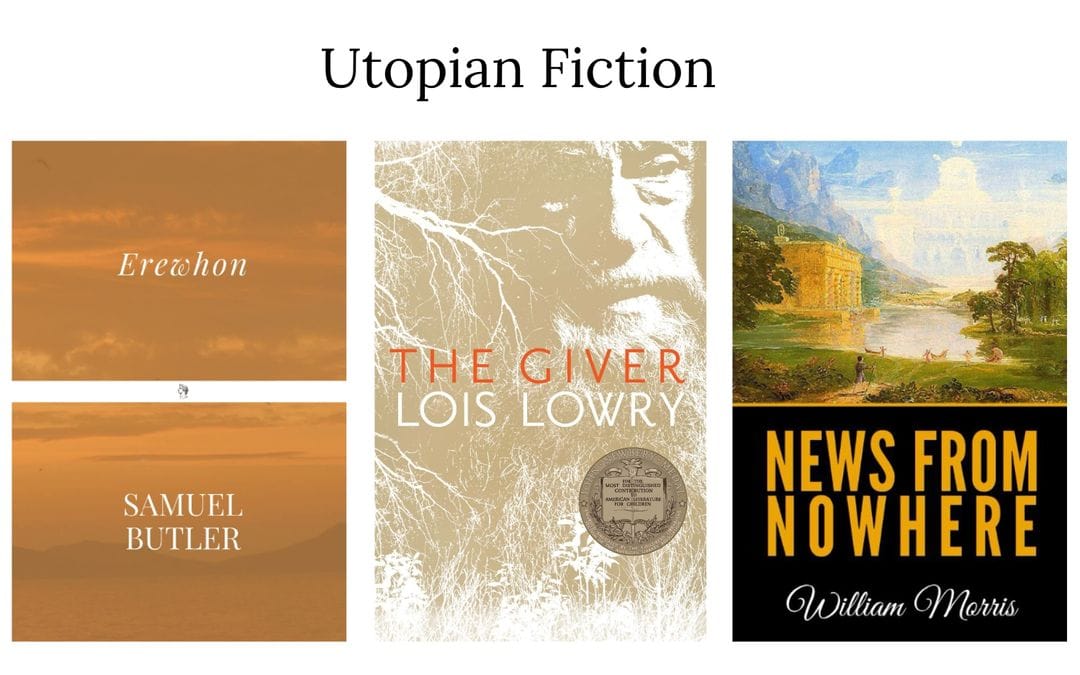
Utopian Fiction is a style of fiction that takes place in an idealized society, where everything is as good as it can possibly be. Utopian fiction typically includes the intrusion of conflict into an otherwise perfect world. It is not uncommon for the intrusion of this conflict to ultimately cause the seemingly perfect society to crumble as certain truths come to light.
Western Fiction
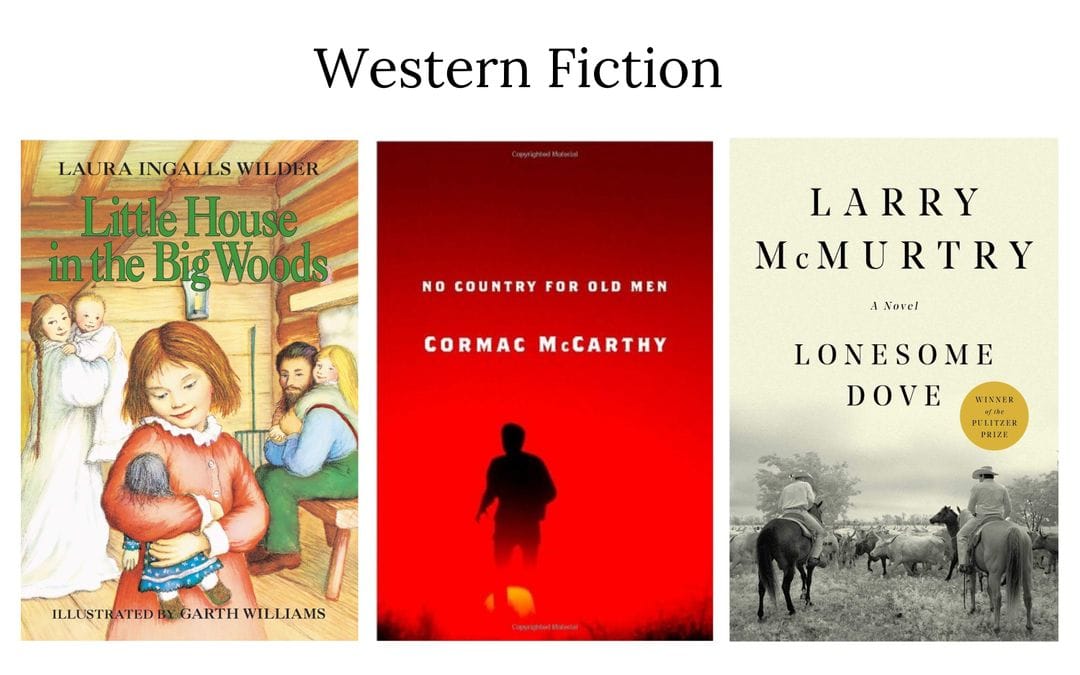
Western fiction typically takes place in the American Old West. It is set from the late eighteenth century to the late nineteenth century and covers such themes as bounty hunters, cattle driving, the gold rush, and prairie settlements.
Women’s Fiction
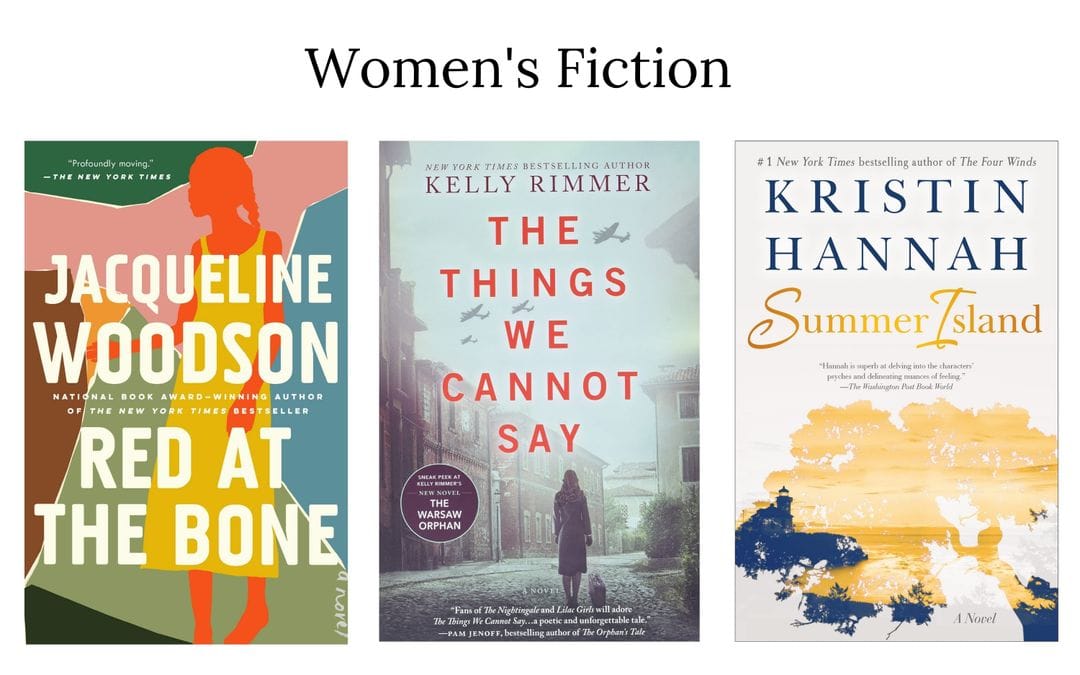
Women’s fiction refers to an overarching group of books targeted toward women. These books typically reflect on the shared female experience and the role of women in society. Women’s fiction often includes themes that revolve around the home, family, and community. These books focus on the growth of the female protagonist as they navigate their way through such real-life challenges as divorce, illness, job loss, or betrayal.
Young Adult
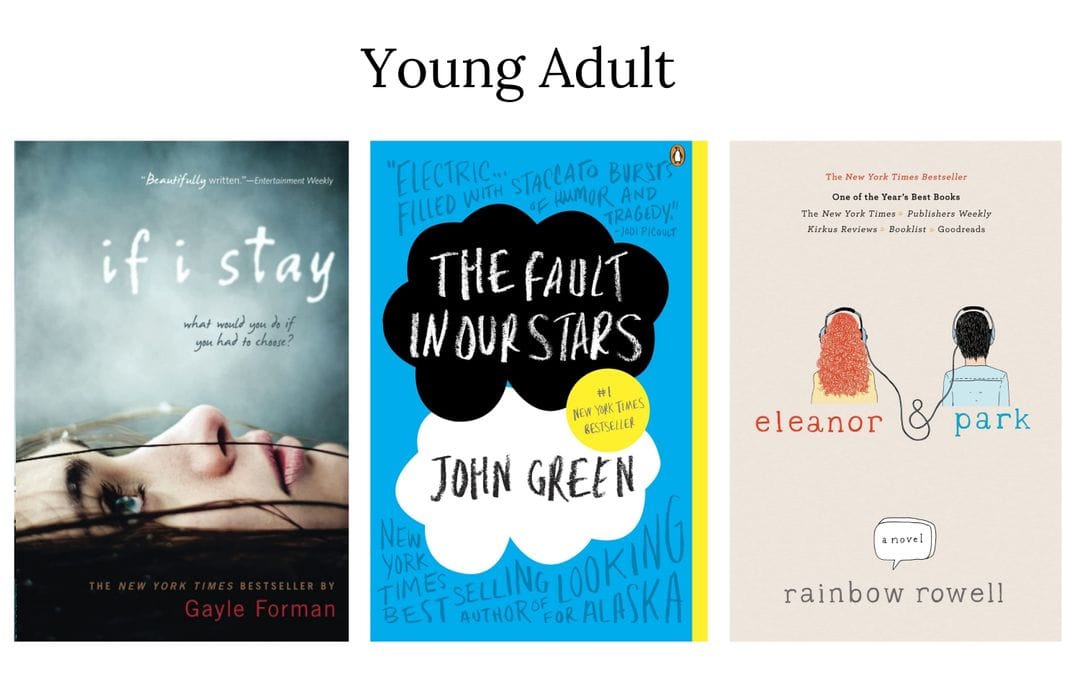
Young adult books cover a large swatch of genres. What holds this genre together is the age of the protagonists. Typically ranging from 13-17, young adult novels are coming of age novels in which the protagonists cope with the unique challenges of adolescence.
Nonfiction genres
Unlike fiction, which is made up by the authors nonfiction is fact-based. Whether an accounting of an author’s life, a list of recipes, or a deep dive into business, nonfiction must be true, and authors are held accountable for the veracity of the words they put on paper. Still, nonfiction is varied, with many different genres.
Art and Photography
Art and photography books tend to fall into the category of “coffee table” books. Meant to be admired more than read, they may discuss an artist’s work in detail or simply showcase their work.

Biography
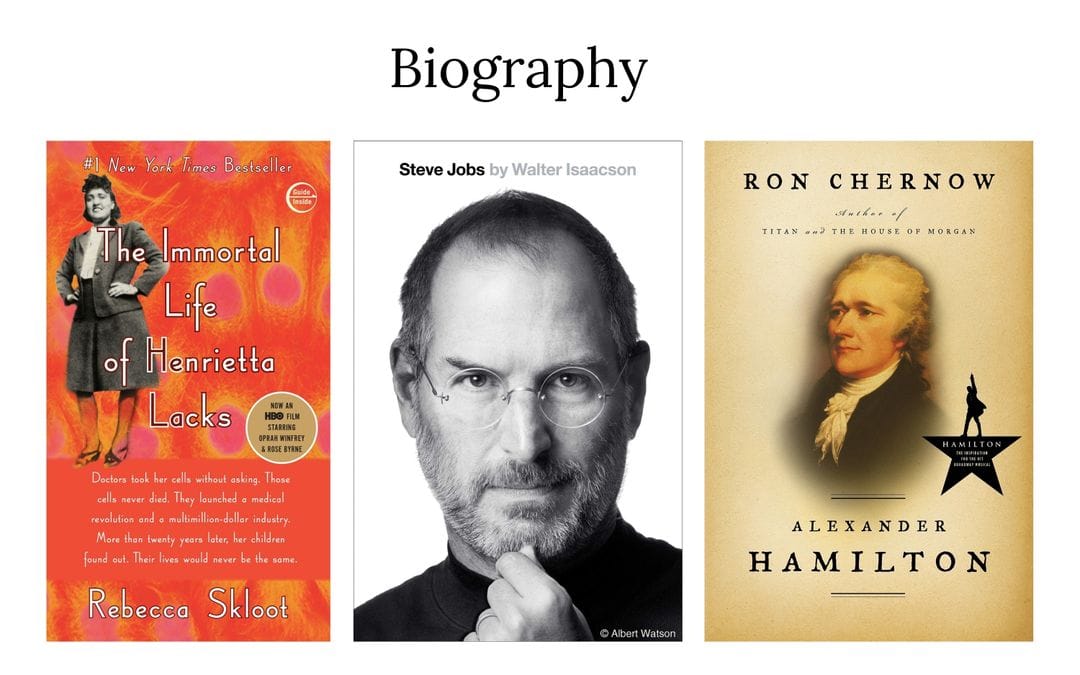
Like autobiography, biographies chronicle the life of a person of interest. Biographies are not written by the person whose life they detail, however. Often biographies are written long after a person of interest has died, and look back at the entirety of their life.
Cookbooks
Cookbooks are more than just a collection of recipes. They are often an introduction to a chef and a particular style of food that they either find to be important or that has shaped them. These days, cookbooks frequently cater to either a particular style of food or to a diet plan.

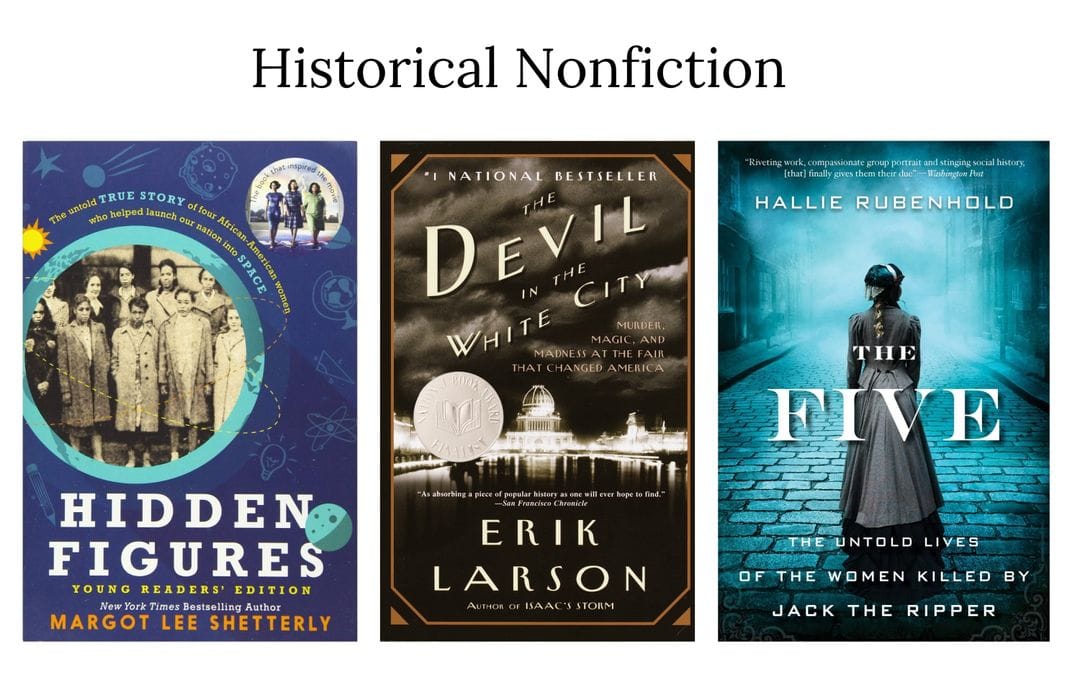
Historical Nonfiction
Historical nonfiction focuses firmly on the facts of a historical event. These books are incredibly well-researched as every fact in them must be accurate. The goal of this book is to educate readers on any given topic. While history textbooks would technically fall into this category, most historical nonfiction is a bit more exciting!
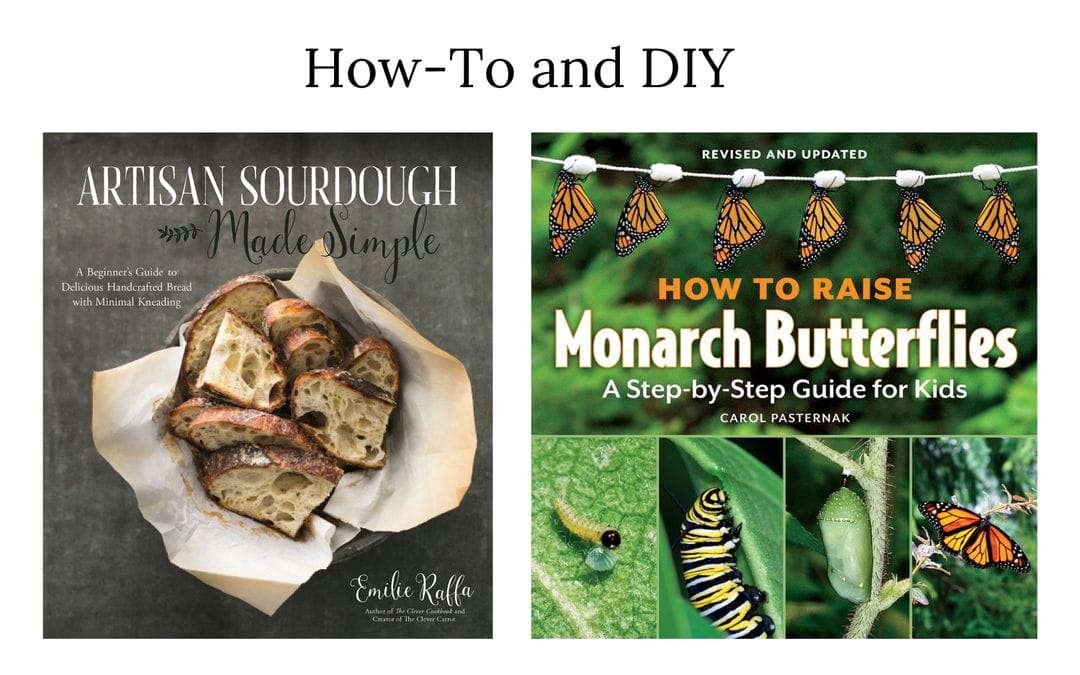
How-to and DIY
How-to books and DIY, otherwise known as Do-It-Yourself, offer readers a way to develop a hobby, skill, or craft. Often the nature of these books is clear from the title, which clearly indicates what it the book will teach the reader how to do.
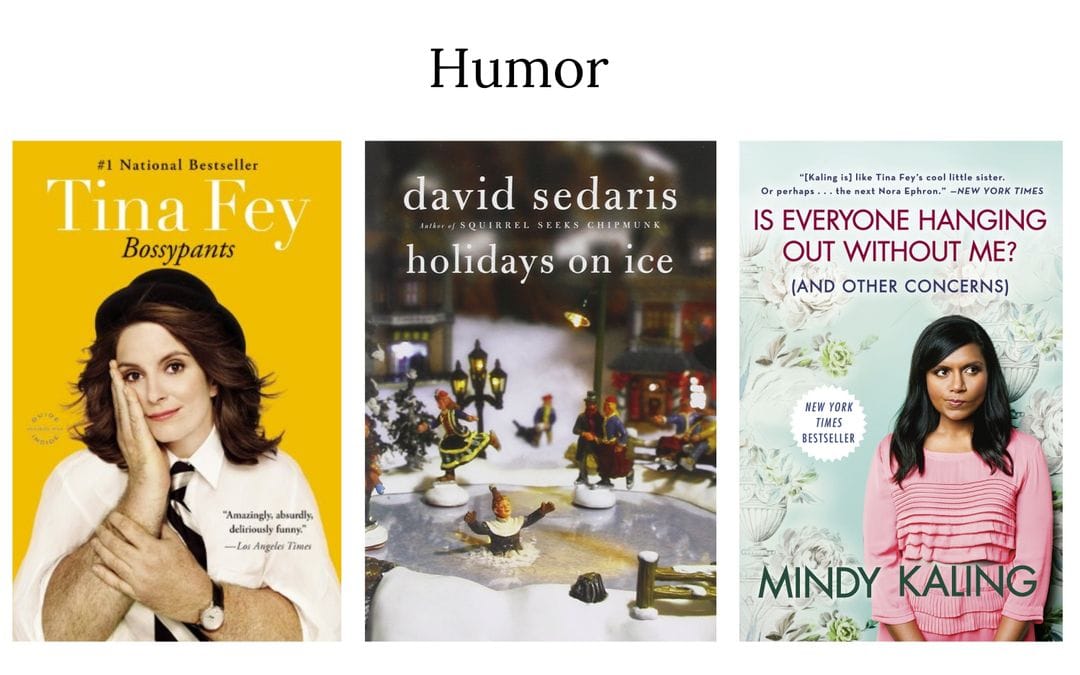
Humor
More often than not, humor is written in the form of a memoir or a satirical essay. As opposed to typical memoirs that focus on serious topics, humor focuses on the light-hearted nature of people’s lives. The goal of humor is simple: to make people laugh!
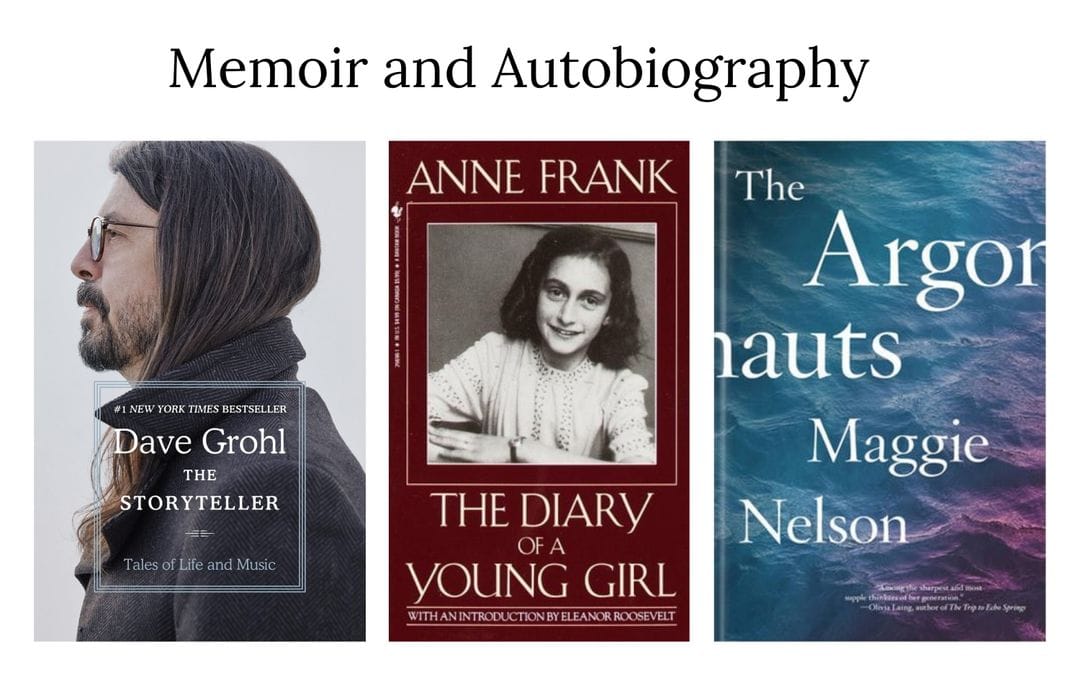
Memoir and Autobiography
Memoirs and autobiographies each provide an account of an authors’ life, as written by the author. The difference is that memoirs tend to focus on a certain defining moment in an author’s life while an autobiography focuses on an author’s accomplishments.
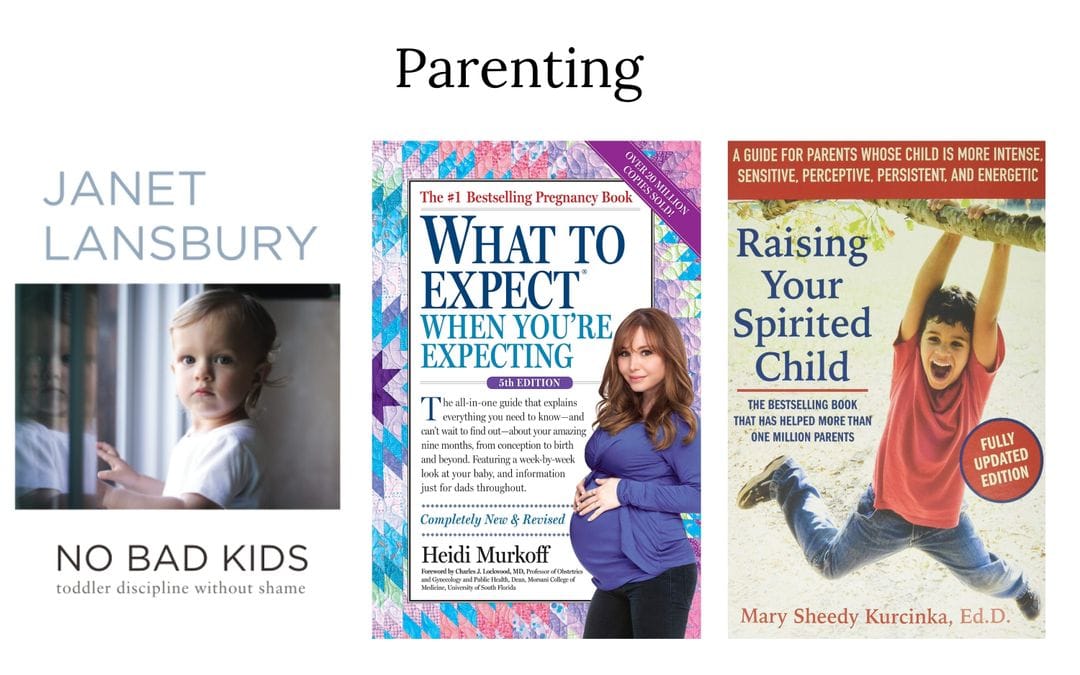
Parenting
Parenting encompasses a wide range of subjects, from how to discipline a child to how to homeschool a child to how to prepare for children. Any book that offers advice on how to raise or maintain a family typically fits into this genre.
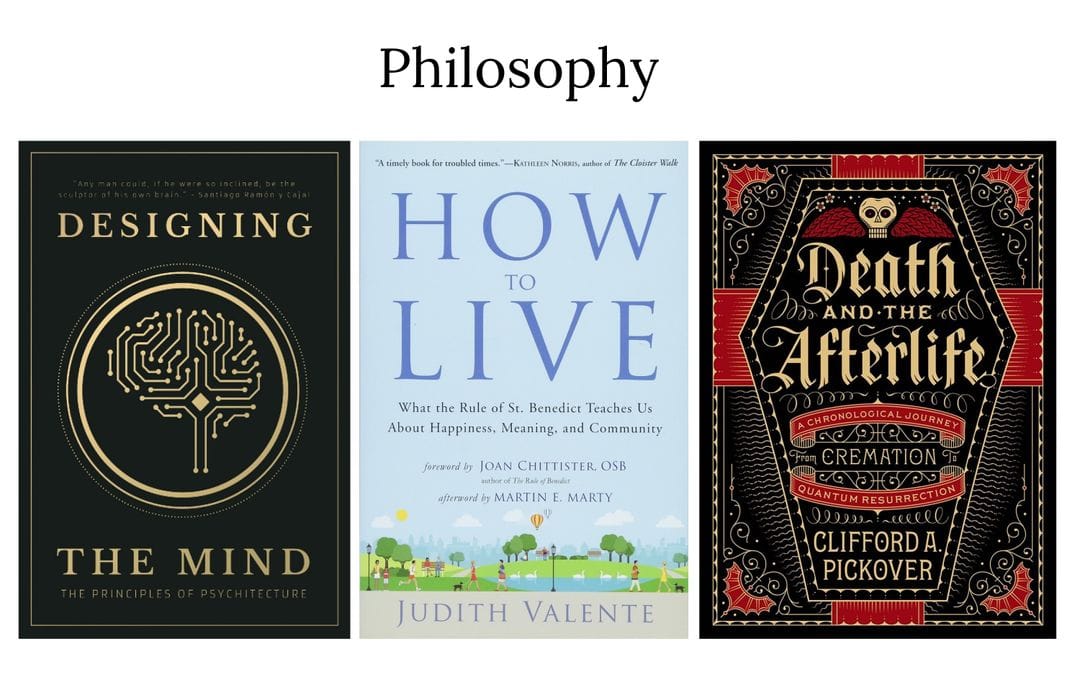
Philosophy
Philosophy nonfiction includes an exploration of such topics as ethics, the purpose of life, and the understanding of the human condition. These books used to belong to such classical philosophers as Aristotle and Plato, but these days they are becoming more common and more accessible.
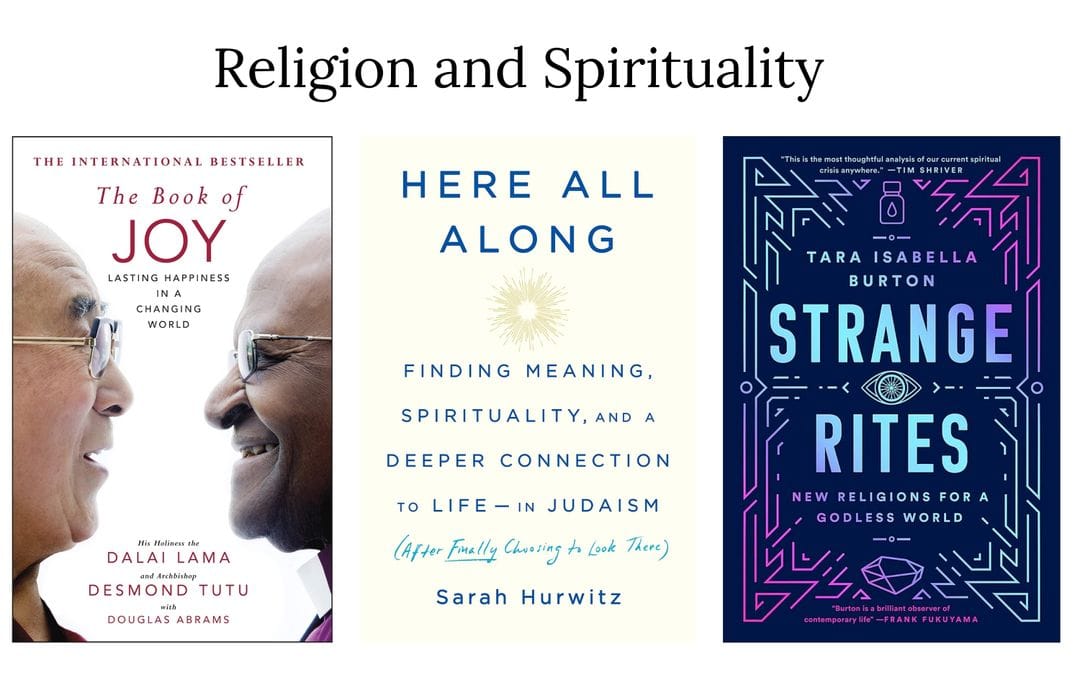
Religion and Spirituality
Religion and Spirituality is a broad genre, and can encompass anything related to either religion or spirituality. Religion and spirituality books range from a history of the church or a spiritual memoir and everything in between.
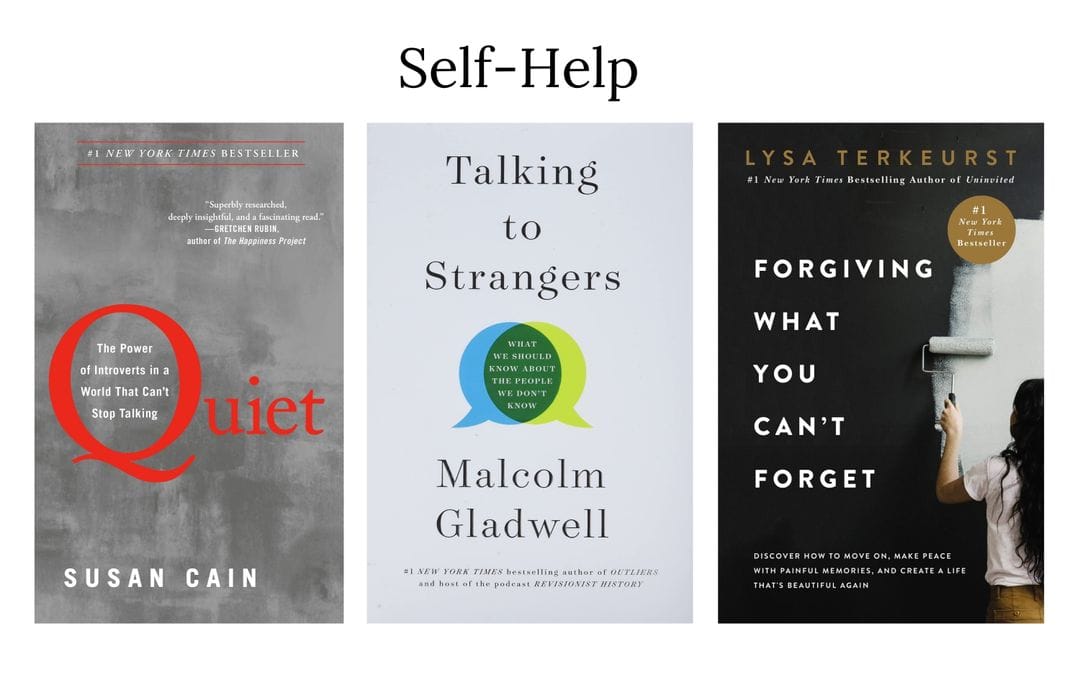
Self-Help
Self-help is one of the most popular nonfiction genres. These books exist to help people help themselves. Self-help can cover a variety of topics, from managing your finances to learning how to stay organized. At their core, self-help books are mean to uplift a reader and give them a definitive path forward toward solving their problems.
Travel
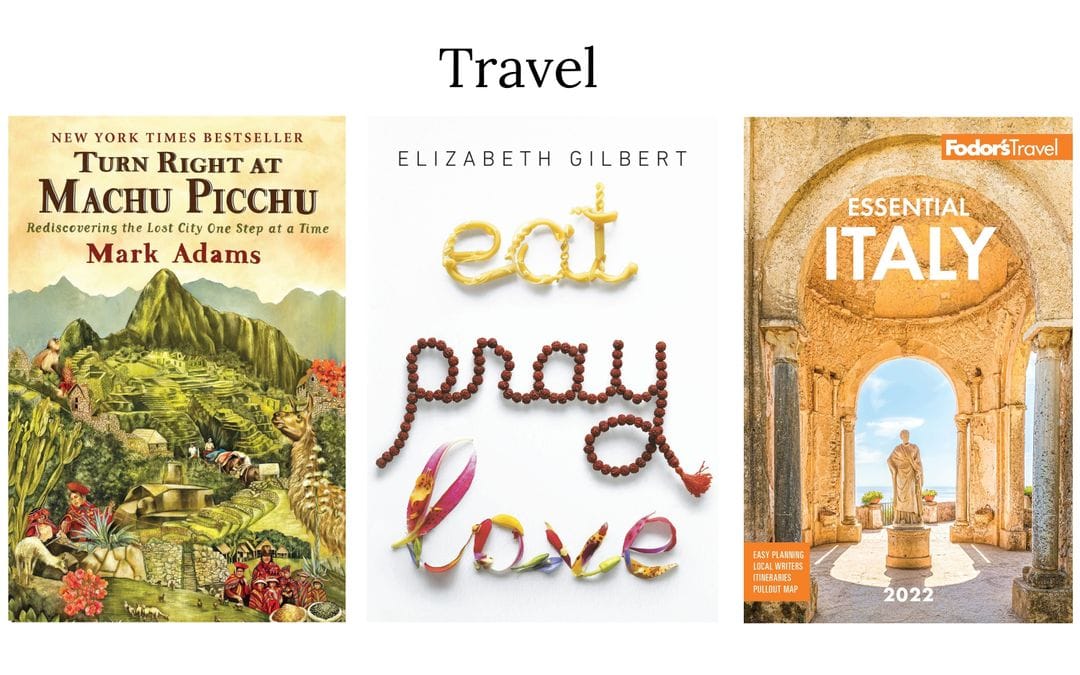
Travel books come in many shades. They may be actual guidebooks, or may appear in the form of travel memoirs with an author sharing their own journey and the path they followed. Travel books often feature suggestions on what sights to see, where to eat, and where to stay.
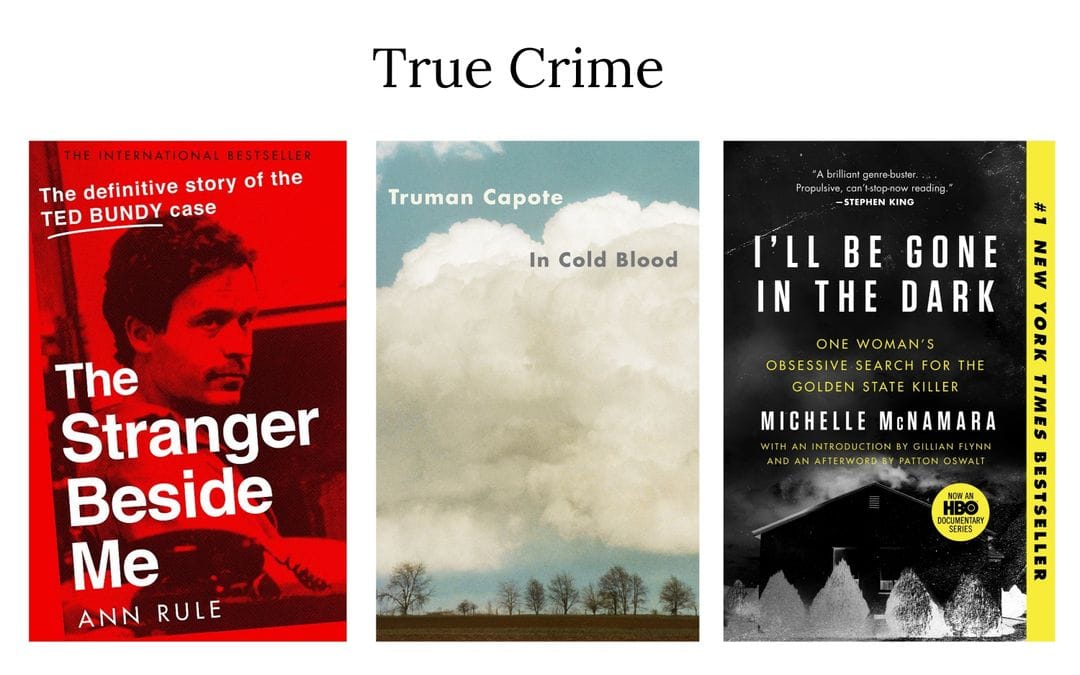
True Crime
True crime is a nonfiction genre in which the author examines an actual crime from start to finish, detailing not just the crime, but the policework that went into solving the crime and the ways in which real people were affected by crimes. True crimes are most often stories about high profile murders.