What is First Person Point of View: Writing in First Person
Contents
When you think of your favorite book, what is the first thing that comes to mind? I’d be willing to bet it’s the characters. Most stories stay with us not because of what happens in them, but because of the indelible mark the characters leave on our minds. Their actions, their feelings, their motivations . . . these are the things we remember long after the minor plot points have been forgotten. Take for instance, J. D. Salinger’s Holden Caulfield or Harper Lee’s Scout Finch. These larger-than-life fictional characters stay with us because of their intensely rich voices that resonate across the page and throughout the narrative. But creating a rich, memorable character is not easy, and it’s important to remember that the most unforgettable ones are those with deep backstories, inner flaws, and a clear and distinct voice.
So how do you find a character’s voice, and how do you share their story with a reader? It all starts with determining a character’s point of view.
What is a point of view?
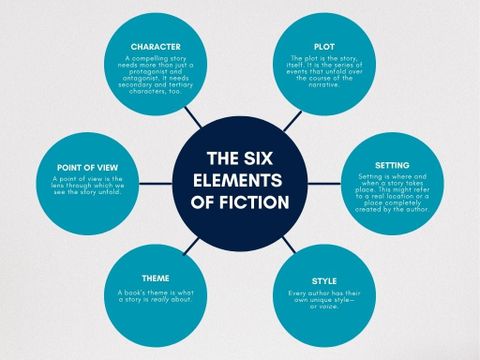
In writing, a point of view is the lens through which we see the story unfold. It informs what we know about the protagonist of a book, and all those characters floating around them. It is how we see (and interpret) the world in which the characters live, and it controls how much we know (or don’t know) about what is happening. As an author, one of the first things you will need to decide is what point of view you want to use when telling your story. Let’s take a look at the options!
What are the three points of view in writing?
In fiction writing, there are three points of view. First person point of view, second person point of view, and third person point of view.
What is first person point of view?
First person point of view is a story told from the perspective of a story’s narrator. This type of storytelling relies on the pronouns I, me, we, and us.
First person narration creates an intimate relationship between the narrator and the reader, inviting the reader into the narrator’s innermost thoughts. A first person narration may put the reader right into the action, experiencing it with the narrator as it unfolds, or it may offer distance, relating and reflecting on the events of a story that has already happened.
Pro Tip: First person point of view is also common in nonfiction works like memoirs and autobiographies that require a trustworthy author/narrator.
What is second person point of view?
Second person point of view is written in a style that addresses the reader directly. This type of storytelling relies on the pronouns you, your, and yours.
In fiction, second person point of view makes the reader the star of the story. Everything unfolds through the reader’s eyes as they are told what they experience. One of the most common uses of second person is “choose your own adventure” novels where the reader is asked to make decisions and learns the consequences of their actions.
Pro Tip: Second person point of view is also common in nonfiction works, particularly self-help books.
What is third person point of view?
Third person point of view tells the story from an outside perspective and uses the pronouns he, she, it, they, him, her, his, and them. This point of view provides the writer with more freedom to show the entire world, and provides some distance between the reader and the narrator. In fiction, third person is the most commonly used point of view.
 Related articleBook Genres: 85 Genres & Subgenres of Fiction & NonfictionA book genre list with definitions, categorizations, & examples of the 33 top book genres across fiction and nonfiction, with a look at their 52 subgenres.Read the article →
Types of first person point of view
Writing in first person means telling a story through a character’s eyes. But who that character is—and what their role in a story is—may vary. When writing a book, always remember that there are two sides to every story. But unless you are writing from an alternating point of view, a first person narrative will only tell one side of that story. So whose side do you want to tell? And how central to the story should your narrator be to tell the most compelling tale? That depends on the kind of first person narrative you’re writing.
First person central narrative
In a first person central narrative, the narrator is the protagonist, or main character of the story. They are at the center of the story. One example of this is Charlotte Brontë’s masterpiece, Jane Eyre. Here, the title character is also the narrative’s protagonist Employing a first person point of view enables readers to become deeply invested in Jane’s pursuit of independence. Take a look at the following excerpt from the book.
“He was, in short, in his after-dinner mood; more expanded and genial, and also more self-indulgent than the frigid and rigid temper of the morning; still he looked preciously grim, cushioning his massive head against the swelling back of his chair, and receiving the light of the fire on his granite-hewn features, and in his great, dark eyes; for he had great, dark eyes, and very fine eyes, too—not without a certain change in their depths sometimes, which, if it was not softness, reminded you, at least, of that feeling.
Note in this excerpt how the reader sees Jane’s innermost feelings about Mr. Rochester. We are invited to see how her mind strays when she looks at his eyes and are given a hint of her true feelings toward him that would not be possible if we were not in her head.
First person peripheral narrative
In a first person peripheral narrative, the narrator is a secondary character, or a spectator to the primary narrative. Often such a character is able to see things the protagonist cannot. A peripheral narrative can offer a wider view of the world while still maintaining the intimacy of first person storytelling. F. Scott Fitzgerald’s novel The Great Gatsby, is one such example of a peripheral narrative. While the focus of the story is on millionaire Jay Gatsby and his love interest, Daisy, the novel is told from the first person point of view of Nick Carraway. It is Carraway who gives readers a front row seat to the love story between Gatsby and Daisy Buchanan. Below is an example showing how this peripheral narrative sets the scene for intrigue surrounding the enigmatic, and impossibly rich, Gatsby:
“I believe that on the first night I went to Gatsby’s house I was one of the few guests who had actually been invited. People were not invited — they went there. They got into automobiles which bore them out to Long Island, and somehow they ended up at Gatsby’s door. Once there they were introduced by somebody who knew Gatsby, and after that they conducted themselves according to the rules of behavior associated with amusement parks. Sometimes they came and went without having met Gatsby at all, came for the party with a simplicity of heart that was its own ticket of admission. I had been actually invited. ”
This small piece gives us a telling look at Gatsby’s world, the way people flow in and out of it, and the sense of belonging that Carraway feels from actually being invited into it.
Why authors write in first person
There are many reasons a writer might choose to write a book from a first person point of view. Perhaps one of the most obvious is that the first person point of view comes naturally to us. This is the perspective we use when telling stories about our own lives. It is how we think, talk, and perceive the world around us. It is how we tell people what we have done.
But first person perspectives can serve a number of other purposes, from giving a narrator credibility to creating intense suspense in a story. Let’s take a closer look at what a first person narrative can do:
Builds trust
A first person narration is meant to build trust. By inviting a reader into the narrator’s mind, we establish an intimacy that makes us trust the narrator. We are experiencing events with them, at the same time as them, and have no reason to doubt what they are telling us. After all, we are getting their gut reactions. We are seeing what they are truly thinking . . . right?
In most cases, yes. Take a look at the opening lines from Ishmael by Daniel Quinn:
The first time I read the ad, I choked and cursed and spat and threw the paper to the floor. Since even this didn’t seem to be quite enough, I snatched it up, marched into the kitchen, and shoved it into the trash.
These lines show us a visceral reaction on the part of a narrator. They make us feel his anger. And they make us feel that we can trust him, because we are truly seeing who he is and how he thinks.
But there is a catch when it comes to first person narratives, and it’s called an unreliable narrator.
What is an unreliable narrator?
An unreliable narrator is one we actually cannot trust to tell us the truth. Just because we are in the narrator’s head, that doesn’t mean we are seeing every thought they have. Sometimes those thoughts have been curated to show only what the narrator wants the reader to see. Sometimes scenes have been omitted to paint only one side of a picture. And sometimes even the narrator doesn’t know the full picture or can’t see it clearly. Think for a moment about Holden Caulfield. He is telling his story from an insane asylum. If he, as the narrator, is not mentally sound, we must question whether the story he shares is true.
Another example of this is the character of Pi Patel from Life of Pi. Stranded at sea, dehydrated and starving, this character spins yarns about what happens to him. But is his narrative accurate or is it driven by hunger-fueled hallucinations? As the reader, we have no way of knowing. An unreliable narrator can add a level of intrigue to a story, particularly when the narrator’s deception isn’t revealed until the end of a book. Suddenly, everything we thought we knew is turned on its ear and we must reread to look for the lies scattered among the truths—or the truth scattered among the lies!
 Related articleHow Many Words are in a Novel: Standard Word Counts by GenreA guide to standard word counts by genre, with a detailed explanation of why word count is critical to successfully publishing a book.Read the article →
Establishes familiarity
In Charles Dickens' Great Expectations, readers sense a certain familiarity with the novel’s protagonist, Philip Pirrip, or more affectionately, Pip.
“I give Pirrip as my father's family name, on the authority of his tombstone and my sister—Mrs. Joe Gargery, who married the blacksmith. As I never saw my father or my mother, and never saw any likeness of either of them (for their days were long before the days of photographs), my first fancies regarding what they were like, were unreasonably derived from their tombstones. The shape of the letters on my father's, gave me an odd idea that he was a square, stout, dark man, with curly black hair. From the character and turn of the inscription, "Also Georgiana Wife of the Above," I drew a childish conclusion that my mother was freckled and sickly.”
Notice in these opening lines how Pip presents himself on equal footing with the reader; he does not pretend to be anything special, and is in many ways quite unsure of himself. This immediate sense of familiarity with Pip creates a common ground between the narrator and reader, and ultimately, entices the reader to invest in this character and champion Pip over the course of the novel as he overcomes hardships:
Creates suspense
One of the most interesting things about a first person narrative is that we as the reader can only know what the narrator knows. We don’t get to look at the outside world and learn more than our narrator, because the entire story is told through their lens. In some ways, this can be very limiting. But it can also be an effective tool for creating suspense, particularly in thrillers or mysteries. By only knowing what the narrator knows, we must wait patiently for the story to unfold to discover what really happened. There are no outside forces to give us extra hints or to show us something the narrator may have missed. If the narrator doesn’t know something, neither does the reader!
Highlights a particular point of view
In any story, there are a number of characters who could be the narrator. A first person narrative locks the author—and the reader—into a particular take on the story. Think for a moment about the story The Adventures of Huckleberry Finn by Mark Twain. This story follows the adventures of young Huckleberry as he runs away with Jim. Told through Huckleberry’s eyes, we get his particular view of the world. But how would this story have changed had it been told through Jim’s eyes? What would the same sequence of events have looked like as told by a runaway slave? This certainly would have been a different story, but it is not the one that Twain chose to tell.
 Related articleWord Counts: Short Stories, Novellas and Novelettes LengthWord counts: Why word count is important and a detailed guide to the word counts of novellas, novelettes, and short stories.Read the article →
How to write in first person
Writing in first person can be an incredibly effective method of storytelling. But in order to do it well, there are a things you’ll want to do first, and a few tricks to keep in mind.
Study other first person books in your genre
Before writing any story, it’s important to read similar books. Study how other authors maneuver their narrators through a story from a first person point of view. Take notes on tone, setting, voice, and how the character reacts on the page.
Decide if your story is best told from a first person point of view
Ask yourself how close you want the reader to be to your story. Here’s a simple writing exercise to help you decide: write the same scene from both a first- and third-person point of view. Which felt more natural to write? Was the story delivered in a satisfactory way?
Decide if your narrator is a central or peripheral character
Deciding whether or not to write from a central or peripheral perspective might be the most important decision you make before starting your novel. Why? Because it determines how close the reader is to the action playing out. Do you want your reader up close and personal with your book’s protagonist, or would you rather offer more distance and perspective on the character? Both are powerful tools when used correctly.
Develop a strong backstory for your narrator(s)
In order for a reader to feel invested in your story’s protagonist, you’ll need to create a rich backstory for your character. If writing from multiple first person viewpoints, you’ll need to set the stage for each character individually. Even if the narrator’s full backstory doesn’t make its way into the words on the page, it still impacts how the narrator sees the world. So give some serious thought to who your narrator is, where they come from, and what biases may impact their thinking.
 Related articleCharacter Questionnaire: 180 Character Development IdeasA character questionnaire with180 character development questions to help authors build richer, more authentic, and more engaging characters.Read the article →
Write a memorable opening line or paragraph
Open your story with the narrator’s voice. Delivering a punchy, snappy line that tells readers right away that the story will be told in a first person point of view. Here are a few iconic first lines:
- “I am an invisible man.”— The Invisible Man by Ralph Ellison
- “It was a queer, sultry summer, the summer they electrocuted the Rosenbergs, and I didn’t know what I was doing in New York.”— The Bell Jar by Sylvia Plath
- “You don’t know about me, without you have read a book by the name of The Adventures of Tom Sawyer, but that ain’t no matter. That book was made by a Mr. Mark Twain, and he told the truth, mainly.”— The Adventures of Huckleberry Finn by Mark Twain.
Stick to one point of view
Within any narrative, a character’s voice must be distinct, but nowhere is that more important than with a first person narrative. Once you’ve chosen to tell a particular character’s story, stick with them! And take care not to break character. It’s easy as a writer to slip into your own voice, but don’t. Your character’s voice must always be the one telling the story.
Pro Tip: Remember when giving your character a voice that this goes beyond simply creating dialogue, which is what the whole world hears. In a first person narrative, a character’s voice is displayed through their innermost thoughts, feelings, and emotions.
Show, don’t tell
When writing from a first person point of view, avoid using phrases like “I heard,” “I saw,” or “I think.” Since the reader will already be privy to the narrator’s thoughts, feelings, and emotions, there’s no need to be redundant in using unnecessary pronouns. Take a look, for example, at the following sentences:
I saw the bird fly into the sun. The bird flew into the blistering sunlight and was lost.
Craft stronger, richer language by avoiding these unnecessary phrases. The reader will already know the information being provided to them is what the narrator is personally experiencing. And remember, there’s no need to italicize thoughts in a first person narrative.
 Related articleShow, Don't Tell—A Guide to Stronger Writing, with ExamplesA comprehensive guide to what "Show, Don't Tell" means, how to show rather than tell, and how showing can make you a better writer, and your book a better book, with show don't tell examples of what to do and what not to do.Read the article →