What Are The Best Children's Book Sizes | Standard Book Sizes
Contents
When it comes to self-publishing a children's book, one of the first decisions you will need to make is the book size. But what is book size, and how does it impact all aspects of your book? Let's take a look.
What is book size?
Book size, also known as trim size, is the actual book dimensions. Book size is measured in length by height. A trim size of a 8.5" x 11" has a portrait orientation, while 11" x 8.5" has a landscape orientation.
Book size measures the interior of a book, also known as the book block. For a paperback book, the book cover size will be the same as the book block. For a hardcover book, however, this is not the case. The actual cover size on a hardcover book will roughtly .25" taller and .125" wider than the book block to accommodate for the hardcover case that wraps around the book block.
Pro Tip: The difference between trim size and the actual size of a hardcover book is small, but it can be enough to cause problems with mailing. While standard book sizes won’t typically cause a problem, if you’re considering a less than standard trim size, make sure you can find mailing envelopes to match!
Why is trim size important?
Choosing a book trim size may not seem important early on in the publishing process, but if you are publishing a picture book, it is essential. And sticking to that decision can mean the difference between success and failure! Why? Because picture books are created with art in mind. And illustrations that are created to the wrong size aren't easily fixed.
Imagine illustrating beautiful landscape scenes, only to realize that a book was designed as square. To make the illustrations fit, the sides of the art will have to be cut off. How about creating square illustrations, only to realize the art should have been portrait? Suddenly, what was a beautiful book is now filled with ugly white space at the top!
Take a look at the examples below. In the first, a page has been resized from portrait to landscape and square.
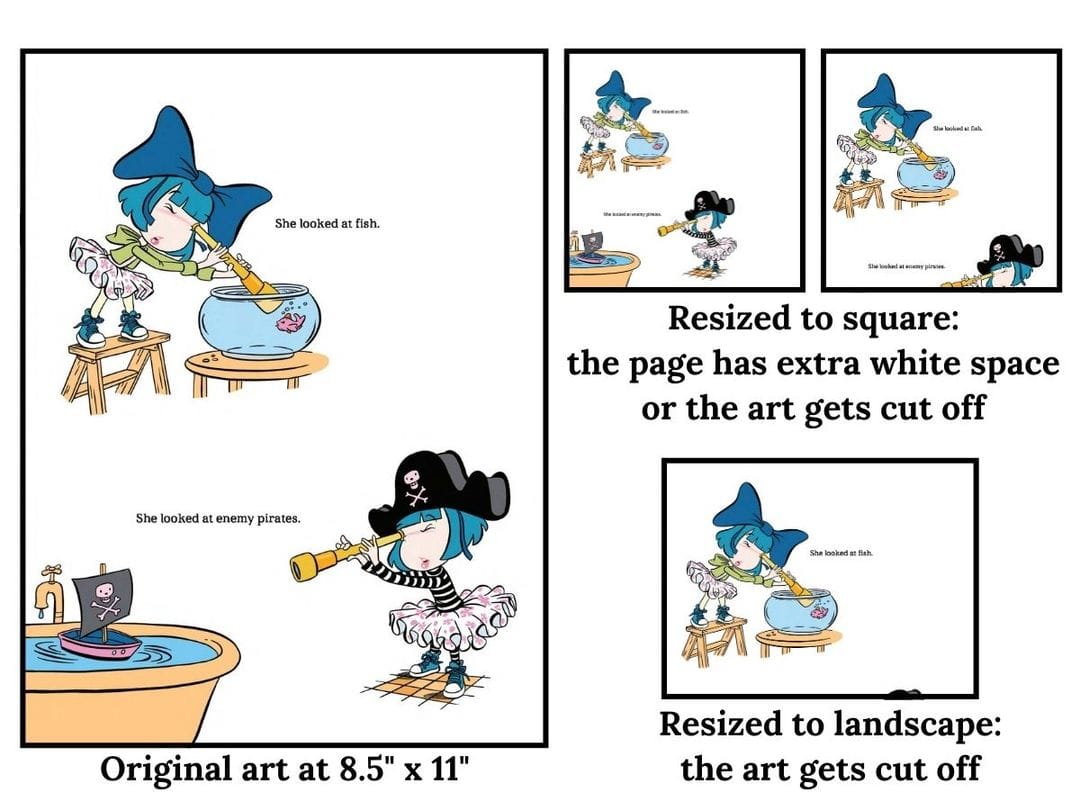
As you can see, the art gets cut off when changed to a size other than how it was originally drawn. Below is another example, this time moving from landscape to portrait and square.
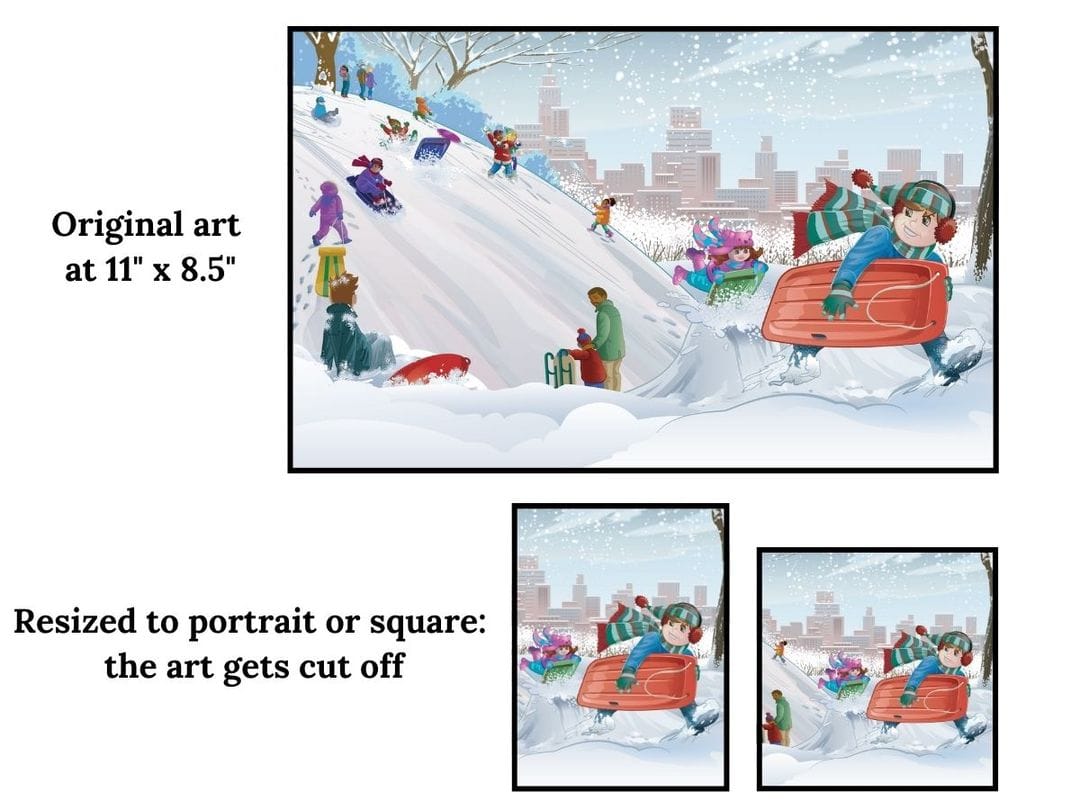
Before hiring an illustrator, do some research on standard book sizes. Decide what trim size feels right for the book. (And try pricing out the book sizes with a printer! If you intend to use an offset book printer, you’ll want to know that you can afford the trim size you’ve chosen. If you plan to do print on demand, you’ll want to make sure that the book trim sizes you are considering are an option! More on that below.)
 Related articleChildren's Book Printers: The Children's Book Printing BibleThe essential guide to hardcover children's book printing, offset book printing and a vetted list of children's book printers for hardcover book printing.Read the article →
What is book bleed, and how does it impact book size?
Book printing is a complicated process with a lot of moving pieces. One of those pieces is the trimming of the pages once they have been printed. It is not uncommon for pages to shift a bit when being cut. That's where book bleed comes in. Book bleed is extra art that extends beyond the trim size of your book. If your art was created only to the book size, a paper slip could result in a streak of white paper along the side of your book. Including bleed prevents this from happening. Book bleed is typically an extra .125" on the top, bottom, and outer edge of the page. (When printing in China, this may be measured a 3mm.)
 Related articleWhat Is Bleed in Printing: How to Print a Perfect Book!A detailed guide to full bleed printing with an explanation of crop marks, safety zone, margins and trim size with correct and incorrect full bleed examples.Read the article →
Whether you are printing on-demand or through an offset printer, do yourself a favor and download a print template for your book. The template will include bleed, giving you the exact size your illustrations should be drawn.
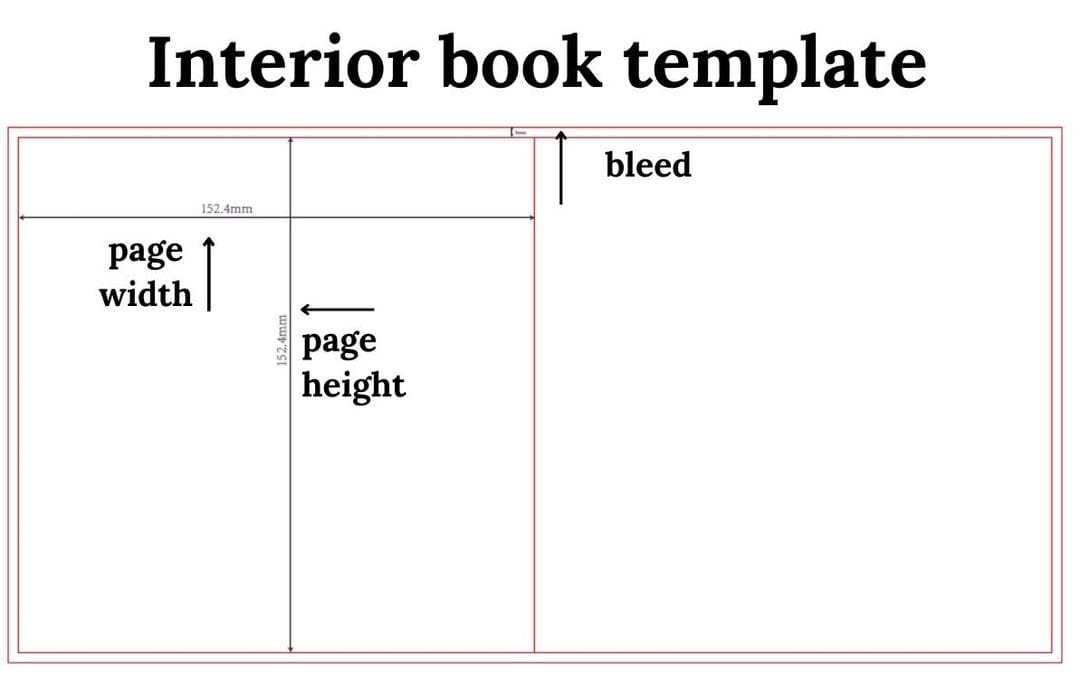
Pro Tip: When creating illustrations for the cover of a hardcover book, keep in mind that art will need to be even larger than the front cover of the book. That's because the art on a hardcover book cover wraps around the case, extending onto the inside front cover, where it gets covered by the first page of the book, called the pastedown page. Before beginning illustrations, be sure to get a cover template to determine the correct size for cover art.
Once a trim size has been decided on (and after editing a book!), it’s time for the next steps:
- hire an illustrator
- hire a book designer.
 Related articleHow to Find a Book Editor: 5 Steps to Hire the Right EditorThis 5-step process will teach you how to hire the best editor for YOUR book. Whether a children's book or novel, get your book ready to publish or query.Read the article →
Pro Tip: trim size matters most in picture books because of the art, but it impacts the layout of chapter books, middle grade, YA, and novels, too. Trim size will determine how many words fit on a page, and the page count of a book, so it’s worth doing a sample page design to see how a book looks at any given trim size. If the book feels wrong at that trim size, it’s better to find out early, not once the book layout is complete.
How to choose a children's book size
Book orientation
For a picture book, there are three options for book orientation: Square, Portrait (vertical), and Landscape (horizontal). In deciding the orientation of a book, it is important to consider what the illustrations need to show. A picture book about a giraffe will better in a portrait orientation to allow the illustrations to showcase the giraffe's height. A picture book about a walk on the beach, on the other hand, will likely work better with either a square or landscape orientation to show the beach stretching across the page, rather than up. Always considering what the illustrations will look like, and what orientation they are most suited to, when choosing a book size.
While you’re at it, think about whether most of the illustrations will be single pages or full spreads, as spreads become more landscape than single pages.
 Related articleA Template for Children's Book Layout, Pagination & DesignThis easy-to-follow children's book layout template will guide authors through picture book layout and story pacing, with sample 32 page picture book template.Read the article →
Portrait book orientation example
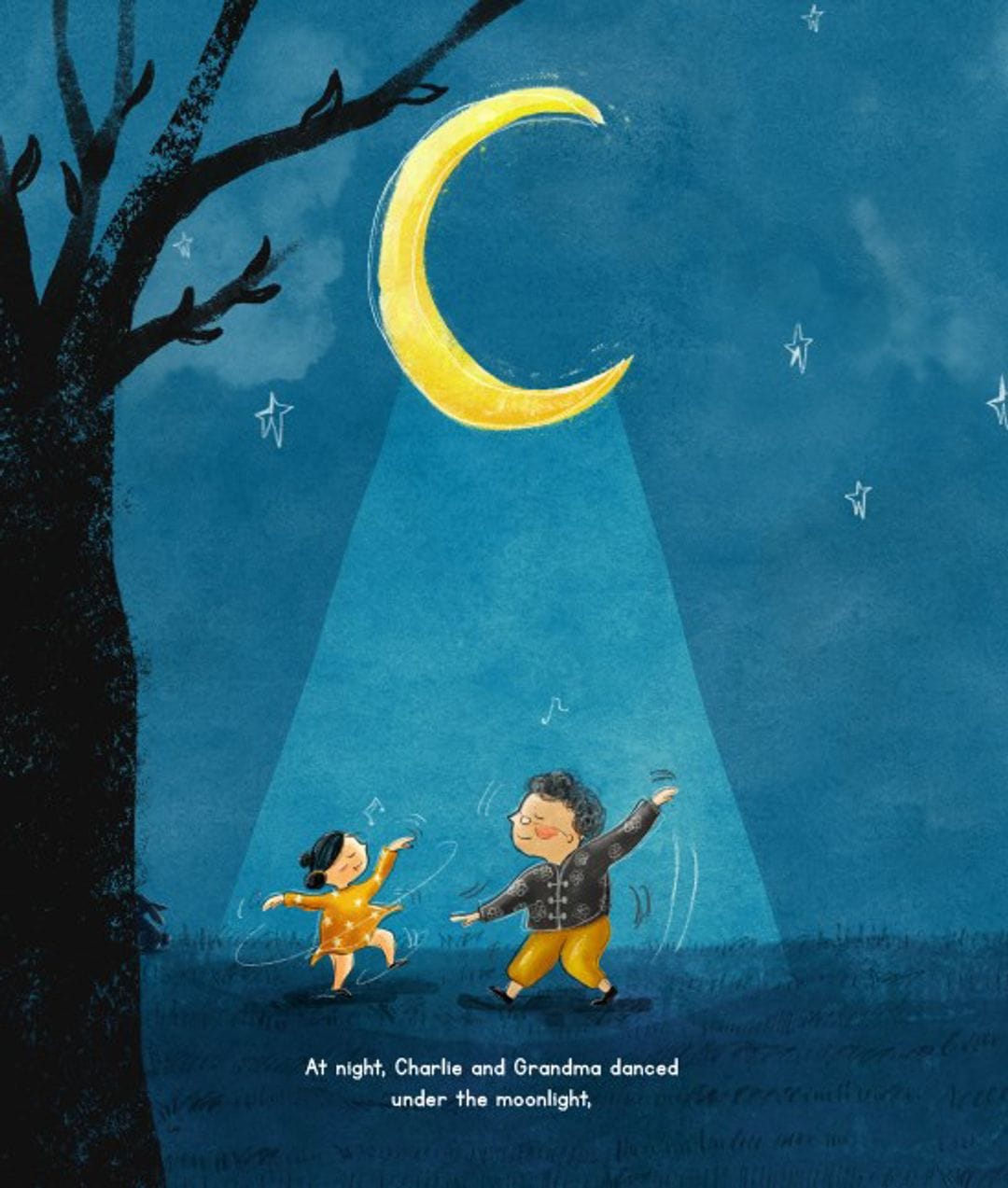
Portrait orientation is the most common book orientation in picture books. In this page from If You Miss Me by Jocelyn Li Langrand, we see both ground and the sky. It is important to the story that we see the characters dancing, but because the text specifically calls out that they are dancing under the moon, it is equally important to see the moon. By illustrating this image in a portrait orientation, the illustrator is able to give equal weight to both elements, without pushing one to the back or forcing the image to appear squished. This breathing room allows for a freer feeling that matches the tone of the page.
What are the best portrait children's book sizes?
For your reference, the book sizes below are listed in inches:
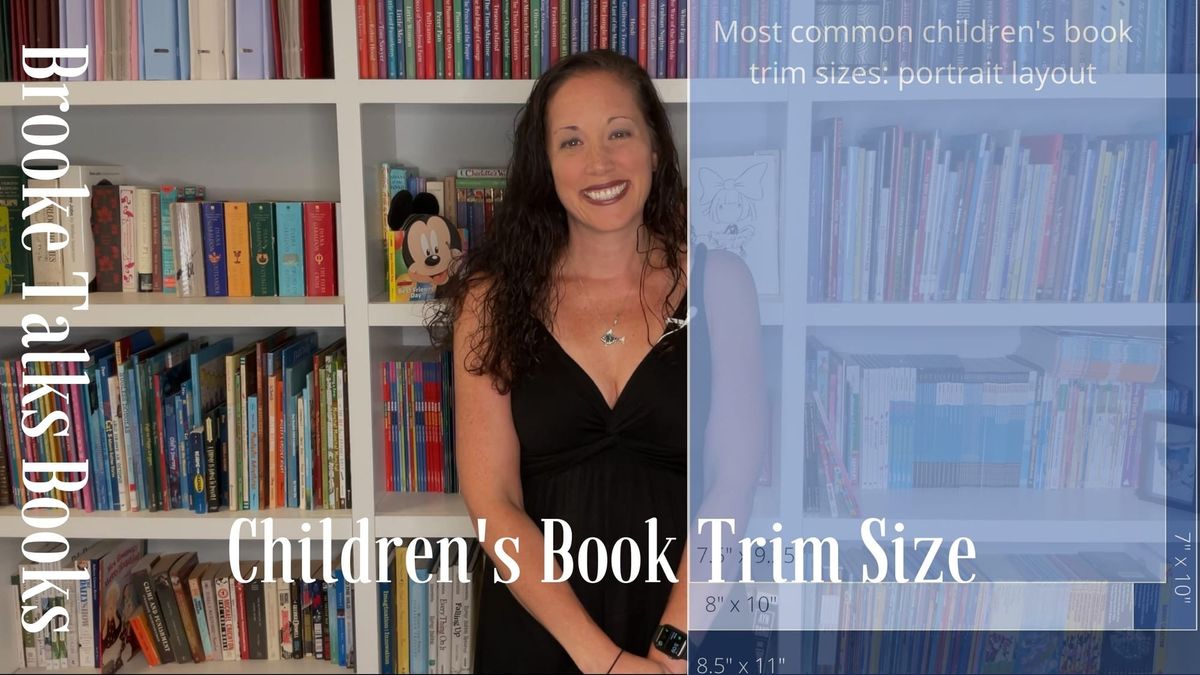
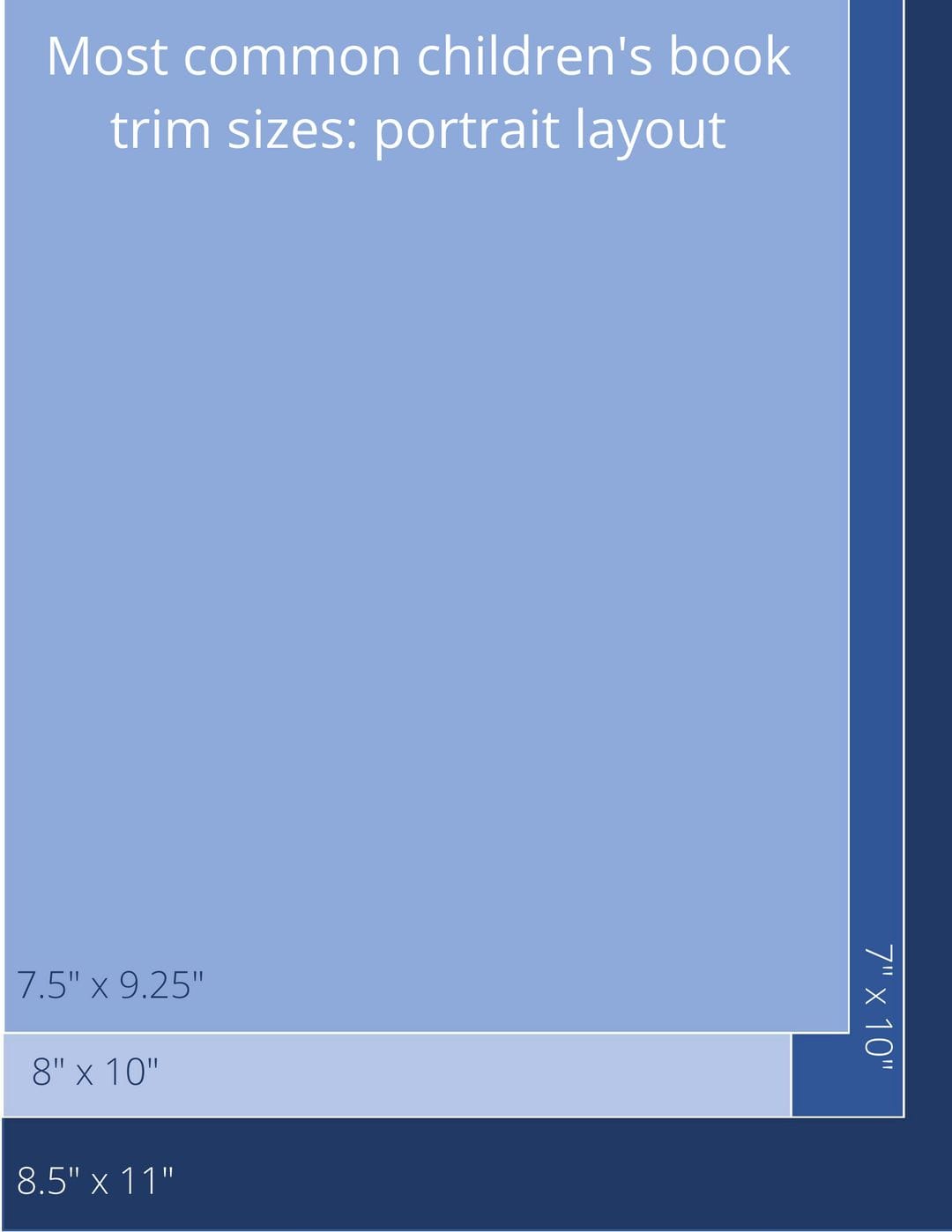
- Picture books: 7 x 9, 7.5 x 9.25, 8 x 10, and 8.5 x 11
- Early reader books: 6 x 9
- Chapter books: 5.25 x 7.75, 5.5 x 7.25, 6.5 x 8
- Middle grade: 5.25 x 7.5, 5.25 x 7.75
Pro Tip: Just because a trim size is common does NOT mean it is an option for print on demand. Always confirm available book sizes before beginning illustrations if you plan to publish a print on demand book.
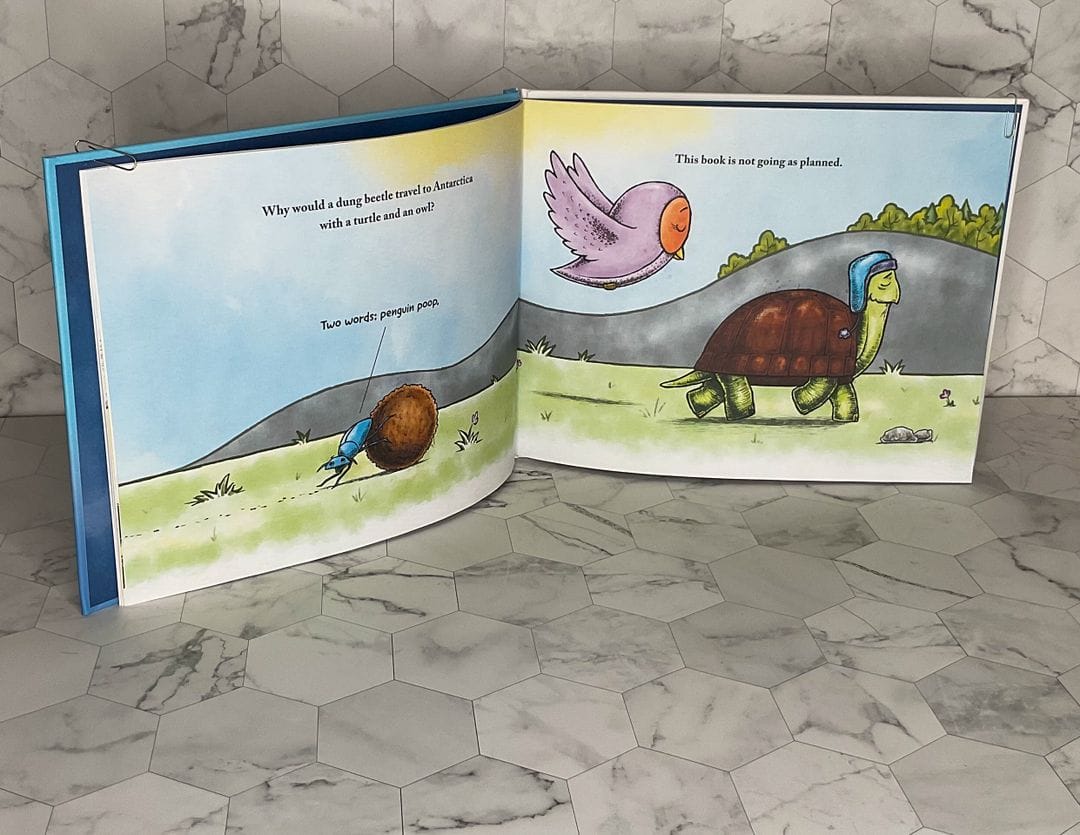
Landscape book orientation example
In this page from Except Antarctica by Todd Sturgell, we see a group of animals making their way across the landscape. The actual act of their journey and their forward progress toward Antarctica is the essence of the story. By setting this book in a landscape orientation, the illustrator accomplishes the feeling of making such a journey. If this book were in a portrait orientation, it would be more challenging to convey the distance being traveled by this group of animals.
Pro Tip: If you plan to use a print on demand model, be aware that IngramSpark offers ONLY ONE landscape trim size (11.5" x 8") while Amazon KDP DOES NOT OFFER ANY landscape book sizes.
What are the best landscape children's book sizes?
For your reference, the book sizes below are listed in inches:
- Picture books: 10 x 8, 11 x 8.5
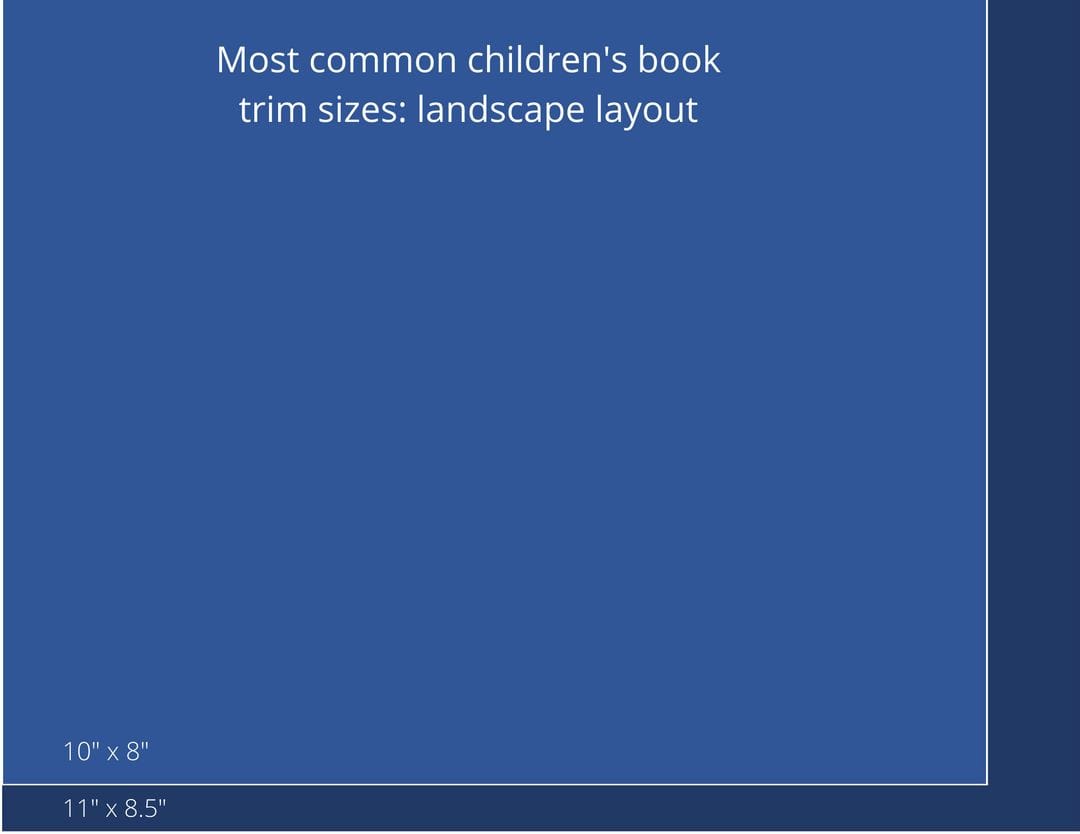
Pro Tip: Other than picture books, children's books are rarely in landscape orientation.
Square Orientation
Many authors and publishers choose to use a square orientation for picture books. Square orientation works well when the illustrations do not require extra height or length to convey a story. Do keep in mind when considering a square orientation that a full spread of art will still allow for a landscape scene.
What are the best square children's book sizes?
For your reference, the book sizes below are listed in inches:
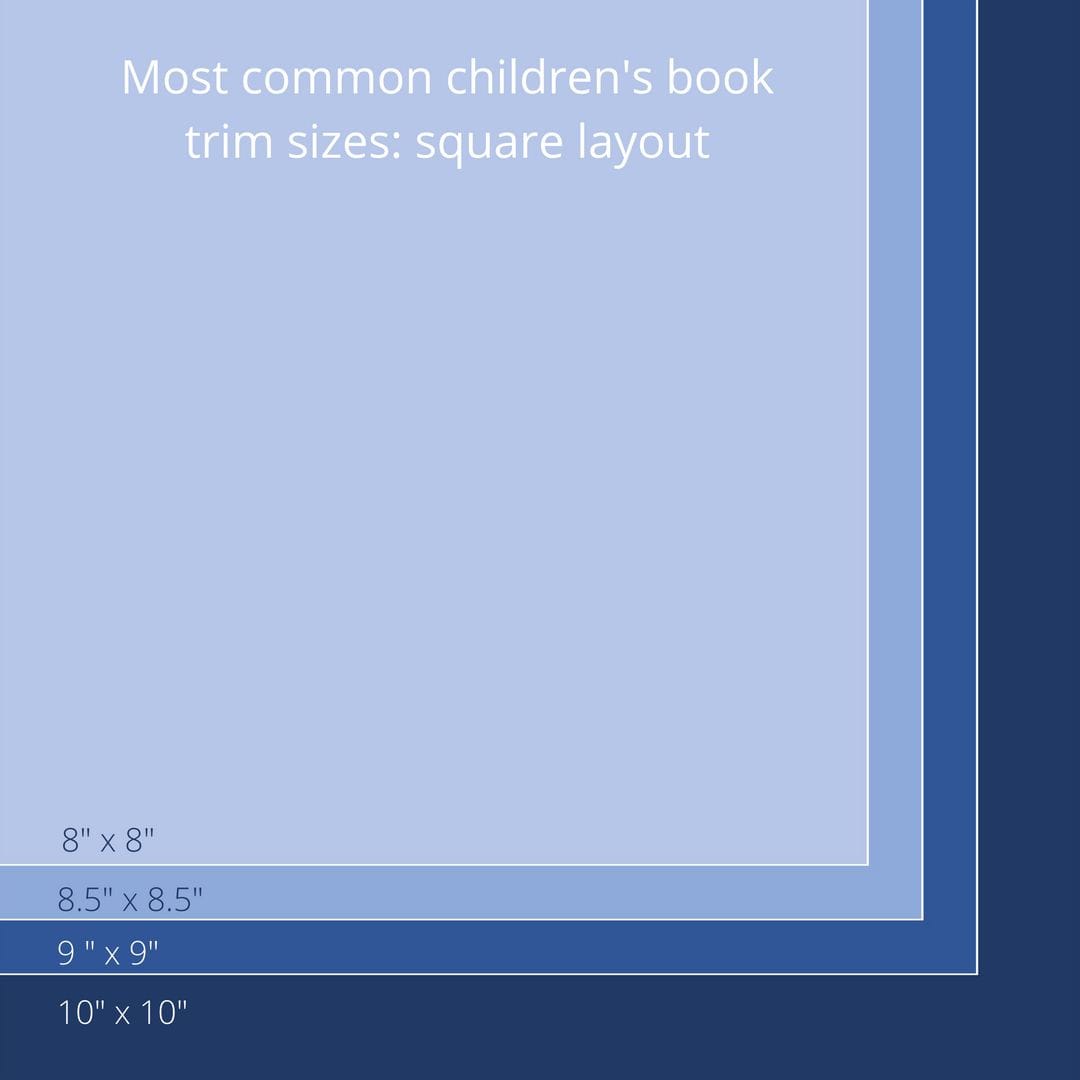
- Picture Books: 8 x 8, 8.5 x 8.5, 9 x 9, 10 x 10
Pro Tip: Print on demand offers only one square trim size: 8.5" x 8.5". This is a popular book size, but if printing through an offset printer, consider 9" x9" instead. The extra half inch gives the book a nice feel and presence on the shelf.
Pro Tip: In traditional book publishing, 8 x 8 is reserved for what is called "mass market" picture books. These are the books that go on spinner racks at the store, such as Berenstain Bears and movie tie-in books. These books usually retail for $3.99 to $5.99. Consider using a larger trim size for a higher perceived value.
Why do standard book sizes matter?
The truth is, picture books can be published in ANY trim size. But there are standard children’s book sizes. Why? Because some sizes are more cost-efficient than others! Printing a book can be expensive, and every bit of paper wasted in the printing process costs money. Choosing a cost efficient trim size can minimize overall printing costs of a book. Most offset printers work with what is called a sheet-fed press. That means a big sheet of paper is fed through the printer, and your book is “offset” onto that page.
Below is a picture of a finished sheet of posters from an offset printer.
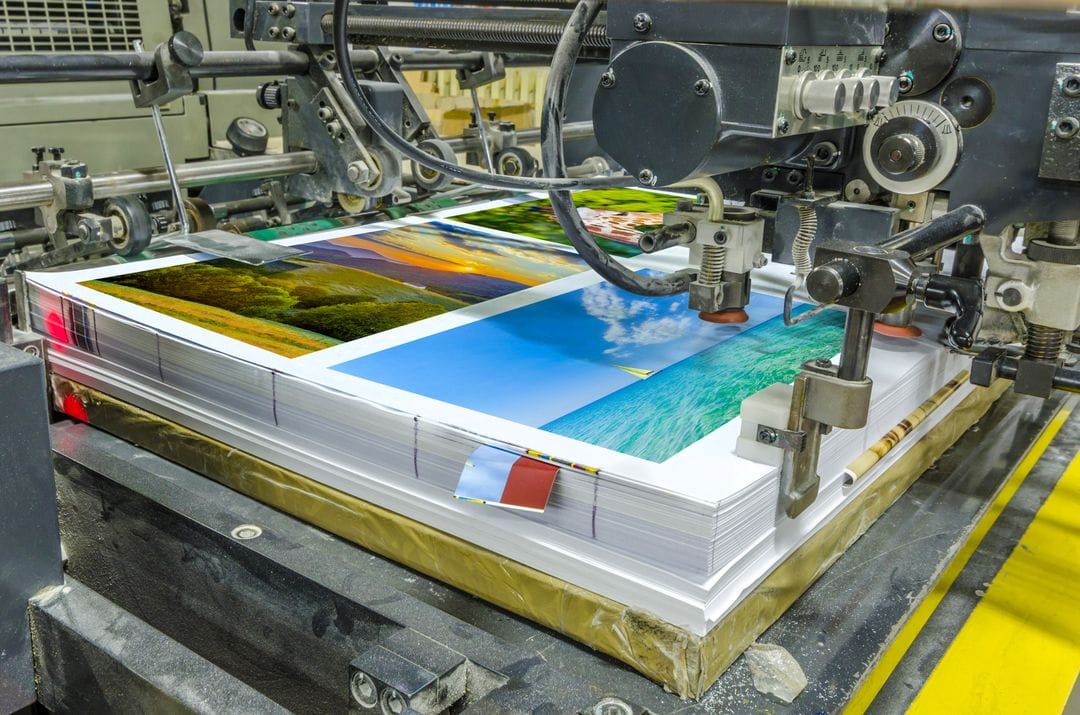
Courtesy MCRL Book Printing
That page is then folded and cut to form what is called a “book signature” or a set of 16 pages. The above example is not an actual book signature but highlights how an offset printer prints multiple images onto a single sheet that is then cut into smaller pieces.
Pro Tip: Here’s where cost-efficiency comes into play: This sheet of paper needs to be able to hold eight pages of a book, including the extra bleed on the pages. (Art bleed is extra art included on each illustration in case the page slips when it is being cut, or in case something shifts in the printer during book printing.) If the eight pages line up with a lot of extra white space at the edge, that is wasted paper the printer can’t use. And that means you are paying for paper that is being thrown away. Similarly, if your book is too big to fit eight pages on a sheet, you’ll need more sheets of paper to print your book, which means you are paying for more paper.
Print on demand book sizes
As you move through your choices, keep in mind how you plan to print a book. If you intend to offset print your book, you’ve got your pick of picture book sizes. As noted above, there are standard children's book sizes that result in the most cost efficient printing, but there are times when as an author you may want book that is less than standard.
If you intend to use print on demand, less than standard may not an option. Print on demand services offer a limited selection of book sizes, and all books adhere to their specifications. The top two print on demand services are Amazon KDP and Ingram Spark. Both offer common book size options, but they don’t offer all of the same options. Why does that matter? Because you may choose to go through both services.
Many authors choose to create eBooks and paperbacks through KDP, but go to Ingram Spark for hardcover (as KDP does not currently produce hardcover picture books). If you think you may want to publish through both services, try to pick a trim size offered by both. By working to a common book size, you’ll be able to use the same files across all platforms, rather than re-illustrating or redesigning if you choose to switch platforms.
 Related articleWhat Are the Best Print on Demand Book Services?A guide to the best book printing services for print on demand books, including the pros and cons of Amazon print on demand, IngramSpark, Blurb, BookBaby, & Lulu xPress.Read the article →
What book sizes do both Amazon KDP and IngramSpark offer?
Amazon KDP and IngramSpark both have a long list of available trim sizes. Below is a breakdown of which of those book sizes overlap for ease of working across both print on demand services.
For your reference, the book sizes below are listed in inches:
- Amazon KDP and IngramSpark book sizes: 5 x 8, 5.06 x 7.81, 5.25 x 8, 5.5 x 8.5, 6 x 9, 6.14 x 9.21, 6.69 x 9.61, 7 x 10, 7.44 x 9.69, 7.5 x 9.25, 8 x 10, 8.5 x 8.5, 8.5 x 11
What are the best IngramSpark children's book sizes?
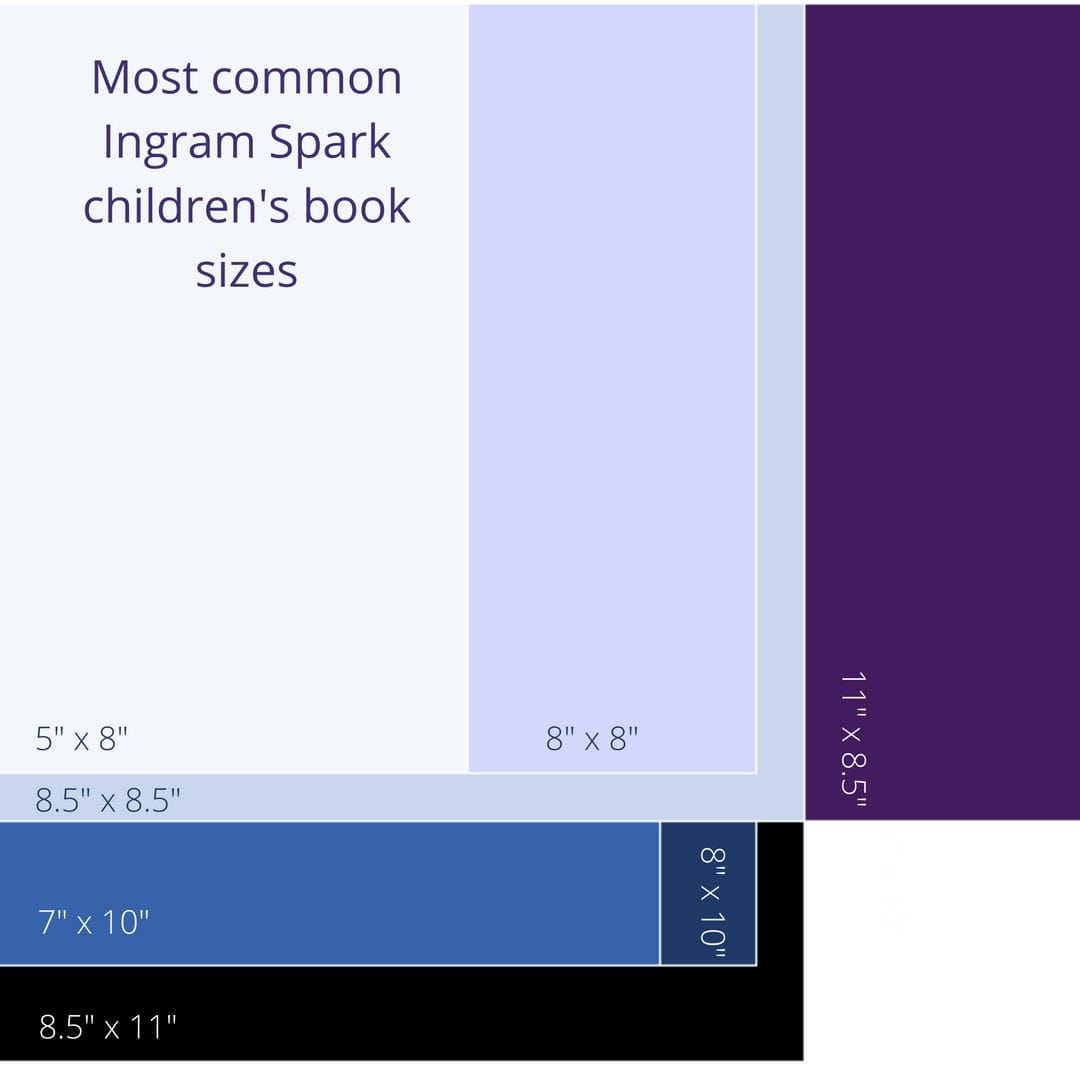
IngramSpark offers the following book sizes that are suitable for children's books.
- Portrait children's book sizes: 5 x 8, 7 x 10, 8 x 10, 8.5 x 11
- Square children's book sizes: 8 x 8, 8.5 x 8.5
- Landscape children's book sizes: 11 x 8.5
Pro Tip: While IngramSpark offers a landscape book orientation option, Amazon KDP does not. If you intend to use a landscape orientation, it is best to publish both the hardcover and paperback books through IngramSpark.
What are the best Amazon KDP children's book sizes?
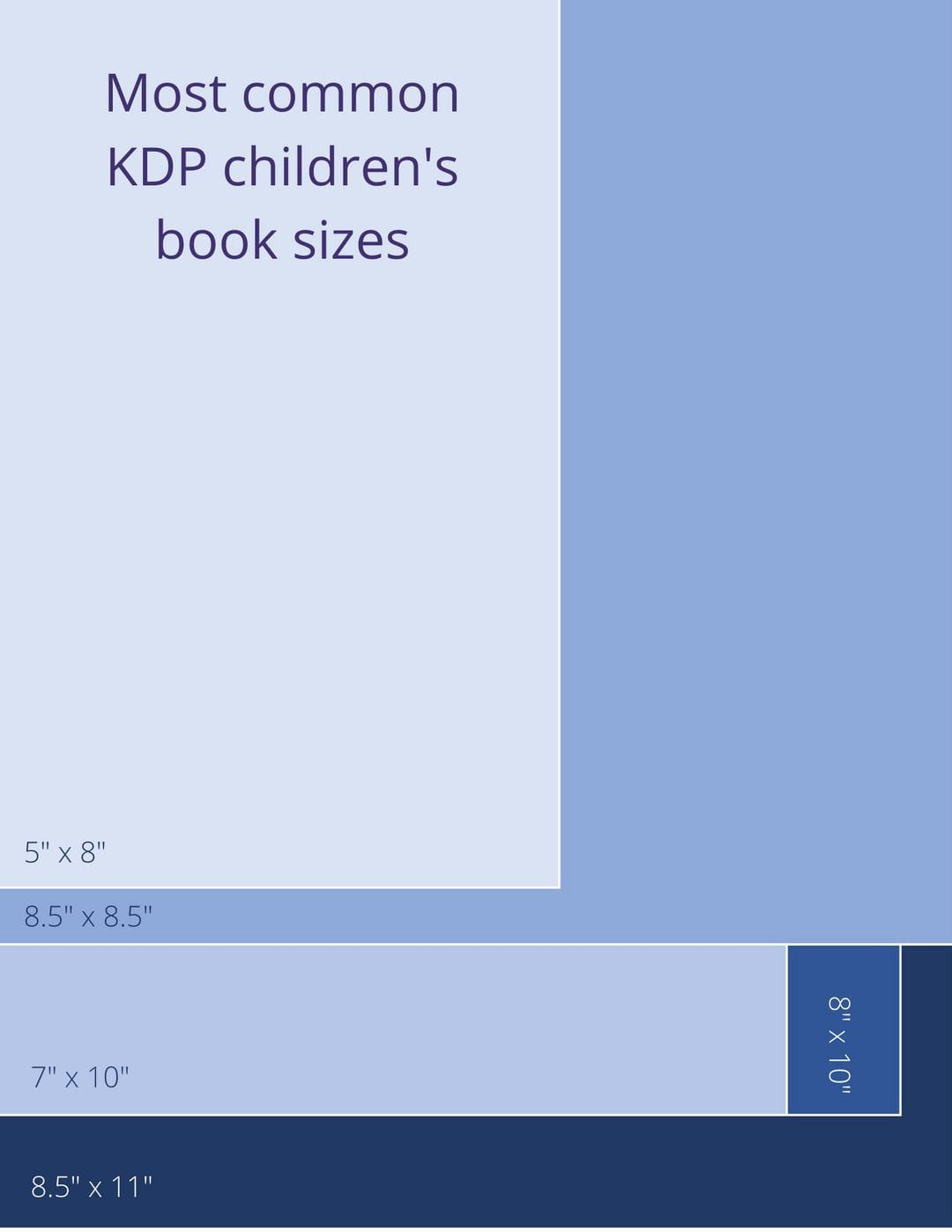
Amazon KDP offers the following book sizes that are suitable for children's books: 5 x 8, 7 x 10, 8.5 x 8.5, 8 x 10, 8.5 x 11.
Not happy with those choices. Amazon KDP does allow you to customize your book size, within certain limits. Width must be between 4" and 8.5", while height must be between 6" and 11.69". This is good news for authors who are looking for something unique, or who have a good reason for going outside of the standard book sizes. Do note, though, that IngramSpark does not offer the same option, so using a unique size should be reserved for books only printing in paperback.
Pro Tip: Whether you are using Amazon KDP or offset printing, beware of going too tall. Standard publishing logic states that a book should never be taller tahn 11.5" or else it won't fit on a bookstore shelf. If printing hardcover, plan to print a bit shorter than11.5" to allow for the extra height taken by the hardcover case.
What are the standard book sizes in publishing?
Printing something other than a children’s picture book? The publishing industry tends to follow specific book size conventions. Check out the standard book sizes for other kinds of books.
Early Reader Books: This includes leveled readers for beginning readers, such as Step into Reading and I Can Read, and the earliest of chapter books, like the graphic series Narwhal and Jelly.
- Early reader book sizes: 6 x 9
Chapter Books: These are books for newly independent readers who aren’t ready for more mature stories (generally ages 8-10). Some examples include The Magic Treehouse, Ivy + Bean, and Mercy Watson.
- Chapter book sizes: 5.25 x 7.75, 5.5 x 7.25, 6.5 x 8
Middle Grade: Middle grade stories are more complex, often focusing on family, friends, or school. These are books for kids 8-12. Some examples include Wonder, the Percy Jackson series, and Harry Potter.
- Middle grade book sizes: 5.25 x 7.5, 5.25 x 7.75
YA: These are books for older readers (12-17+) and often contain far more complex scenes and relationships. Among the most famous examples are The Hunger Games, The Fault in Our Stars, and Divergent .
- YA book sizes: 5.25 x 8, 5.5 x 8.5, 5.5 x 8.25
Fiction: These are books for adults and may span a variety of genres, including fantasy, sci-fi, romance, and thriller to name a few.
- Fiction book sizes: 5.25 x 8, 5.5 x 8.25, 6 x 9, 6.125 x 9.25
Non Fiction: These are books for adults and may span a variety of genres, including memoir, self-help, and other non-fiction topics.
- Non fiction book sizes: 5.25 x 8, 5.5 x 8.5, 6 x 9, 7 x 10
What are the standard print on demand book sizes?
The standard book sizes in this article assume printing through an offset printer. Below find a comparable list of book sizes available through the print on demand services Amazon KDP and IngramSpark.
- Children's books: 5 x 8, 7 x 10, 8.5 x 8.5, 8 x 10, 8.5 x 11
- Early reader books: 6 x 9
- Chapter books: 5.06 x 7.81, 5.25 x 8, 6.14 x 9.21
- Middle grade: 5.06 x 7.81, 5.25 x 8, 6.14 x 9.21
- YA: 5.25 x 8, 5.5 x 8.5
- Adult fiction: 5.25 x 8.5, 5.5 x 8.5 x 8.5, 6.14 x 9.21
- Non fiction: 5.25 x 8.5, 5.5 x 8.5, 6 x 9, 7 x 10
For a complete list of trim sizes available, visit IngramSpark trim sizes and KDP book sizes.