How to Get Started Writing a Book in 4 Steps
Contents
For some people, writing a book comes easily. For others, it’s one of the hardest things they’ll ever do. But it can also be one of the most rewarding. But how do you actually get the book written? In 4 steps.
Step 1: Set up a good writing environment
It can be nearly impossible to write when there are distractions coming at you from every angle, so step one is creating a writing space that will actually allow you to think! But what does that look like? The truth is, that’s up to you. No two people need the same thing, so instead, ask yourself some questions:
- Do you work better with natural light or in a darker room?
- What makes you comfortable? A good office chair or a recliner with a notebook?
- Do you need actual quiet, or can you work with background noise?
- Where will you store all your writing equipment? Is out in the open okay, or do you need a space no one else can access?
Whatever works best for you, the goal is to create a space that fosters your creativity. But whatever your personal style, there are a few things that may help:
- Declutter your work area. The more mess you have, the more likely you are to find a distraction when you find yourself suffering from writer’s block!
- Are you the kind of person who takes inspiration from others? If so, try hanging inspirational pictures or quotes around your workspace.
- Buy a calendar to help keep track of the deadlines you’ve set.
- When the time comes to actually write, turn off your phone, email, and all other internet browsers to minimize distractions.
And remember, it may take time to find the right space, and you may move around to a few places before you find one that you can settle into.
Step 2: Create a writing schedule
People are creatures of habit. If you wake up at the same time every day, you may find yourself waking up at that time even without an alarm. If you’re used to eating at a certain time, you may find your stomach rumbling at that time. And if you’re used to writing at a certain time, you may find that around that hour your mind starts sparking with ideas!
Try to find a consistent time every day that you can dedicate to your writing. It may be an hour or it may be three. Everyone’s schedule is different, so don’t focus on the amount of time other people can put in, focus on the amount of time you can put in, and on making that time quality time!
As you look to build a block of time into your schedule, think about when you are at your best. Is your head the clearest early in the morning? Do you get too tired to focus right after lunch? Look for times when you know you’ll be awake and alert and ready to work!
For some people, part of creating a writing schedule also means setting writing goals. What do you plan to write each day? A certain number of words? A certain number of chapters? If you’re writing a picture book, are you sitting down with the intention of writing the whole book? If that kind of structure works for you, by all means set those goals! But if having a specific word count you must hit each day stresses you out, don’t feel you need to stick to something that rigid. A plan that makes you feel bad about yourself or puts undue pressure on you is likely to backfire, so know what works for you, and be willing to throw out what doesn’t!
Step 3: Come up with an idea and start outlining it
Writer’s block is a real thing. But if you really want to be an author, you’ve probably got hundreds of ideas swirling around in your head. The question is, which one do you start with?
The truth is, you’ll find it easier to write if the idea is one that excites you, so think through your ideas and decide on one that you can really feel like you can run with. Then get busy outlining it!
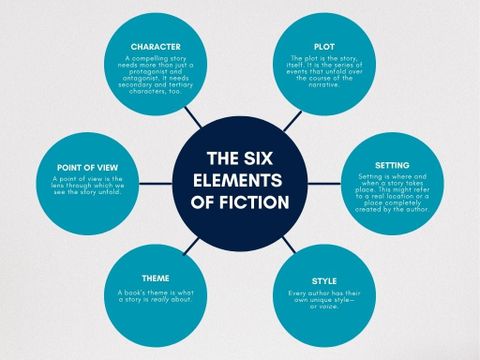
Consider the five elements of a story: setting, plot, characters, conflict, and theme. These all apply to a story whether you’re writing a picture book, a historical fiction, or an epic fantasy.
Setting: where does your story take place? If you’re writing a picture book, this could be a very simple answer. At school. At the playground. In outer space. For longer stories, this answer may not be so simple. Does the story take place in the far future? Does it take place in the past? On another planet? In a dystopian world? Figuring all of that out will help as you move toward . . .
Plot: What’s going to happen in your story? How does it start? How does it end? And what has to happen in the middle to get your characters to that end point?
A story follows five points: introduction, rising action, climax, falling action, and conclusion. Are you hitting all of those points in your outline?
As you move your way through, you may find that you don’t actually know how the story begins. Or that you know how it begins, but you don’t know what happens in the middle. All of that is fine, and it will come to you. But one thing you MUST know is how the story ends. If you don’t know what you’re working toward, chances are good you’re going to end up floundering in the middle of the book.
Characters: Who is your protagonist. Who is your antagonist? Where do they come from? What do they look like? If you’re writing a longer book, are there things in your character’s past that are essential to understanding who they are NOW? Even if that information never makes its way into the book, it will help you in developing well-rounded characters. And well-rounded characters are the key to a good book.
Conflict: Ultimately, this is the crux of your book. So what is it? Saying “I’m going to write a book set 300 years in the future in space” is great, but what HAPPENS? What’s the problem? Even with picture books, there is almost always a conflict that the story fully revolves around, so make sure you know what that conflict is!
Theme: You might also look at this as the genre for your book. Understanding what genre you’re writing in is key to understanding the needs of your book. Different kinds of books have different expectations. Writing a romance? Know how the story is generally structured. Writing historical fiction, how many words is a typical book. Writing a picture book, understand the essentials of what makes a picture book a picture book and how it fits in the market!
As you work your way through the outline, you may find you have ideas that don’t quite fit into a strict structure. Find a place to write those ideas down. They may prove not to be needed, or they may be the key element you come back to later when you’re stuck. But if you don’t write things down, you’re probably going to forget them. So find a place to write down all of your inspiration (even if it’s an idea for another book.
Step 4: Start writing
I know. Even with all those steps, the writing itself isn’t easy. But guess what. What you write doesn’t need to be perfect. It doesn’t need to be final. It just needs to be words. Fixing those words comes later! That's what rewriting and editing are for. But until there’s something on the page, there’s nothing to fix, rewrite, or edit!
So . . . dive in. And do it wherever it feels right. For a picture book, you’re probably starting at the beginning and going straight through. But for a longer book, that may not be the case. Maybe you don’t know how the book starts yet, but you DO know how a particular scene in the middle plays out. If that’s the case, go ahead and write that scene. Your book doesn’t need to start in order. It will get there. (And who knows, you may find that middle scene actually works better at the beginning as a flashback!)
If the blank page is staring you in the face and feels too daunting, try writing something else just to clear out the white staring at you. Even if it’s just a story about something that happened to you that morning. But once you get started for real, stay focused on the book you’re actively working on. Trying to write pieces of lots of different books will only get confusing, so keep moving forward one book at a time.
And know this: your first draft may be garbage. Half the book may make no sense, or you may realize halfway through that your beginning is all wrong. And that’s okay! No one’s first draft is perfect. Writing a book also means rewriting. And rewriting and rewriting and rewriting. But before you start rewriting, give yourself the freedom to write whatever comes out. You never know which pieces of dreck will end up being the stars of your book!