The Pros & Cons of Traditional Publishing vs Self-Publishing
Contents
What is traditional publishing?
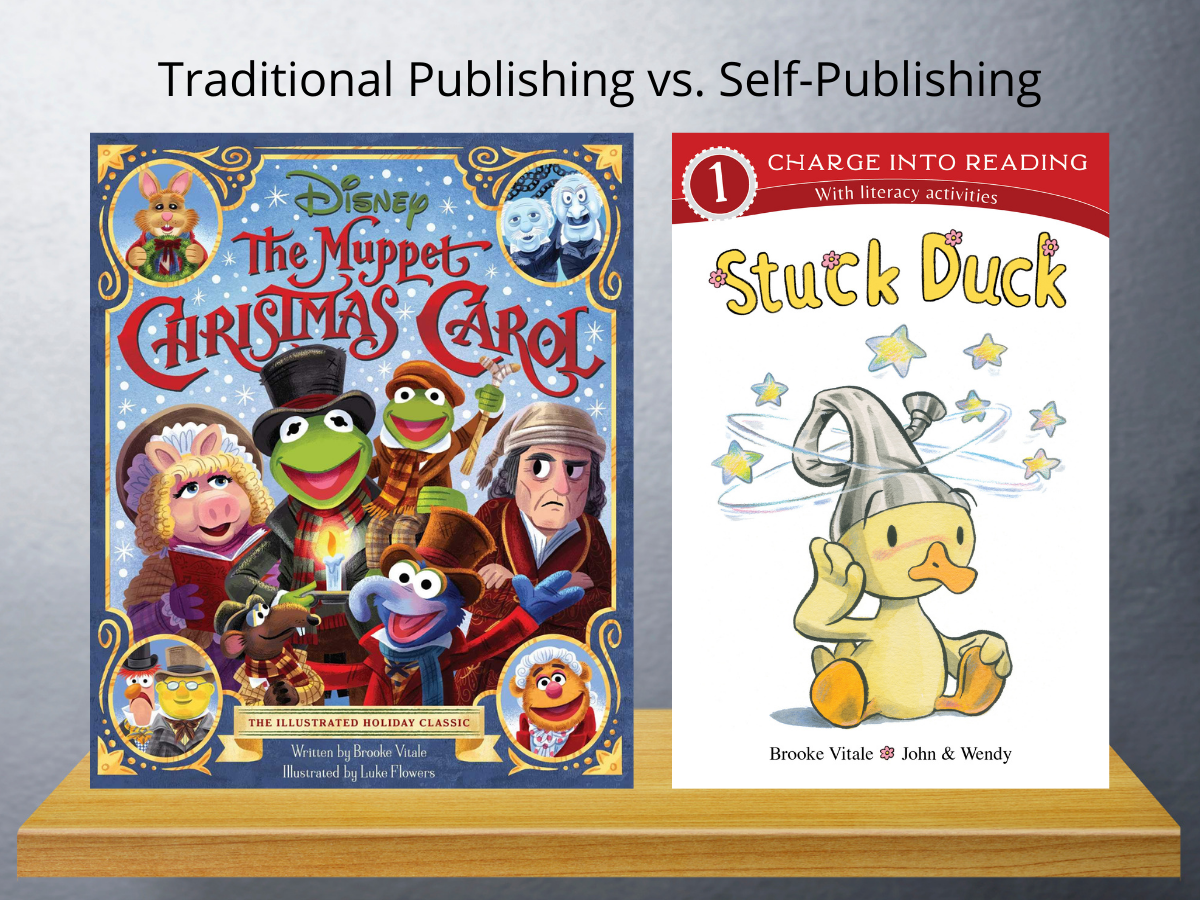
Traditional publishing means that a publishing company acquires a book for publication. The biggest thing to understand about traditional publishing is that an author does not hire a publisher, or simply decide to publish with a publisher. A traditional publisher chooses the author, and they are very selective about whose books they choose to publish.
In traditional publishing, the publisher takes responsibility for all aspects of book creation, from editing, design, and art creation to printing, distributing, and marketing. Traditional publishers want to know that authors are looking at book publishing as a business. They want to know that an author has written (or plans to write) more than one book, and is invested in the financial success of their books. Authors who are looking to publish books just to have their books out in the word, or who only want to put their books out there for their friends and family would not be advised to follow this path.
As a new author, deciding between traditional publishing and self-publishing can be confusing. The truth is, getting published by a traditional publisher is hard to achieve. With so many books being written every year, authors are more and more frequently turning to self-publishing. But what is the difference between the two? Let’s take a look.
What is self-publishing?
Self-publishing means that an author is responsible for all aspects of book publication. Everything in self-publishing is paid for by the author. All of the marketing and distribution plans must be developed by the author (or by someone hired by the author.) The word self comes from the fact that the author must do everything by themselves.
The truth is, there are pros and cons to both traditional publishing and self-publishing. And there’s no right or wrong answer about which path to follow. That’s because every author’s path and every author’s publishing goals are different. So, other than the joy of being able to say, “A publisher chose me!”
The pros and cons of self-publishing and traditional publishing?
Financial implications
First the good news. Traditional publishing is free. At least it is from the moment the publishing company gets involved. Some authors choose to bring on a book editor prior to submitting to agents. Others hire help for writing a query letter. But from the moment a literary agent or book publisher steps in, an author should not spend a single penny. Literary agents take a cut of the author’s payment from a publisher. If an agent cannot sell the book, they do not get paid, plain and simple. As for those traditional publishers, they pay the author, not the other way around. (Any publisher asking for payment from an author is either a hybrid publisher or a vanity press.)
For more information on querying agents, check out Top Children's Book Agents Accepting Submissions 2021 | Agent Query Guide .
Self-publishing, on the other hand, can be pricy. While an author can choose to do everything alone, more often authors will hire outside help. After all, there’s no point in putting the money into a book that isn’t good. And a book that doesn’t look good won’t sell. Which is why authors employ book editors, book designers, and illustrators, to name just a few of the many jobs that go into publishing a book. But preparing the book files aren’t the only costs. For authors choosing to print their books (as opposed to using a print-on-demand option) it is also the author’s job to pay for book printing and distribution. And then, of course, there are all the expenses that go into marketing the book. All of those bills fall strictly on the author, not on anyone else.
But there’s a flip side. If a book is successful, an author actually has a better chance of making money through self-publishing than through a traditional publisher. Why? Because there isn’t a publisher taking a cut. Print-on-demand models are harder to make money on, as the print-on-demand publisher not only takes a cut of the profits, but also charges the author for the printing cost of the book. Printing through an offset printer is typically cheaper (if printing a high enough quantity) , and the only company taking a cut of the profits is the one the book is being sold through. (For example, Amazon and Barnes & Noble both take a cut for allowing an author to sell through their platform.) For books sold directly to consumers through an author’s website, or books hand-sold by the author, 100 percent of the profit belongs to the author.
Traditional publishing is not so generous with the profits. In exchange for buying rights to a book, a publisher will typically pay the author a small fee, called an advance. The term advance means that the money paid upfront is an advance against earned royalties. With each book sold, the author will earn a percentage of the book sales. This is called an author’s royalties, and if often between 5 and 15 percent of the book’s profit. Once the royalties due exceed the advance paid, the author will start earning additional money.
Note, most publisher contracts base royalties on the discount books are sold to retailers at. Books sold at a discount of over 52-54%, as most are, will receive a royalty on net profit, rather than gross price of the book.
Money, at a glance:
Traditional publishing finance pros:
- Publishing a book is free.
- Author only gets a fraction of the money made on book sales.
Self-publishing finance pros:
- author gets the bulk (or all!) of the money made on book sales.
- self-publishing comes with a lot of potential expenses, and it can cost quite a bit to successfully self-publish a book. (This is especially true of picture books that include the cost of book illustration.)
Ask yourself: How much money are you willing to spend on your book? Can you afford to invest your own funds to ensure your book is successful, or do you feel comfortable finding an outside source of funding such as Kickstarter?
Creative control
Traditional publishing offers authors very little creative control of a book. But—and this is a big but—that does not mean an author gets no control over a book. Usually authors have the right to say yes or no to changes being made to their manuscripts. Authors will also typically have the right to say they do not like their book cover (although that doesn’t always mean changes will be made). And in the case of a picture book, authors may get to weigh in on the illustrator (which is not to say they get the final say, but they do have the option to express concern if they truly dislike an illustrator or art style). Publishers know that they make their money on authors, and they are in the business of building relationships with authors, which means they want to keep them happy. But even with that being the case, traditional publishing doesn’t give authors much say over the overall process.
With a traditional publisher, the PUBLISHER is the last word on a book’s illustrator or cover look. The publisher decides what editor and designer will be working on the book. And the publisher decides on the book’s marketing plan, distribution strategy, and the number of books being printed. Even when authors decide to go out and market on their own, it is usually done with the guidance and approval of a publisher.
Self-publishing, on the other hand, is all about creative control. In fact, many authors who choose to self-publish do so because they want full creative control over their books. They want to pick their own editor, make the changes THEY want to make, find an illustrator they like, and manage the marketing strategy for the book. The world of self-publishing is full of decisions to be made, and it is up to the author to make all of those decisions, for better or worse.
Creative control, at a glance:
Traditional publishing con:
- Authors have little control over the final product being released.
Self-publishing pro:
- Authors have complete creative control over every aspect of the book.
Ask yourself: How important is creative control for your book? Are you willing to make changes, or do you want your book the way you want your book, period?
Publishing industry knowledge
Traditional publishers know their business. Each person who touches a book through a traditional publisher is an expert in their own field, with years of experience. An editor working on a book has been trained to work on books in that genre. A book designer knows what font reads best for the audience and which ones they have the rights to use. Production managers have relationships with offset printers. Sales teams have a strong historical knowledge of what is selling in the market and access to book sellers to get input on covers (and concepts) BEFORE a book is published. And they can use that information to accurately estimate how many copies of a book should be printed. All of their decisions are based on past experience, not guesswork.
Self-published authors don’t have that luxury. And while they can hire experts who know each area of book publishing, ultimately decisions still need to be made by THEM. The problem is, many new authors don’t know what they don’t know. So while it’s liberating to have full creative control, many authors find themselves stuck because they don’t know what to do next, or don’t know if they decisions they are making are the correct choices. They don’t know how to find an offset printer, whether a font is legally useable, or how to negotiate a contract with a bookstore. With full creative control, it’s easy to make mistakes without even realizing they are being made.
Knowledge base, at a glance:
Traditional publishing pro:
- From start to finish, a book is being worked on by experts in the field.
Self-publishing con:
- Self-publishing con: publishing a book comes with a steep learning curve.
Ask yourself: Are you willing to do the work to learn the publishing business? And if not, are you willing to spend the money to hire experts who know what needs to be done? Or do you prefer to have someone else handle it all for you?
For more information on the steps that go into self-publishing, check out my article How to Self Publish a Children's Book in 18 Steps
Need tips on hiring an editor or an illustrator? Check out my articles How to Find a Children's Book Illustrator | Hire an Illustrator and How to Hire a Book Editor.
Publishing timeline
Traditional publishing takes a long time. Period. It takes a standard picture book roughly two years from the time a publisher acquires it until the time it gets published, in part because of how long it takes to illustrate a book. (And that does not include the time it takes an author to get an agent and have the agent find a publisher to acquire the book. Publishing a novel can take less time, or it can take more. (Editing a 150,000 word book does not happen quickly!) But the amount of time it takes to develop a book isn’t the only factor in how long it takes to publish a book. Publishers must also consider their existing slate of books. Typically publishers sell books into bookstores at least a year in advance. This allows them to have an accurate quantity for printing. But it also means that a book has to be finished (or close enough to finished) for a book buyer to read it in advance. Which means that a book can very rarely be dropped on a list and printed quickly. Publishers must also consider what is on their list for any given month or year. In most cases, it is not advisable to release two very similar books close together, which means when a book is published can be dictated by when OTHER books are being published. (For example, a picture book publisher might have a Christmas book already for the next year, and the one after, which means that the next available time to publish a Christmas book would be three years down the road. To publish two at the same time would mean cannibalizing the sales of both.)
Self-publishers have the ability to work faster. Because everything moves on the author’s timeline, a book can come together as fast (or slow) as the author wants. This allows a self-publisher to put out many more books in a year. It also allows them to more quickly jump on trends. For authors working through a print-on-demand model, books can be available as soon as 3 days from the time files are completed. For authors printing through an offset printer, that timeline can be quite a bit longer, depending on the printer’s schedule.
Timeline at a glance:
Traditional publishing con:
- Books take a long time to get published.
Self-publishing pro:
- books can be published quickly, allowing authors to jump on trends more quickly.
Ask yourself: How urgently do you need to get your book in the market? If you’re willing to wait, it never hurts to query literary agents and publishers. If you are eager to see a book published, self-publishing will more quickly accomplish your goals.
Market visibility
Unlike most areas of book publishing where there are clear pros and cons to both traditional publishing and self-publishing, visibility is one place where traditional publishing has the clear advantage. This comes down largely to relationships and access. Book publishers already have relationships with national book sellers. They have set pitch dates where they sell hooks in, but can also pick up a phone to pitch titles as needed. They also have something called co-op, which basically means they have the power to nominate their books for special placement in store, like on end caps or front of store displays, which increase visibility.
Self-publishers can’t do that. Getting a book into a bookstore usually means walking in and hand-selling the book to a single store. And it will be a single store, not a full chain. The one exception here is self-publishers who work with a distributor. A distributor is a company that stores a book after it is printed and distributes it to stores as it is bought. Distributors usually have their own sales forces that will go out and sell their catalog of books to the big (and little!) chains. Just remember, a self-published author is just one cog in a distributor’s wheel. Unless the sales are big enough to really make a dent in the distributor’s bottom line, they aren’t likely to push one book over another.
Visibility at a glance:
Traditional publishing pro:
- Book publishers have the relationships needed to get books on store shelves.
Self-publishing con:
- self-publishers cannot easily get books in big chains. Instead, authors have to focus on getting books into single stores.
Ask yourself: Do you have the stamina to hand-sell your book store by store? Or would you rather work with someone who will handle that part for you?
Marketing
Marketing is really a catch-all that encompasses a lot of different parts of selling a book. So let’s break down some of the key components
Editorial reviews
There are millions of places to get editorial reviews (not to be confused with book reviews that appear on places like Amazon or Goodreads), but very few matter when it comes to getting book placement. In truth, there are only a handful of BIG reviewers out there: Kirkus, School Library Journal, Publishers Weekly. . . These are the reviews industry insiders such as book buyers and librarians are interested in. And they aren’t readily accessible to self-published authors (or if they are, the fee is exorbitant.) But publishers can easily get books reviewed by such publications. (That’s not to say every book will get a review, but any book put out by a publisher can at least be submitted for a review.)
Self-published authors don’t have such easy access to these editorial reviews. But they do have other options. Local newspapers, magazines, radio shows, and TV stations are a great source of such reviews. And in these venues, self-publishers have the upper hand. In order to successfully self-publish a book, and author needs to be scrappy. They need to be willing to put themselves out there, ask for help, and tell their story. And local papers and news stations eat that up. Which is a great way for a self-published author to stand out because the truth is, a traditional publisher usually won’t go after these markets. They are too “small potatoes” to be of interest. And that might be true, except that people like supporting local businesses. And editorial reviews (and interviews) through local channels get an author in front of potential readers! And the good news about readers who feel a personal connection? They tend to be more loyal than readers who randomly pick a book at the store.
Note: When it comes to true editorial reviews, Kirkus and Book Life (a subsidiary of Publisher’s Weekly) both allow self-published books to apply for reviews, but granting them is rare. The also both offer paid, guaranteed book reviews. (They guarantee to review a book, not to give it a good review.) These reviews are pricy (Kirkus begins at $425 while Book Life costs $399) and while they are good for marketing, they are as esteemed by book buyers and librarians.
Editorial reviews at a glance:
Traditional publishing pro:
- Book publishers have access to high-quality editorial reviews for free
Traditional publishing con:
- Book publishers rarely go after articles in local markets, which can drive book sales
Self-publishing pro:
- local markets are a great source for publicity and generating book sales
Self-publishing con:
- editorial reviews from big-name companies are pricy and don’t hold as much weight as non-paid reviews.
Ask yourself: Are you willing to go out and tell your story to get press and editorial reviews, or are you uncomfortable doing so?
Book awards
Book awards are a dime a dozen. But some matter more than others, and what kind of award a book gets often comes down to self-publishing vs. traditional publishing.
Traditional publishers have access to the biggest book awards. And while some open their doors to self-published books (such as the Newbery Medal), many are ONLY available to traditionally published books. Given that book awards can be a deciding factor in getting into stores and libraries, that puts traditional publishing in the pro column. After all, winning awards like that comes with an awful lot of prestige and hoopla.
Here’s the thing: readers don’t usually know which awards are the most prestigious. A standard parent, for example, could not tell you the difference between the Coretta Scott King award and the Purple Dragonfly award. And that’s where self-publishers at advantage. There are hundreds of book awards out there, and traditional publishers won’t bother to apply to most of them. There are also many available only to self-published authors. Which means that self-published authors are more likely to win an award than traditionally published authors. And that’s great for marketing.
Book awards at a glance:
Traditional publishing pro:
- Access to the most prestigious book awards.
Traditional publishing con:
- Most book publishers won’t bother to apply to smaller, less consequential awards.
Self-publishing pro:
- self-published authors have a better chance of winning a book award.
Self-publishing con:
- Most awards available to self-published authors may not be prestigious enough to sway libraries or book buyers.
Ask yourself: how important is the “prestige” of awards to you? And do you believe you’ve written a book that could truly win an award for the best book of the year in your genre?
Self-marketing
It’s one of the big sells of traditional publishing: they will market your book. But the truth is, unless a book is a lead title, a publisher won’t put much marketing time or spend behind it. Which means that whether an author is published traditionally or self-published, most of the marketing push will be on them. All social media. All book or craft fairs. And the bulk of author visits/author readings.
The big win for traditional publishing comes if a book is highly anticipated or if it has been deemed one of the important books of the season. Then there will be a full marketing plan: author tour, interviews, press release. But if not, an author shouldn’t expect much more than ensuring books arrive to an event or perhaps being grouped in a mailer to reviewers or a multi-book ad. The problem is, while not offering much financial support, traditional publishers also don’t help authors develop their own marketing plans, and some even frown on authors deciding their own marketing plans.
For a self-published author, every title is a lead title. No one book is more important than another. They all contribute to the overall success of the author’s business. Self-published authors go into publishing with the knowledge that selling a book is on them. Which means that they usually decide their own fully-fleshed out marketing plans and have complete control over how they are executed.
Self-marketing at a glance:
Traditional publishing pro:
- Lead titles get huge marketing pushes and promotional spends.
Traditional publishing con:
- Non-lead titles rarely get much marketing support.
Self-publishing pro:
- All titles are lead titles!
Ask yourself: Do you have the savvy to market a book (or are you willing to hire someone to do it)? Can you get out there and push hard to get your book sold and make a name for yourself?
Traditional publishing versus self-publishing. There are pros and cons both ways. There are elements that will appeal to authors both ways. But which is right for you? Only you can decide that!