Costs to Self-Publish a Book: 14 Costs to Set Your Budget
Contents
Self-publishing a book is a complicated—and often costly—endeavor. But how much does it cost to self-publish a book? Every book is different. A picture book will cost more to illustrate (and more to print) than a novel, but a novel will cost more to edit than a picture book. The cost of self-publishing a book depends in many ways on what an author wants to put into the book. The price of self-publishing can range from $0 all the way up to $10,000 or more. These costs vary widely depending on the kind of book being published and the number of services or service providers hired to help. But as they say, you have to spend money to make money. So let’s look at what kind of expenses go into self-publishing a book.
Book Editing Costs
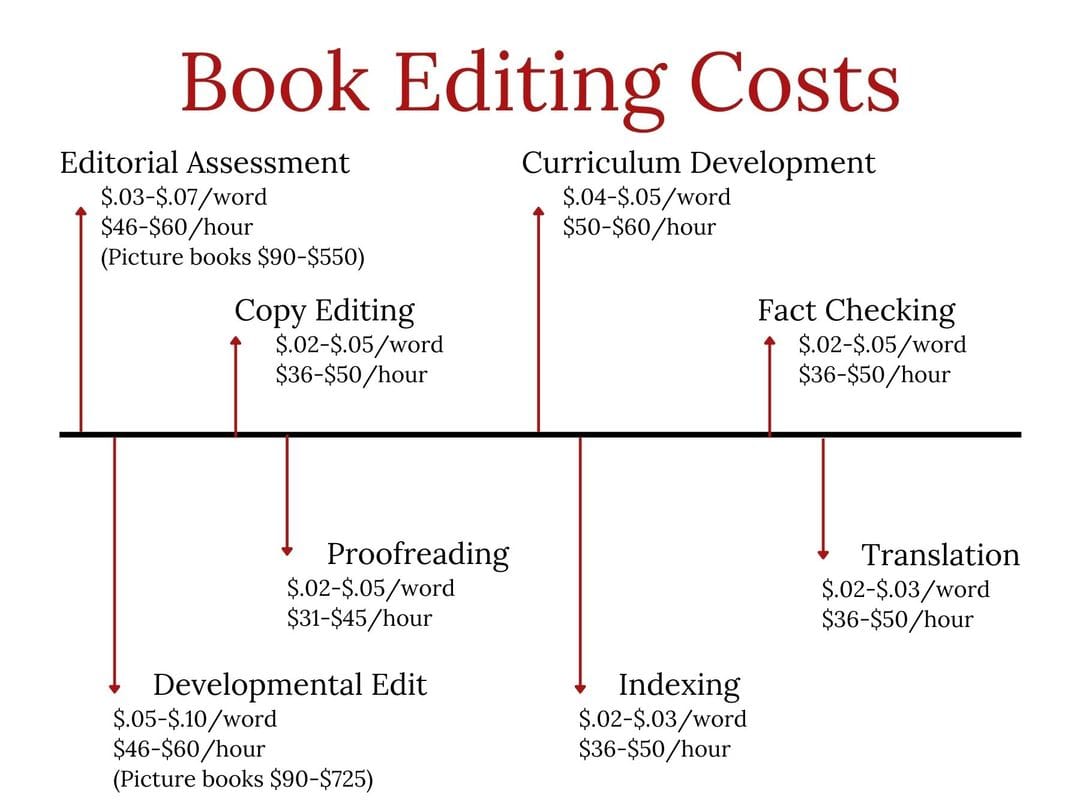
Simply assigning a cost to book editing is not as easy as it seems. That’s because book editing is not a one-and-done job. In reality, there are several different kinds of book editing: editorial assessment, developmental editing, copy editing, and proofreading. I personally recommend going through all four stages of editing, but not every author will choose to do so. Still, it’s important to understand the stages of editing and the costs associated with each so that you can budget accordingly.
What is an editorial assessment?
The editorial assessment is a high-level overview of a manuscript. It is the first step in editing a book. At its heart, an editorial assessment is an author’s opportunity to find problems with a book such as plot holes, scenes that appear out of order, lack of character development, age appropriateness and more.
 Related articleWhat is an Editorial Assessment with Real Word ExamplesAn editorial assessment is your chance to find out the big problems in your story. But what, exactly, should you expect to get back from your editor at this stage?Read the article →
Editorial assessment costs
Book editors may work on either a per-word rate or an hourly rate. For an editorial assessment, the rate may range from $.03 to $.07 per word or $46-$60 per hour.
Pro Tip: Picture books are too short to charge on a per-word basis. For this reason, picture book editors tend to charge on a per-project basis for picture books. I have seen this stage of editing range from $90 all the way up to $550 for a book under 1,000 words. Personally, I fall in the middle, charging $250 for an editorial assessment. For more details on what I include in my assessment, contact me for a free sample edit and check out my editorial services page.
What is a developmental edit?
The developmental edit is the moment when a children’s book editor starts finessing the text of a book. Also known as a line edit, a developmental edit is looking for issues such as clarify of language, show versus tell, sentence structure, and more.
 Related articleWhat Is Developmental Editing and What to Expect From OneDevelopmental editing, also called line editing or structural editing, is a comprehensive and in-depth review of your manuscript. Here we discuss what to expect from one.Read the article →
Developmental editing costs
Developmental editing rates may range from $.05 to $.10 per word or $46-$60 per hour. Developmental editing is a precise art form and often requires reading through a book several times, so it’s important to determine whether an editor’s rate is for a single read or for several readthroughs.
Pro Tip: Long books are rarely finished after a single developmental edit. If you are working on a long novel, plan to pay for this round of editing two, three, or possibly even four times.
As with the editorial assessment, the exception to this price range is picture books. I have seen this stage of editing range from $90 all the way up to $725 for a book under 1,000 words. Again, my rates fall in the middle at $300 for a developmental edit under 1,200 words. (For more details on what I include in my assessment, check out my rates page.)
What is copy editing?
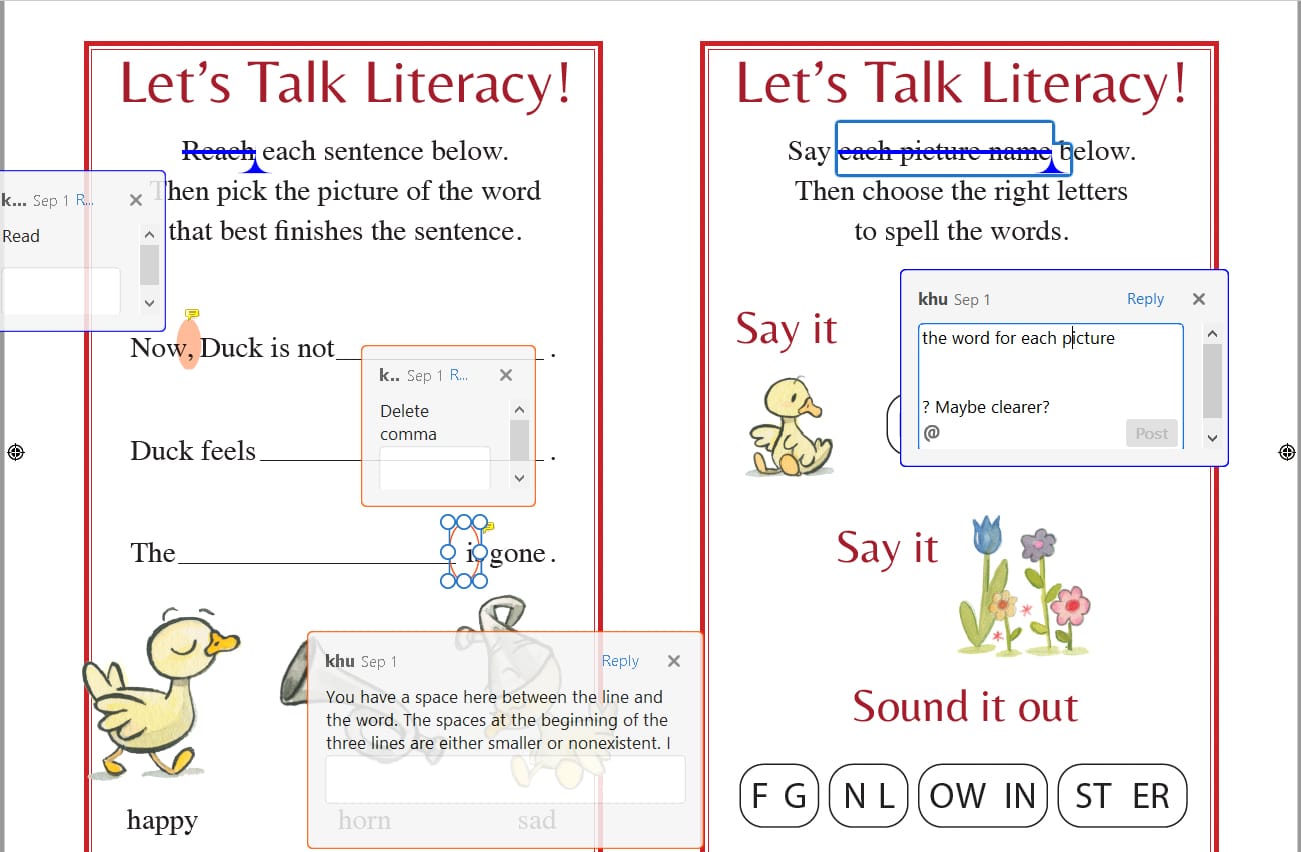
Copy editing is a read for grammar issues and story inconsistencies. A copy editor provides a second set of eyes that finds the things a book editor missed and makes sure there are no problems with the manuscript.
Copy editing costs
Copy editing rates can range from $.02-$.05 per word or $36-$50 per hour. Again, because copyediting is about finding mistakes, it often requires more than one read, so confirm how many reads are included.
 Related articleWhat's The Difference Between Copy Editing and Proofreading?Copy editing. It’s one of the more confusing editorial services. Why? Because it’s often mistaken for line editing or developmental editing. As a new author, it’s hard to know exactly what editorial service is needed and at what stage. So let’s take a look at what copy editing is and where it fits into the editorial process.Read the article →
What is proofreading?
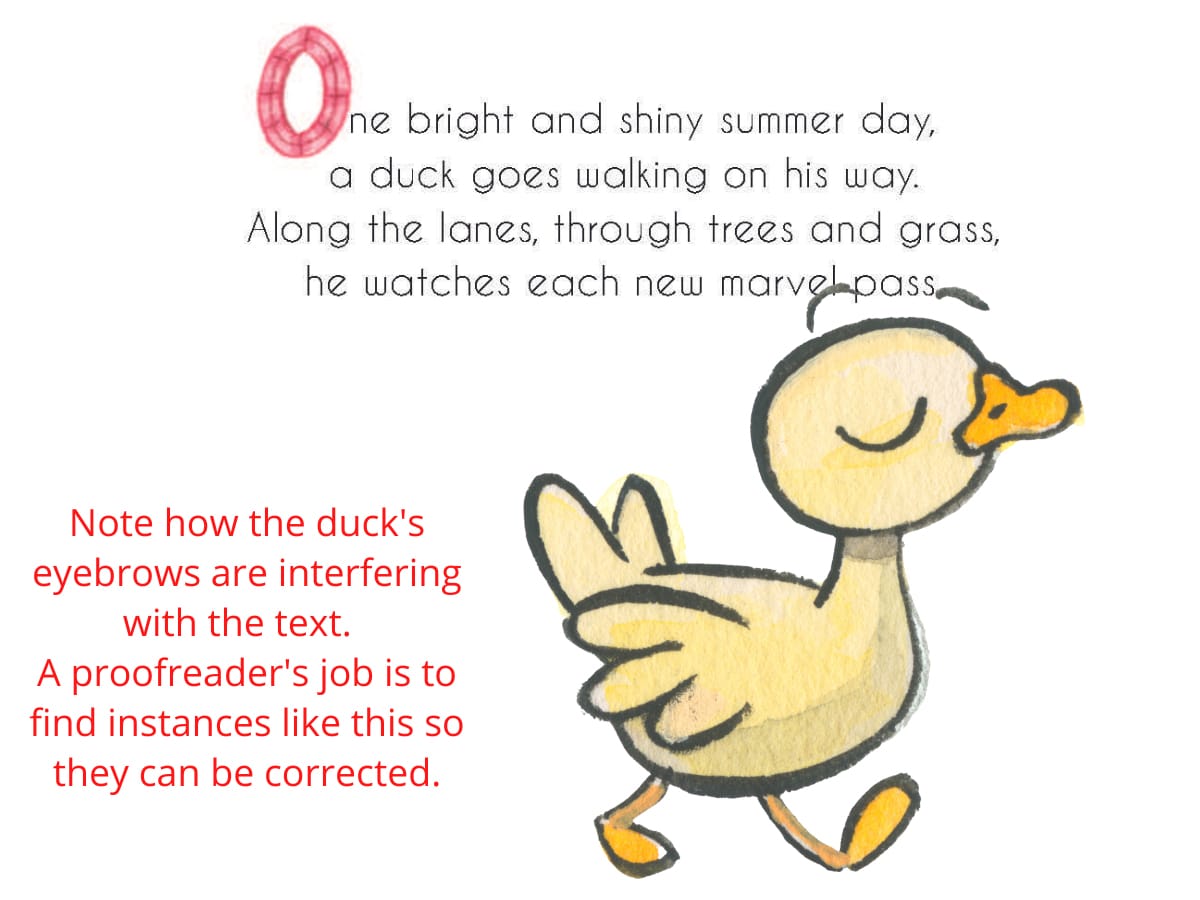
Proofreading occurs once a book has been designed and is almost ready to go to the printer. A proofreader compares a copy-edited manuscript to the designed pages to make sure no mistakes were introduced. They review designed pages for issues such as bad breaks, stacks of words, art overlaying text and more.
 Related articleWhat Is Proofreading: the Most Misunderstood Editing ServiceProofreading is a review of designed book pages against a copy edited manuscript. A proofreader is looking primarily for formatting issues, but will also read for spelling and grammar mistakes. Proofreading is the last editorial step before a book goes to the printer.Read the article →
Proofreading costs
Proofreading rates can range from $.02-$.05 per word or $31-$45 per hour. Because proofreading is done on final pages, a proofreader may also charge a per-page rate.
Other editorial expenses
For many books, these are the only editorial services needed. But some books require other services, and those come at an additional expense. These services may include: Curriculum development: $.04-$.05 per word or $50-$60 per hour Indexing: $.02-$.03 per word or $36-$50 per hour Fact checking: $.05-$.06 per word or $41-$50 per hour Translation: $.11-$.15 per word or $46-$50 per hour
What impacts editorial costs?
Book genre
Some book genres are faster to edit than others. Romantic comedies, for example, are easy to breeze through. Historical novels, on the other hand, require heavy fact checking, which is more time consuming. Such a book will typically come with a higher editorial rate.
Editorial experience
The more experienced an editor is, the more they will charge. That’s because a more experienced editor typically has a better understanding of the market. They are able not only to make a book read properly, but also guide it toward what the market will bear. More experienced editors also tend to secure clients more easily. Because they are in higher demand, they can command a higher rate.
The state of the manuscript
Often editors will review a manuscript, or part of a manuscript, before agreeing to work on a book. A book that seems to be in a good place will come a at a lower cost, while a book that is riddled with errors, plot holes, and typos will cost more to edit because it will take longer to fix. Similarly, a particularly dense manuscript that requires closer reading will command a higher fee because it will take longer to read.
Book Design Costs
For a book to sell, it has to look good, and a large part of that is book design. This is especially true of novels, where the book designer takes a heavy hand in cover design, often driving the overall feel of the package. A book designer is responsible not only for laying out the entire book, but also for preparing files for print. Depending on the kind of book you are publishing, book design can be broken into two categories: interior design and cover design.
Interior Book Design
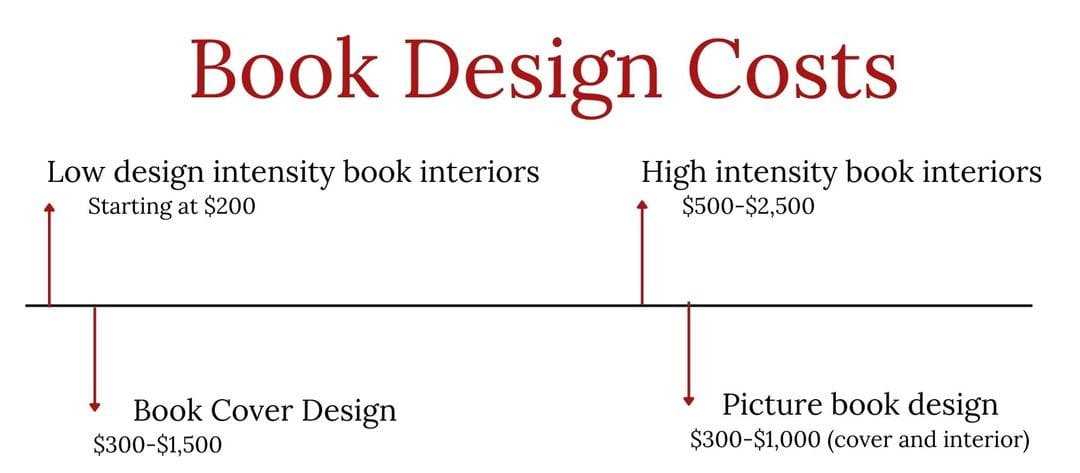
Interior book design is the process of laying out the interiors of a book. The rate to design a book is as variable as the design itself. Authors creating text-only books may choose to use online tools that enable them to format on their own for free. Interior design work for a relatively simple book such as this may cost as little as $200. But the more intricate a book is, the higher the cost will be. It is not uncommon for design costs on art-heavy books or those that require more graphic design elements to come in anywhere between $500 and $2,500.
Pro Tip: Picture books are illustration driven, and every page must follow a different layout. But these books are also generally short. Standard rates to design a picture book range from $300-$1,000, which also includes book cover design.
Book Cover Design
Book cover design may be done by the same designer who does your book interior or by a book designer who specializes in cover design. The rate for book cover design ranges from as little as $300 to as much as $1,500.
Pro Tip: Using a cover designer is more common when a formatter has been hired for the interior of the book rather than a full designer.
What impacts book design costs?
Design experience
Just like book editing, book design and formatting is an acquired skill, the longer a designer has been doing this work, the better they will likely be. That experience is often reflected in a book designer’s rates.
Author experience
This seems a strange thing to charge on, but book design is a meticulous art form. An experienced author who knows what to expect from the book design process is less likely to ask for multiple changes. That means a book designer can complete the work more quickly and then move on to their next job. A book designer who suspects they will spend a lot of time explaining the process may build in extra budget to cover those hours.
Book length
Every page of a book takes time to design, even if it is simple. So it makes sense, then, that the more pages a designer has to design, the higher their rate for the overall project will be.
Design intensity
For a novel which contains only text, interior book design may be a relatively easy process. A book designer (or formatter) will only need to make a few simple choices such as font, margins, and leading. The most complicated aspects of a text-only book will fall in designing such areas as the table of contents and the chapter openers, if they exist. This is not true of complicated, design-heavy books. The more complicated a book is, the more decisions a designer will have to make. While it is expected that every page of a novel will look the same, every page of a cookbook or an art-heavy nonfiction book will not. For a design heavy book, a designer will likely create several possible page templates to be used over and over, although even those templates may need manipulation from page to page to fit existing art and to ensure that text stays with the art it references. This is a far more time-consuming job and will cost more to complete.
Book covers also vary in design intensity. Some covers may be as simple as laying text over an existing piece of art while others will involve overseeing a photo shoot or creating an intricate text-oriented cover complete with unique design elements. The more complicated a book cover is, the longer it will take a cover designer to create it, which inevitably means a higher cost.
Pro Tip: Some book cover designers will offer a single cover option while others will offer several different designs to choose from. Expect to pay more for a designer who offers several options, as each takes time. Also expect to pay more for multiple revisions to the cover.
Book format
The format a book is being published in dictates the amount of cover work needed. An eBook only requires a front cover, typically delivered as a flat JPG file. Publishing a physical book (paperback or hardcover) requires a front cover, back book cover, and a spine. Each of these must fit a specific size template or risk printing incorrectly (and the size will likely change between hardcover and paperback books). For a hardcover book, a cover designer may also need to design a dust jacket.
 Related articleWhat Is a Dust Jacket and Does a Hardcover Book Need One?When it comes to children's book publishing, there are a lot of decisions to make. Not the least of which is whether print a children's book with a dust jacket. So, what are the benefits of a book jacket. What are the drawbacks. And at the end of the day, is a book jacket worth having? Ultimately, only you can answer that, but not without some extra information!Read the article →
Because each of these elements takes more time to design, you can expect to pay more for paperback book cover than an eBook, and more for a hardcover book with a dust jacket than for a paperback book.
 Related articleBook Back Cover: 6 Steps to a Back Cover that ConvertsHow to write and design a book back cover, featuring a step-by-step guide, free book back cover design templates, and back cover examples for all genres.Read the article →
Whether an eBook is needed
While the design for a paperback and hardcover book will typically be roughly the same, that may not be true for an eBook. eBooks are their own design process because they need to be reflowable. For a novel, this may not be a challenge, but for a design-heavy book where art must flow with text, this can be an enormous challenge. If you are creating a design-heavy book with an added eBook, expect to pay a larger add-on fee for eBook files.
Illustration costs
For most books, illustrations costs never factor into an author’s budget. The exception is for picture books, which require art on every page. As with editing and book design, the amount an illustrator charges to create a 32-page picture book will vary depending on the illustrator’s experience. That makes locking down a budget challenging. For a traditional picture book, the art budget could truly vary from $100 to $10,000. I have seen illustrators charge as little as $5 per page and as much as $200 per page. Personally, I have paid between $2,000 and $7,500 to have a picture book illustrated.
What impacts illustration costs?

Quantity and type of illustration
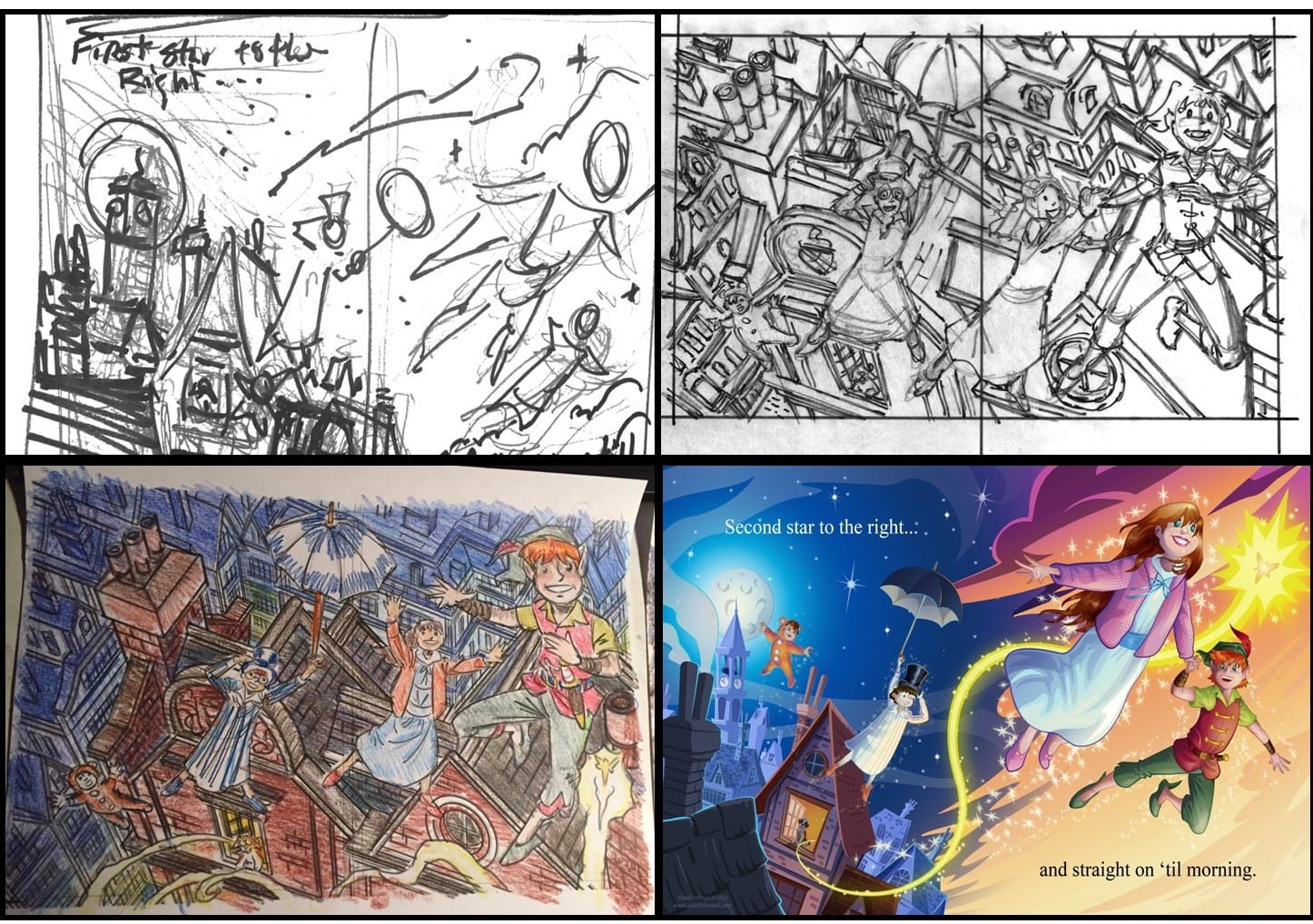
The cost of illustrating a picture book can vary widely based on how many pictures are needed, and what portion of the page they take up. Generally an illustrator will charge more for two full-bleed pages than a single full-bleed spread. That’s because the illustrator will need to create two unique scenes rather than a single scene. Similarly, an illustrator will charge less for a piece of spot art with no background than for a full-bleed page. Full-color art will also be more expensive than black-and-white art.
 Related articleHow to Illustrate a Children's Book: A Step by Step GuideA guide to children's book illustration: Learn how to illustrate a children's book, work with an illustrator and the elements of picture book illustration.Read the article →
Number of illustration revisions
A typical illustrator contract will allow for a set number of revisions to the art. The more revisions an illustrator allows, the more they may charge. An illustrator may also charge additional fees for revisions beyond the agreed-upon number.
Rights to art
Unless specifically assigned to an author or publisher, an illustrator owns the copyright to their work. That allows them to control how the work is used. A standard illustration contract will allow an author to publish an illustrator’s work in book form. It is not uncommon for an illustrator to ask for an additional fee to give an author merchandising rights (the ability to create items such as stickers, posters, T-shirts, or plush dolls) or to assign copyright to an author.
 Related articleHow to Find an Illustrator: Hire an Illustrator in 10 StepsThis 10-step guide will teach you how to find an illustrator, prepare a children's book for illustration, and hire an illustrator that's right for your book.Read the article →
Photography costs
While picture books (and to some extent chapter books) utilize illustrations, nonfiction books typically use photography. This may come in the form of a photo shoot (as in a cookbook) or stock photography (as you might find in a science book). A beginner photographer may charge between $35 and $75 per hour. A semi-professional photographer would run between $75 and $150 per hour, while a professional photographer may between $150 and $500 an hour. The final amount spent to provide photos for a book will largely depend on the complexity of the shots and how many pictures are needed, so it is best to get a quote from multiple photographers before proceeding.
For a more cost-effective approach to using photography in a book, an author might try getting a subscription to a stock photo site such as Shutterstock, which charges between $199 and $249 per year depending on how many photos are needed. While some stock photo sites exist that offer free photos, it is essential when using these for an author to do their research to make sure the photos are truly free for commercial use.
Fixed fee book creation costs
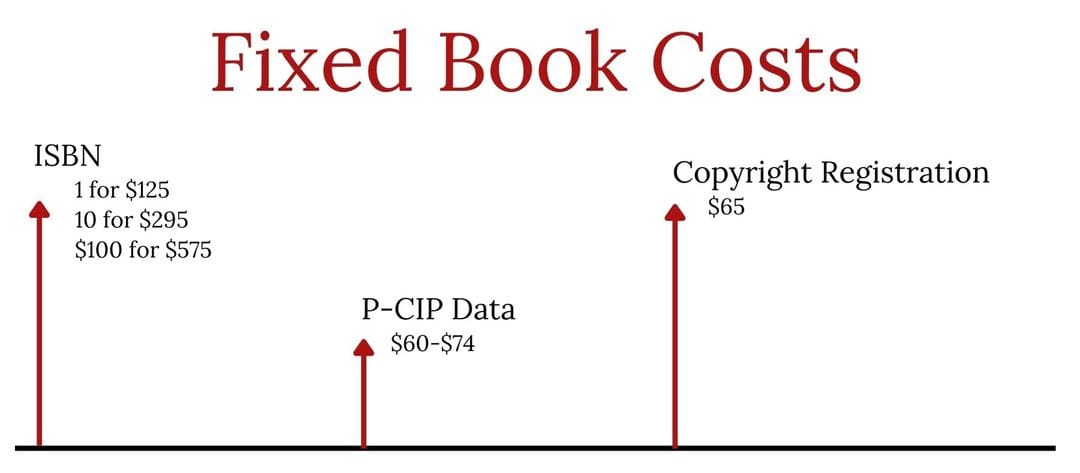
While services such as book editing, book design, and book illustration are variable, there are other book creation costs that never change. These include the cost to get an ISBN, to secure P-CIP data, and to copyright a book.
ISBN costs
Every country has one authorized retailer of ISBNs, and they are the ones that set the rates to purchase ISBNs for any given country. In the United States, that authorized retailer is Bowker. They offer ISBNs at the following rates:
- 1 ISBN for $125
- 10 ISBNs for $295
- 100 ISBNs for $575
- 1,000 ISBNs $1,500
The cost per ISBN decreases the bigger the package you buy, so it is worth considering how many books you intend to publish. And remember that each book format (hardcover, paperback, eBook) needs its own ISBN.
 Related articleWhat is an ISBN: Buy a Bowker ISBN or Use an Amazon ISBN?A step-by-step guide to understanding what is an ISBN, the meaning of ISBN, how to purchase an ISBN, when to buy an ISBN, and why to buy a Bowker ISBN.Read the article →
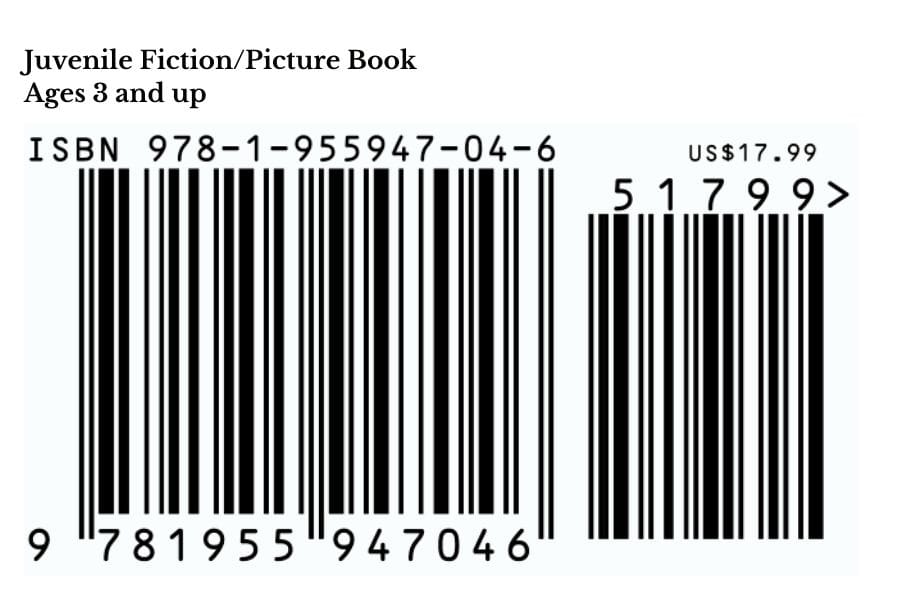
Pro Tip: While you can purchase a barcode from Bowker, don’t. These are available for free elsewhere and should never be paid for.
 Related articleWhat is a Book Barcode and How to get a Bookow Barcode?A detailed look at book barcodes, including an explanation of Bookland barcode versus UPC number, barcode generators, and a barcode's placement on a book back cover.Read the article →
P-CIP costs
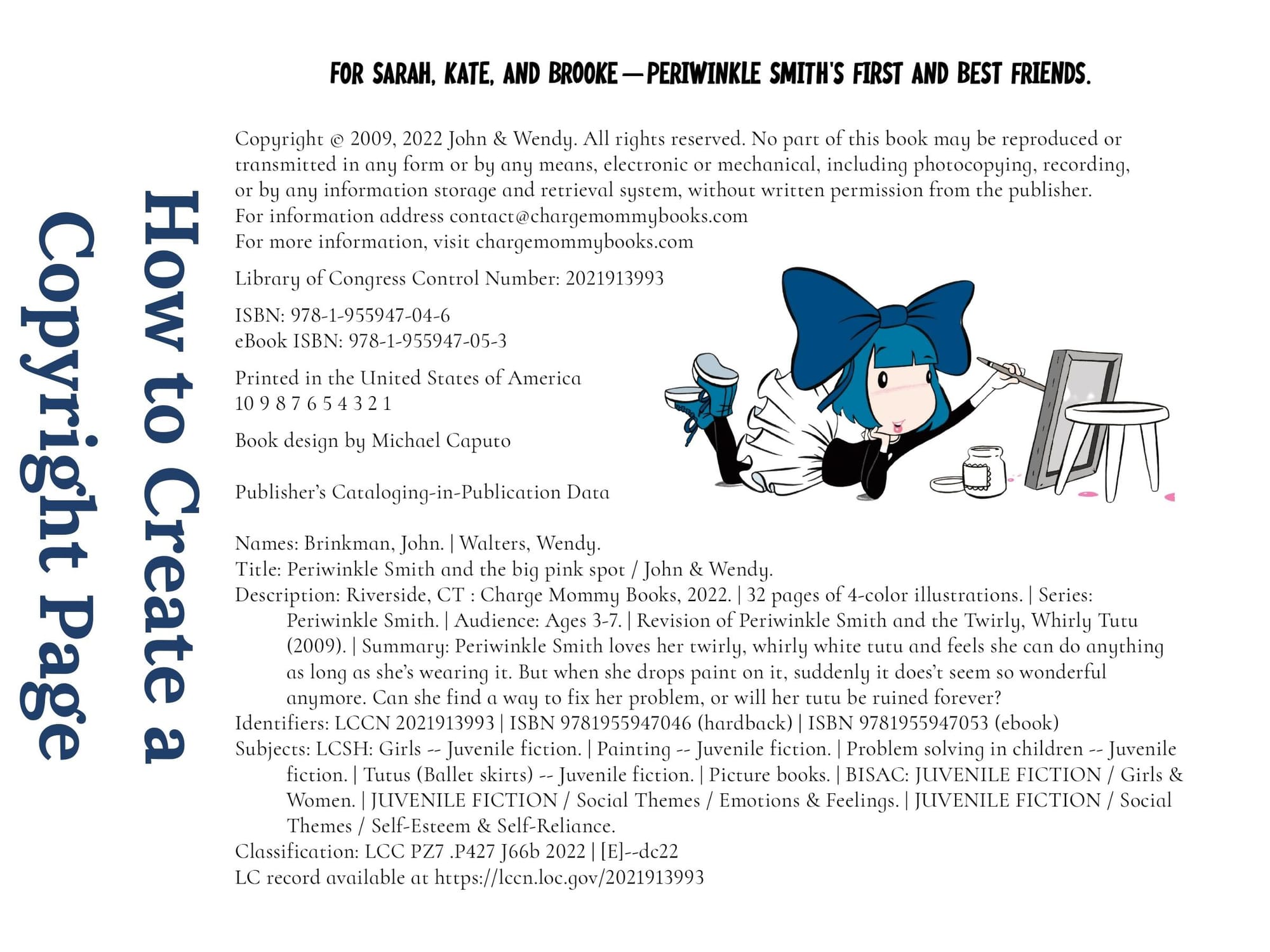
In order to get placement in libraries (at least in the United States), books need to be registered with the Library of Congress. For a traditionally published book, this comes directly from the Library of Congress and is displayed as a block of data called CIP, or Cataloging-in-Publication Data. For a self-published book, CIP data can be acquired through a publishing agent. This is called P-CIP data.
The cost for P-CIP data is between $60 and $74 depending on the publishing agent you work with.
 Related articleWhat is CIP Data, P-CIP Data, And How to Get P-CIP Data?Learn what CIP data is and follow this step by step guide to get a book into a library by getting a Preassigned Control Number (PCN) and P-CIP data.Read the article →
Copyright registration
It is not essential to copyright a book. Technically, an author owns copyright from the moment a book is written. But formal copyright registration does offer certain protections, including the right to sue for copyright infringement. The cost to formally copyright a book through the US Copyright Office is $65.
 Related articleHow To Create a Book Copyright Page (with Template)Walk through every element of the copyright page with this 13-step guide, including a free copyright page template to make creating your own copyright page easy.Read the article →
Printing Costs
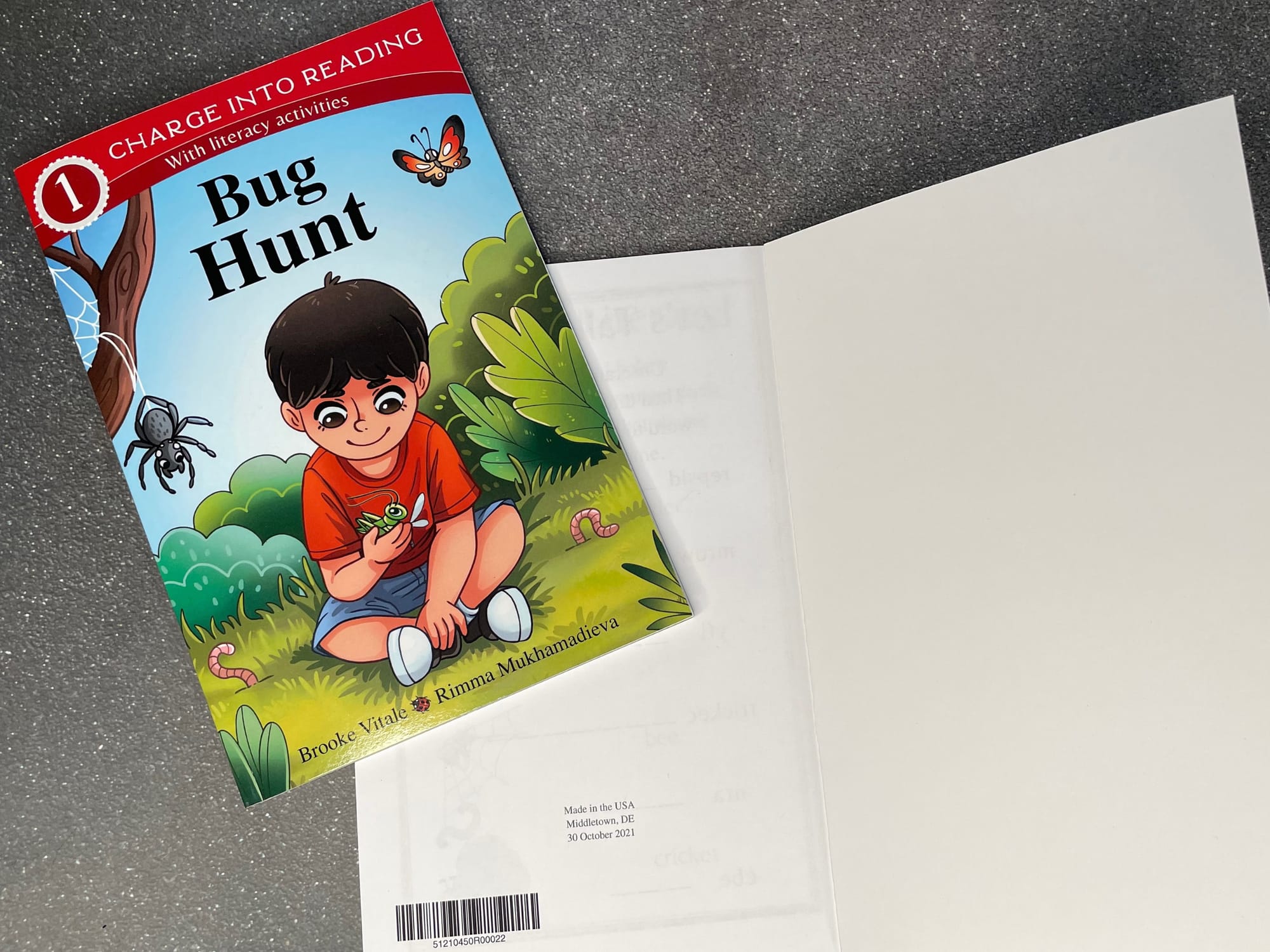
Once a book has been finalized, it is time to print it. Printing a book comes with several options, including whether to go the print-on-demand route or to offset print a book.
Print-on-demand costs
Amazon Print on Demand
Amazon charges no upfront fees to upload books, nor does it charge an author a fee to print books. Instead, the print cost is deducted from an author’s royalty. Amazon book printing varies by page count and the kind of paper being used.
- A standard 32-page picture paperback book print cost is $3.65.
- A 128-page paperback black-and-white book costs $2.39 to print while a 256-page black and white book costs $3.92 to print.
For a full breakdown of print costs on Amazon, check out the Amazon Printing Cost and Royalty Calculator.
IngramSpark
IngramSpark charges a fee of $49 to upload a book for printing. As with Amazon, it does not charge a fee to print books, but rather deducts print cost from an author’s royalty. A standard 32-page picture paperback book print cost is $4.21. A 128-page paperback black-and-white book costs $3.07 to print while a 256-page black and white book costs $4.86 to print. For a full breakdown of print costs on IngramSpark, check out the IngramSpark pricing calculator.
BookBaby
BookBaby charges a setup fee of $399 and requires authors to purchase a minimum of 25 books. Price per book decreases as quantity increases, but is still upwards of $11 per book.
 Related articleWhat Are the Best Print on Demand Book Services?A guide to the best book printing services for print on demand books, including the pros and cons of Amazon print on demand, IngramSpark, Blurb, BookBaby, & Lulu xPress.Read the article →
Offset printing costs
Offset printing is typically a cheaper alternative to print on demand for authors who want to have physical stock of their books. The rates for printing can vary widely depending on what kind of book is being produced and the quantity being printed. Cheaper rates can usually be found by printing overseas, although an author then needs to deal with customs and the long lead time for overseas delivery. For authors in the United States, printing domestically can be more expensive but faster.
In order to secure accurate offset printing costs it is essential to get quotes from printers. However, to give a basic idea, a quote for a 40-page picture book printing 1,000 units overseas recently came in a $2.94 per unit while a quote for the same 40-page picture book printing 1,000 units in the United States came in at $4.60 per book.
 Related articleChildren's Book Printers: The Children's Book Printing BibleThe essential guide to hardcover children's book printing, offset book printing and a vetted list of children's book printers for hardcover book printing.Read the article →
Book distribution costs
Once a reader orders a copy of your book, you need to figure out how to get it to them. Many authors who have chosen to offset print their books will list them for sale on Amazon. To do so, you will need to create a Seller Central account at a rate of $39.99 per month. Amazon also charges an additional $5.64 per unit sold as a fulfillment fee. Should you choose to have Amazon fulfill your orders, you will need to cover the cost of shipping books to their warehouse. Amazon charges an additional $5.40 per book to handle the fulfillment. Should you choose to ship your own orders, you will need to either charge your buyers a shipping fee, or cover the cost of shipping yourself. If you live in the US, the most cost-effective method of shipping is Media Mail through the USPS, which begins at $3.49 for packages under 1 pound. You will also need to account for the cost of packaging materials, which can vary widely depending on how you choose to package your books. If you choose to sell through a website, you would be wise to engage with a third-party such as Shopify, Stripe, or Square to handle payments (and possible to handle your online store). Rates for these companies vary depending on the services you need.
Marketing, Publicity, and Advertising costs
The truth is, there is no set amount of money that you will spend on promoting your books. When it comes to this area of book publishing, it is easy to rack up bills:
- A high-end publicist alone can cost between $5,000 and $10,000 dollars.
- Many influencers charge fees to promote books.
- There are dozens of book awards to submit to for consideration, most of which have fees attached, many ranging from $100 to $500.
- Securing book reviews from sources such as Kirkus and Publisher’s Weekly can range from $300 to $600 per review.
- And Amazon and Google ads, which are based on keywords, each have unique per-click prices for each keyword. These costs can add up quickly, although as the ad manager, you can set a daily maximum spend.
Pro Tip: Before going down the road of marketing, publicity, and ads, consider how much you can actually afford to spend and begin building a plan around your own budget.
 Related article75 Book Marketing Ideas to Boost Sales!75+ book marketing tips to help authors sell books. Includes ideas on website creation, advertising, social media, Amazon Direct Publishing, and media outreach.Read the article →
Costs to creating a publishing company
If you only plan to publish one book, you likely won’t need this part, but if you plan to make a business of book publishing, then you need to set yourself up as a business. And that will mean some extra expenses.
 Related articleWhat Is an Imprint in Publishing and How to Create OneA detailed look at the definition of a publishing imprint, why a publishing imprint is important and a step by step look at how to create a publishing imprint.Read the article →
Incorporating as company
The cost to incorporate varies by state and by country. In the United States, most incorporation fees range from $50-$150, with additional annual fees due each year. Check the requirements of your local government for full details.
Buying a domain name
If you want to start a publishing business, you’ll need to set up a website. That begins with buying a domain name. This can usually be done for a minimal fee, roughly between $5 and $10 per year.
Setting up a website
Unless you are capable of building a website from scratch, you’ll want to consider a service that provides templates for webpages. Among the most popular are SquareSpace and Wix. Rates for these sites vary depending on what deals are being offered at the time you sign up.
Creating a company logo
In addition to a company name, you may want a company logo. The cost of creating one can vary wildly from$10 to $500 depending who you hire, whether art is created for the logo, and how many versions of the logo are provided.
Clearly, there are many moving pieces when it comes to the cost of self-publishing a book. Begin by setting a budget for yourself. How much are you willing to spend? Then start doing your research to find the service providers who meet your needs—and your budget.