What is an ISBN: Buy a Bowker ISBN or Use an Amazon ISBN?
Contents
What is an ISBN?
ISBN means International Standard Book Number. An ISBN is a 13-digit unique identifier tied to each and every book created. The ISBN helps to identify not only a book title, but book format (paperback, hardcover, eBook). Think of it like a barcode at the grocery store. A barcode tells the store what item is being scanned. Roma tomatoes have one code, tomatoes on the vine have a second, and beefsteak tomatoes have a third. They are all tomatoes, but different "formats" of tomato. Books are the same way. Each unique version of a book has its own ISBN that tells the book seller which version of a book is being sold. But just like a tomato can be bought at several different stores, an author can purchase ISBNs from different places. Amazon ISBN, Bowker ISBN, Ingramspark ISBN, Nielsen ISBN . . . each one has pros and cons. So let's dive in!
But real quick, before we do . . . a plea from an editor: the N in ISBN stands for Number, so please, don't call it an ISBN Number! (Otherwise you're calling it an International Standard Book Number Number!)
How to get an ISBN
There are two ways to get an ISBN: get a free ISBN from a print on demand company or purchase an ISBN from the official seller of the country you are publishing in.
What is a free ISBN?
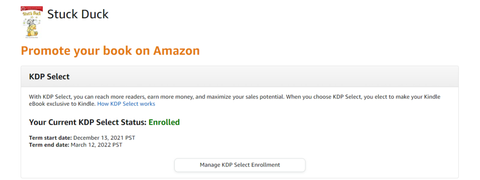
On-demand printing companies like Amazon KDP and IngramSpark offer free ISBNs with book setup. This is a great option for authors who cannot afford to purchase ISBNs. But beware free ISBNs, as they often have restrictions placed on them.
What is an Amazon ISBN?
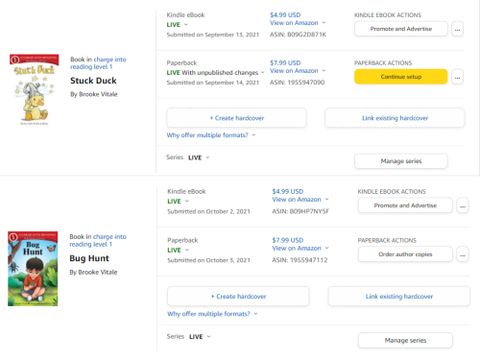
An Amazon ISBN can only be used to sell a book on Amazon. It cannot be used to sell a book through any other retailer. Using an Amazon ISBN also prevents and author from listing their name or the name of their company as the publisher of the book. Instead, the publisher will be listed as Independent Publisher.
For some authors, this is fine. But for authors who intend to build a publishing company, it is better to list their own company name as the publisher.
What is an InsgramSpark ISBN?
Like KDP, IngramSpark also offers free ISBNs. And, like an Amazon ISBN, an IngramSpark ISBN restricts use of the ISBN to its own platform and prevents an author from listing their own company as the book publisher. Instead, IngramSpark lists its own imprint, IndyPub, as the publisher.
Once an Amazon ISBNs or IngramSpark ISBN is used, it is tied to that edition of the book forever. If an author later chooses to use their own ISBN, they will need to set up the book again as a new project. Book reviews from the Amazon and IngramSpark ISBNS do not transfer to the new ISBN.
How to purchase an ISBN
Bowker is the official seller of ISBNs in the United States and its territories. Purchasing a Bowker ISBN lets an author sell a book through any other retailer using that same ISBN. Purchasing an ISBN also lets an author list their name or the name of their company as the publisher of the book.
A Bowker ISBN can be purchased as a single unit or in bundles of 10, 100, and 1,000 (which is really only of value if you are a small publisher). The bigger the ISBN package, the lower the per ISBN cost. A single ISBN costs $125, while a pack of ten costs $295 (only $29.50/ISBN). That means that buying three single Bowker ISBNs is already more expensive than buying a 10-pack. So an author would be wise to think about how many books they plan to publish and in what formats before making any ISBN purchase. If the plan is more than 1 book in more than one format, the 10-pack (or 100-pack!) is the better way to go!
Pro Tip: IngramSpark has now teamed up with Bowker. If you plan to publish a book through IngramSpark, consider purchasing a Bowker ISBN through the IngramSpark dashboard to take advantage of the discounted rate. (One ISBN for $85.)
If you live in the United Kingdom, ISBNs can be purchased through Nielsen Book UK .
Like Bowker, Neilsen sells ISBNs both as single units and in bundles of 10, 100, and 1,000.
A single ISBN through Neilsen costs £89.00, while a pack of ten costs £164.00 (only £16.40/ISBN).
In Australia, ISBNs can be purchased through Thorpe-Bowker in Victoria.
As with Bowker in the United States, ISBNs are sold as single units and in bundles of 10, 100, and 1,000.
A single ISBN through Thorpe-Bowker costs $44, while a pack of ten costs $88 (only $8.80/ISBN).
If Canada, ISBNs can be obtained for free through the ISBN Canada System.
When to buy an ISBN?
Each format of a book requires its own unique ISBN, but does that mean that an author has to purchase an ISBN each time a small change is made to a book? Absolutely not!
buying an ISBN are reserved for substantial changes to the book. For example:
- If you add chapters, have someone write a new foreword, or add a glossary, you’ll want to a buy an ISBN. If you are just fixing typos, there is no need to change ISBN.
- If you change the title of your book, you will need to purchase an ISBN. (Remember that an ISBN is linked to a specific title.) If you are updating cover art, you do not need an new ISBN.
- If you are taking back rights or changing the publisher (as when you shift from a kindle ISBN or IngramSpark ISBN), you will need a purchase an ISBN.
Note: changing the list price of your book does not require purchasing an ISBN. But it MAY require a new barcode if your barcode includes your price.
ISBNs for book box sets
Book box sets are several unique books packaged together. Which raises the question: do you need to purchase an ISBN for each book inside a box set? The big question here is whether the books are also sold individually. If they are ONLY available through the box set, an author does not have to purchase an ISBN for each book inside the box set. It is the set that is being sold, so the ISBN is tied to the box as a whole.
However, if the books are being sold separately and as a book box set, that is a different story. In that case, you need to purchase an ISBN for each book and a separate ISBN for the box set. Giving each book its own ISBN will not only help track where it came from, it will ensure that no one buys the box set (which is usually cheaper than buying all books singly) and then returns a single book at full price.
Do ISBNs expire?
No, ISBNs don’t expire. But they also can’t be transferred. Once you buy one, it’s yours for life. So, if you plan to publish a lot over the next few years, keep that in mind when you decide how many ISBNs you need.
Book barcodes
Many ISBN services offer an added-cost option to include a book barcode. Barcodes are an essential part of book sales. They allow retailers to scan a book and enable them to track inventory. But there is no reason to buy a barcode. Instead, head over to a barcode generator to get one for free.
Three of the top bar code generating sites are Creative Indie Covers , TEC-IT Barcode Generator, and Bookow.
For more information, check out my article, Book Barcode .
What is the difference between ISBN 10 and ISBN 13?
Did you know there are two kinds of ISBNs? Until 2007, book publishers used the ISBN-10. Then we ran out of numbers! That's where the ISBN-13 came from! Okay, yes . . . the ISBN-13 was also created to make ISBNs compatible with the 13-digit EAN codes used across other industries. But here's the fun part. The first three digits of an EAN code indicate the country code. But because books are sold internationally, it was decided that there should be a "country" dedicated to all books. And so, "Bookland" was born, and with it, the Bookland ISBN, which starts with 978. Now, ISBN-13 always starts with either 978 or 979. ISBNs that begin with 978 are backwards-compatible with the old 10-digit ISBNs (which is why you sometimes see both a ISBN-10 and ISBN-13 listed on a book). The only differences between the two? The prefix, and the last number. That last number is called a check digit. When an ISBN is created, a mathematical equation is performed based on the first 12 numbers. The result of that equation is the last digit of the ISBN—the check digit that tells you if the rest of the ISBN has been entered correctly. If the equation is later performed and the result does not come out equal to the check digit, it means the ISBN has not been typed correctly. See, even people who live for words use math!