What is CIP Data, P-CIP Data, And How to Get P-CIP Data?

Contents
Have you ever seen that funny-looking block of text on the copyright page of a book? The one that gives a short book summary with a bunch of numbers tied to it? It’s called Library of Congress Cataloging-in-Publication (CIP) Data, and it's a must to get into a library. But what does it mean, and how do you get it into your book?
What is a Library of Congress Control Number (LCCN)?
The first step to getting CIP data is a Library of Congress Control Number (LCCN) . The LCCN is an identification number the Library of Congress assigns to each book in its catalogued collections. It is also the number libraries use to order and keep track of books. With a Library of Congress Control Number, you can get your CIP data.
What is CIP Data?
A Cataloging in Publication record (CIP Data) is a bibliographic record prepared by the Library of Congress before a book is published that helps libraries know where to file books.
What identifiers does CIP Data include?
- Library of Congress Control Number
- ISBN — International Standard Boo Number
- Bisac Codes
What Is a BISAC Code?
BISAC codes help break a book down into subjects or theme.
They can be vague, such as Juvenile Fiction, or they can dig deeper: Juvenile Fiction--Social Themes--Bullying.
The deeper you dive into BISAC codes, the more specifically you guide both libraries and bookstores in where to shelve your book. Each subject has its own unique code that libraries and retailers can shelve by. (The theme above, for example, would be coded JUV039230.)
What is a CIP data block?
The CIP Data block is the electronic bibliographic record created by the Library of Congress before a book is published. Below is an example of a CIP Data block. CIP data includes the title, author name(s), illustrator name(s), publisher name, book description, LCCN, ISBN, and BISAC Codes. All this information is what libraries use to catalog and file their books.
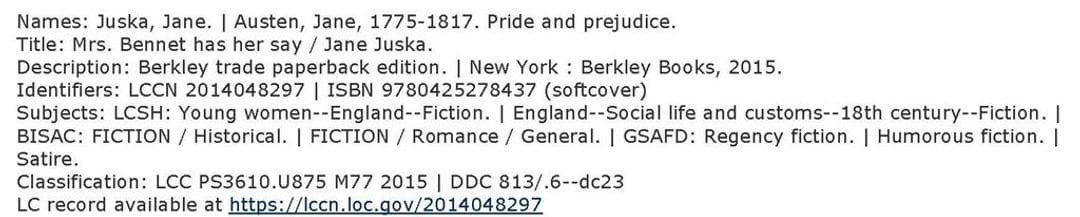
Traditional publishers file for CIP Data (Cataloging-in-Publication) Data for each book. Unfortunately, for self-publishers, getting CIP data is not possible. There are simply too many self-published books created each year for the Library of Congress to create data for all of them. But there’s good news. As a self-published author, you can get P-CIP data—otherwise known as CIP data prepared by a publishing agent. Follow the step by step guide below to learn how to get P-CIP data.
How to get P-CIP data?
1. Get a Preassigned Control Number (PCN) from the library of congress
- The PCN is a unique identifier that can be purchased for your book. It comes from a batch of pre-created Library of Congress Control Numbers. Rather than being tied to CIP data created by the Library of Congress, it simply gives you a number by which libraries can reference your book.
- Apply for a PCN number by going to the PrePub Book Link and going to the Authors/Self-Publishers portal. In order to apply, all contributors' years of birth must be included. Allow 2-3 days to receive a PCN number via email.
2. Get P-CIP Data by reaching out to a publishing agent
- The Donohue Group, Inc.
- Cassidy Cataloguing Services
- Parlew Associates
- Five Rainbows Cataloging Services
Every service listed above will have different rates and different turnaround times. Make sure you do your research before contacting a service and leave plenty time before sending your book to a printer.
CIP Data and P-CIP Data Location?
- CIP Data & P-CIP Data goes on the copyright page of a book.
- P-CIP Data must be filed for before printing a book
- P-CIP Data must be entered on the book copyright page exactly as it is delivered in order to be accepted by libraries.
For more information on how to create a copyright page and get a free copyright page template, check out my article A Guide to Book Copyright and Copyright Registration.