What's The Difference Between Copy Editing and Proofreading?
Contents
Copy editing. It’s one of the more confusing editorial services. Why? Because it’s often mistaken for proofreading. As a new author, it’s hard to know exactly what editing service is needed and at what stage. So let’s take a look at what copy editing is, and the difference between copy editing and proofreading to understand where each fits into the editorial process.
Definition of copy editing
Copy editing is the process of checking for grammar mistakes, story inconsistencies, and typos. A copy editor is not looking at character development or whether a scene is showing versus telling. (That’s a developmental edit.) They are not making sure that all the page numbers are in the right order. (That’s a proofread.) And they are not doing a big rewrite on text. A copy editor may, however, make suggestions on how to make text flow better. A copy editor’s job is to read a manuscript closely, with an eye to the tiny details. Copy editors are ensuring that every comma is where it belongs and that no part of the story is inconsistent with another part. They are making sure that the timeline on a book adds up, and that a restaurant name (or character name!) doesn’t change midway through a book. And they are making sure there are no typos in the manuscript!
What is the difference between copy editing and proofreading?
One of the biggest differences between copy editing and proofreading is when it occurs in the editorial process. A copy edit is done on a manuscript. This occurs before book layout to ensure that a book designer is laying in the cleanest manuscript possible. Making changes in book layout can lead to mistakes, so it is important to ensure that grammar, spelling, story consistency, story timeline, and more are as accurate as possible when manuscript is given to a book designer. Proofreading occurs after book layout is complete, and in the case of a children's picture book, after all illustrations and text have been laid in and finalized. Proofreading is a last check before a book goes to the printer to ensure there are no formatting issues, and that all changes requested in a copy edit have been implemented. A proofread is a comparison between a copy edited manuscript and a book layout. The two are read side by side, word by word, to make sure they match. A proofread also looks for any final typos or grammar mistakes a copy edit may have missed.
What does a copy editor look for?
Spelling
It seems like searching for spelling errors should be easy. But it’s not always as easy as it sounds. Often, an author or publisher will have a preference for how a particular word is spelled (grey v. gray; backward v. backwards). In addition to making sure that every word is spelled correctly and that there are no typos in the words, a copy editor needs to ensure that all of those style decisions are followed in a manuscript.
One way to do this is by creating a style sheet. A style sheet allows copy editors to keep track of every spelling choice, character name, location name, and grammar rule for the story. By keeping a style sheet, the copy editor can not only check that they are making the right stylistic decision, they can also give those decisions to the next person (often the proofreader) to make sure that nothing that goes against the style guide creeps into a book. For more information on style guides ()
Grammar
Most editors want to believe they are great with grammar. But the truth is, many don’t know all the rules of grammar. And that’s okay. We don’t need to, because a copy editor does. A true copy editor can find every gerund that doesn’t belong, every split infinitive or dangling participle. It’s their job to know what that means and how to identify it so that we don’t have to. And the rules of grammar are constantly changing. Back when I was copy editing regularly, my go-to grammar guide was Chicago Manual of Style 14. This book is now up to the 17th edition, with more changes being posted online all the time. The changes aren’t always huge, but sometimes they are. Hyphenations of words change, as does capitalization. Which means it’s important for a copy editor to be up to date on the correct resources, or else a book may go to the printer with errors. Grammar decisions that fall outside the scope of a style manual will also be added to a style guide.
Timeline
Especially on longer books, a copy editor’s job is to make sure that a timeline adds up. If a story starts on Monday, then jumps two days, the copy editor is ensuring that the characters are now on Wednesday. A backtrack to Tuesday would mean that something is wrong. Similarly, if the story starts on Monday and a character mentions that something happened three days earlier, it is the copy editor’s job to ensure that every mention of that event refers to the previous Friday.
Following an accurate timeline can be a challenge for authors (new or seasoned), which is why a copy editor keeps a running list of everything that happens. Traditionally speaking, this timelines will be added to the style guide for the book. This is particularly important in series books, where characters may recall things that happened previously. Not only does the timeline allow the copy editor to ensure that everything lines up, it also tracks key events, allowing a copy editor who did not work on the previous book to align the events of the new book to what has happened before. (And trust me, this matters. I once caught in a copy edit a living character who had died 3 books earlier! And it was the main villain. The author and editor had both forgotten he’d been killed off. And this is why you need a copy editor!)
Consistency
Copy editors are also searching for consistency in each page of the book. Does a character have blue eyes on one page and green on another? Was a door slammed shut but is mysteriously open on the next page? All of these are things a copy editor keeps an eye for to ensure that the book reads as smoothly as possible.
Copyrights
One last thing a copy editor checks for is consistency in copyrights. Specifically, if a name brand is used in a book, is it spelled properly and capitalized properly? And is this a brand that may sue if their name is used without permission? (Bandages, for example, cannot be called band-aids.) It is a copy editor’s job to check these things and call them out as potentially problematic.
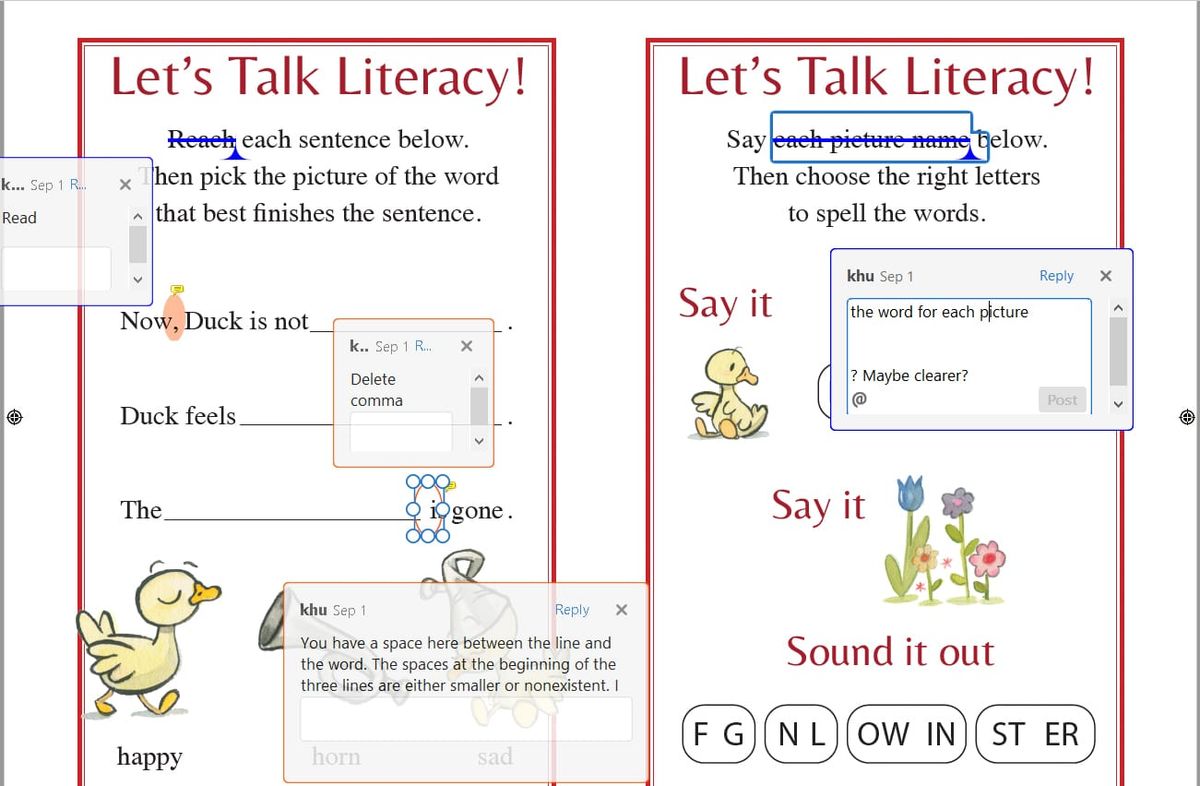
Below is an example of a book that happened to be copy edited as laid out pages. Take note of the questions asked by the copy editor. The copy editor corrected misspelled words, misplaced commas, and questioned word choice for clarity.
Sample literacy activities from the early reader book Charge into Reading: Stuck Duck by Brooke Vitale
Manuscript coding
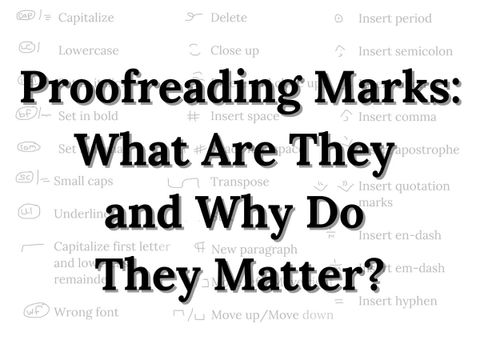
Years ago, copy editing was done on paper. Notes were marked up using something called proofreaders’ marks, a set of symbols every copy editor and proofreader knew and used to ensure that changes were understood.
These days, copy editing is done digitally, often with tracked changes. And with that change came a change in the role of the copy editor. In addition to all of the above, many copy editors will now set up style sheets and code a manuscript so that a designer can properly lay it in. This means they will call out the chapter heads and chapter titles, the section breaks, the subheads, and much more. This is a more detailed process than just copy editing, and takes longer to do, so before hiring a copy editor, ask if this is part of their process and rate.
How much does copy editing cost?
Copy editing rates vary depending on the freelancer. For traditional publishers, a copy editor is typically paid between $20 and $25/hour.
A 2020 survey by the Editorial Freelancers Association showed that freelance copy editors charge on average between $36 and $40/hour, with a rate of between 7 and 10 document pages read per hour.
One important thing to keep in mind when budgeting for a copy editor is that a copy editor will typically read a manuscript twice, so make sure to double the number of hours when you figure out how long it will take to copy edit your book based on your own page count.
Editorial Freelancers Association Copy Editing Rates
For more information about the types of book editing check out my articles: