Editors' Names: Should Manuscript Submissions Be Addressed To an Editor?
Contents
Pick an editor’s name. Query the editor directly. Get a contract for a book! If only it were that easy! But alas . . . not so much! If you’re an aspiring author, chances are you may have searched the books you love for the editor’s name. After all, it’s a great way to find out who to send your own book to, right? But here’s the real question: Did you find it? Probably not! That’s because most book publishers don’t list an editor’s name in a book. Why is that, and should you even try to find the editor’s name? Let’s take a look!
Why don’t publishers list the editor’s name?
It’s a long-standing tradition in publishing: editors do not get their names in a book. Not, that is, unless an author expressly chooses to thank the editor in their dedication. But why is that? Don’t book editors deserve the credit for a job well done?
Sure! As editors, we love a good thank you. We love praise for how well a book did. And at many of the big book publishers, we even bank on the success of a book to get promotions. But most book editors aren’t attention-seekers. If we were, we’d be writing our own books, trying to get our names out there. The truth is, most book editors prefer to work behind the scenes. As a children’s book editor, my job is to make an author look good. To make a reader think that a book came together seamlessly, without any help from outside forces. Putting the editor’s name on a book negates that. We don’t need the attention. (But we will happily take the thank-you chocolates at the holidays!)
Beyond an editor’s own desire to stay private, publishing companies also prefer to keep the name of the editor quiet. After all, a book is not being published by an editor. It is being published by a publishing company. And they are the ones who deserve the credit. Which is why, even in longer fiction, you will rarely see an editor’s name appear on the credits of the book. You may, however, see the editor’s name appear on acknowledgements page, as a thank you from the author.
Of course, there are exceptions to this rule—book imprints specifically named after an editor. Some that spring to mind are Arthur A. Levine Books, Margaret McElderry, and Nancy Paulsen Books. These imprints are often awarded as a sign of lifetime recognition and allow the editor the freedom to acquire anything they want.
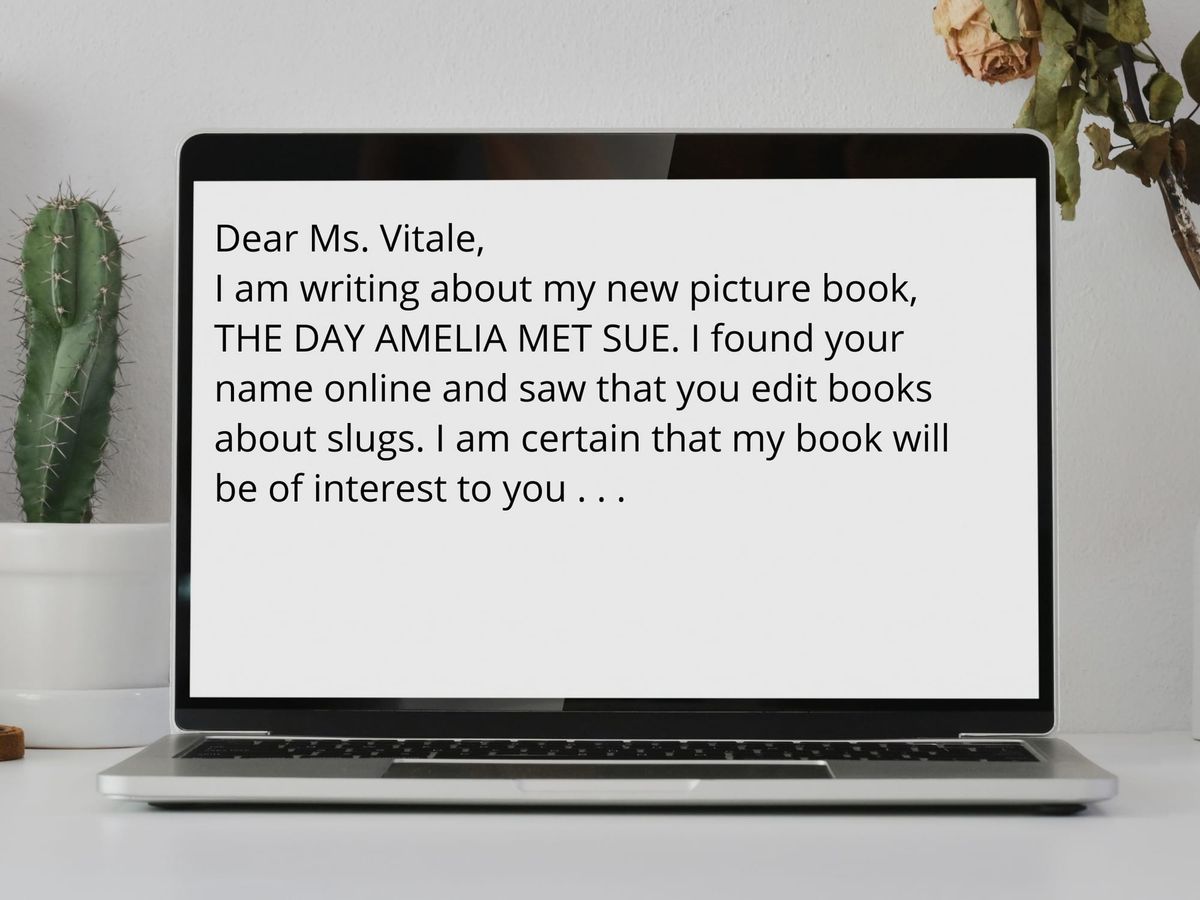
Querying with an editor’s name
In business, the standard logic is that, when applying for a job, you find someone who works in HR at the company and address your letter directly to them. Using a real name and a real email address gets your resume to the top of the pile faster. So the same should be true in publishing, right? Wrong!
In most cases, including an editor name on your unsolicited manuscript submission won’t win you any points—and it may actually lose you some!
Welcome to the Slush Pile!
When it comes to book submissions, most publishing companies and editors are looking to acquire directly from a literary agent. But there are those who are willing to accept unsolicited manuscripts. These manuscript submissions typically go into what is called a “slush pile.” When I was an assistant Sterling Publishing Company, that pile literally meant a cardboard box sitting next to my desk. Whenever a children’s book manuscript came in addressed to “children’s book editor” it got dropped in the box. But here’s the thing: so did almost every manuscript submission with an editor’s name on it. Why? Because if an editor didn’t recognize the name of the person submitting the manuscript, they didn’t give it priority. Which meant that it got thrown in with the rest. And it wasn’t the editor who read them all. It was the assistants, once a month over a pizza lunch!
Want to know a secret about that “slush pile” the assistants get? That pile gets read. Why? Because editorial assistants are hungry for their first acquisition. They aren’t getting proposals from agents, so they have to find their first books another way . . . like through the slush pile. (And yes, I acquired several books that way!)
Manuscript Submissions by E-mail
These days, manuscript submissions are typically made over email. Which means there’s no box to drop them in and no assistant picking them up. A picture book manuscript sent to the “children’s book editor” email address will ultimately be read by someone. But as an editor, I received hundreds of emails a day. Usually about the books I had already acquired. So an email from someone I didn’t know either went unopened, or I read it, filed it away to respond later, and promptly forgot it was there. Maybe it popped back up when I was clearing out my inbox months later. Maybe it didn’t. And I’m not alone in this. editors are busy, and sending an unsolicited manuscript directly to them is a surefire way to end up lost in the pile.
On a more personal note, I also found manuscript submissions from authors who wrote to me as if we knew one another when we had never met to be off-putting. Those submissions often annoyed me enough that they left a bad taste in my mouth no matter how good the book was. And remember, at the end of the day, the goal is not to find an editor to acquire one book. It’s to find an editor to be your partner in ALL of your books. That’s why it is not uncommon for an author to move houses with an editor when an editor switches companies.
Editors’ names aren’t always right
In addition to getting lost in the fray, submitting directly to a specific editor is risky because the information you have may be incorrect or out of date. When I first went to work for Disney, an announcement came out that I had joined Disney*Hyperion. Immediately, my inbox was flooded with manuscript submissions. Except here’s the thing: I had joined Disney Book Group. Not Hyperion. So I wasn’t looking for any of the children’s books being sent my way.
Listings of editor names can be found all over the internet. But that doesn’t mean they are right. Announcements may have been made in error or editors may have shifted companies. Either way, sending a manuscript directly to an editor may result in your submission going missing without anyone ever laying eyes on it. That is why it is important instead of to properly follow the submission guidelines laid out on a company’s website. This is why I don’t offer specific editor or literary agent name in any of my articles. The information changes too fast, and the best course of action is always to focus on a company’s unsolicited submission policies. A publishing company with an email address dedicated to “acquiring editor” or “acquisitions” won’t change their method of contact just because a particular editor changes jobs.
When should you include an editor’s name
Editors don’t toss every manuscript they get into a slush pile. Many, yes. But not every manuscript submission goes there. Because there are times when an editor does recognize a name. Or when they have asked for a manuscript, even if not directly.
Often editors who attend conferences will allow authors to submit manuscripts for a certain window of time after the conference. The same is true of online events such as PitMad, which encourages authors to tweet out summaries of their books and hashtag #PitMad. Agents or editors who are interested in the books will like the tweets, which is an author’s invitation to submit their manuscript.
In both of these cases, an editor’s name will be given, and it is a good idea to include that editor’s name in a pitch. HOWEVER, and this is a BIG HOWEVER, be sure to include in your subject line how you got the editor’s name. Use that space to remind them that the book submission was requested or is welcomed. You’ll be far more likely to get a response!
Related Articles:
- Children's Book Publishers Accepting Submissions
- Top Children's Book Agents Accepting Submissions | Agent Query Guide
- Both articles are updated periodically