How to Submit a Book Manuscript to Publishers and Literary Agents

Contents
1. Prepare the manuscript
Finish the manuscript
Literary agents and book publishers are in the business of finding the next big thing. But in order to do that, they have to see what you have. Although not entirely unheard of, publishers and agents will rarely take a chance on the idea of a book, especially for a debut author. They want to see not only that you have a great idea, but that you have properly executed it. Which means that before submitting a manuscript, query letter, or book proposal, you need to be ready to hit send on the complete manuscript.
Polish the manuscript
As an author, you have one chance to impress an agent or an editor. So make sure you are submitting your best work. Join critique groups, hire an editor, or get beta readers to test your manuscript and make sure the story is as tight as it can be. Then bring on a copy editor to ensure there are no lingering typos. A messy manuscript shows an author who lacks attention to detail, and that’s not something any editor or agent wants to deal with.
Format the manuscript
Manuscript submissions follow particular guidelines, and agents and publishers need to know you are paying attention. Make sure your manuscript is properly formatted and ready to deliver to anyone who requests it. For tips on formatting a manuscript, check out my article, How to Format a Book Manuscript .
2. Research agents and publishers
Back when I was acquiring books, one of my biggest annoyances was submissions from authors whose books didn’t fit what I was looking for. Or worse, didn’t fit what the company was publishing! Getting submissions I could never accept was not only a waste of my time, but of the author’s time as well! In order to effectively submit a manuscript to a publisher or agent, you need to target people who want your book. And that means understanding not only the market, but also the people working in it.
Pro Tip: It is important to note that in almost all instances when submitting an unsolicited manuscript to a publishing company, the submission will go to a general inbox for acquisition editors. The exception to this is book editor who chooses to open their submissions, which typically occurs following a conference. On rare occasions, a book editor will also put out an open call for books that meet the specific genre that they are looking for.
Check acknowledgements pages
As a writer, your job is to know which books are good comps to yours. Spend time digging through those comps. The acknowledgements page of a book will usually list an author’s agent and author. Keep a running list of who is editing the books like yours and what agents are acquiring them. See if you can spot trends in who is looking for your kind of book. Then see if those agents are actively accepting submissions.
Read trade periodicals
Sources such as Publisher’s Weekly are a great way to find out what agents and editors at publishing companies are ACTIVELY acquiring. Remember, it can take more than two years for a book to go from acquisition to print, so even if you’re checking the acknowledgements page of a new release, the editor may not be looking for books in that genre anymore. But book announcements are current. They tell you what people are acquiring TODAY, which is a great starting point for submitting a manuscript to a publisher.
Research publishing companies
Get to know what different publishing companies are actually publishing. Pay attention to who is putting out books similar to your manuscript. Then visit each publisher’s website and see what they have just put out and what they have coming up. Most publishers include their catalogs on their websites, which will give you a good feel for their upcoming releases.
Check to see if the publishers are accepting unsolicited manuscripts (these are manuscripts that come directly from an author, rather than an agent) and what their guidelines are to submit a manuscript.
3. Network within your genre
It’s one thing to know who to submit a manuscript to, but another thing to make the connections necessary. Get to know other writers in your field. Join writers’ workshops to learn more about what’s happening in your genre and get tips on the best agents or publishers to submit to. Some organizations also host workshops and conferences with agents and editors. These workshops are a great way to hear the very people you want to pitch a manuscript to speak, and may even offer you an opportunity to get one-on-one time with an agent or editor.
4. Create a preliminary list of publishers and agents
Creating a list of publishers, editors, and agents to submit a book to is the hard part. It is time consuming and can often feel tedious to read one profile after another. But the good news is, once your list of dream publishers, editors, and agents is built, it’s done. While publishing professionals may move houses or agencies, they don’t tend to shift the kinds of books they work on. Make this list as long as you want, because you never know how many publishers, editors, and agents you’ll need to query.
For children’s books agents accepting submissions, check out my article Top Children's Book Agents Accepting Submissions 2022.
For a list of children's book publishers accepting unsolicited manuscripts, check out my article, Top Children's Book Publishers Currently Accepting Submissions.
For a complete list of agents accepting submissions, check out querytracker.net.
Check agent and editor wish lists
No editor or agent has time to waste on books they don’t want. Which is why they tend to be vocal about what they DO want. Just identifying literary agencies or publishers isn’t enough, as every agent and editor want something different. So do a deeper dive into the actual agents and publishers to see what they are looking for. Many will include a wish list in their bio. The website manuscriptwislist.com is also a great resource for finding what agents and editors are seeking, and will be helpful in narrowing down your long-list.
5. Create a short list
Once your long list is built, it’s time to start narrowing it down to the first few you want to query. While there’s no limit to how many people you can send your manuscript to, it’s worth starting with 5-10 names and then expanding as needed.
Before finalizing your list, check to make sure they are still accepting submissions. If they are currently closed to submissions, DO NOT SEND A QUERY LETTER. Writing to someone who is not accepting submissions is not only pushy, it will make you come across as arrogant to assume you are above following their rules.
It may also be a good idea to look at their social media. If they recently put out a call for submissions, they may be backlogged with proposals. In such a case, waiting a little while to send may mean rising to the top of the pile rather than getting buried in the influx of emails.
6. Send query letters
Now comes the part where you actually submit a manuscript to a publisher, editor, or agent. Or at least, where you submit the idea for a manuscript. A query letter is your pitch to an editor or agent. The sole purpose of writing a query letter is to capture an editor's attention and convince them that your book is the next one they need to read. With the exception of picture books, the query letter is the precursor to submitting a full manuscript. Instead, the goal of the query letter is to get an editor or agent to request your full manuscript. But to do so, you need to make the query letter sing! For more information on how to do so, check out my article, How to Get Manuscript Requests by Writing a Killer Query Letter.
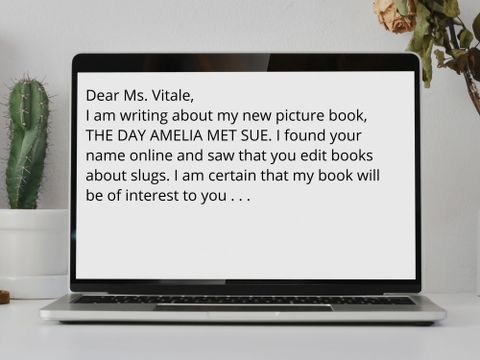
When sending query letters, be sure to personalize them. Rather than saying “To whom it may concern,” address the query letter to the specific agent or editor. If you’ve met them before or were invited to submit your manuscript through an event like #Pitmad, mention that. Otherwise, let them know why you have specifically chosen to submit your book to them over other agents or publishers. What makes that person a unique fit for your book, and why are you and your book a unique fit for that person?
Pro Tip: Every agent and author asks for query letters to be sent in a different way. Pay VERY CLOSE attention to the guidelines laid out on their sites and follow their instructions to a T.
7. Submit your manuscript
Congratulations! You’ve heard back from an agent or editor who is interested in reading your full book. Follow the guidelines laid out in their email or on their company website for submitting. And remember, both book editors and agents have more to do than just look for the next book. Book editors, in particular, also have to get out all the books they’ve already acquired. So be patient. Do not follow up weekly to see what they think. If they like your book and are interested in acquiring it, they will let you know.