Top Children's Book Publishers Accepting Submissions in 2024
Contents
What is a children's book publisher?
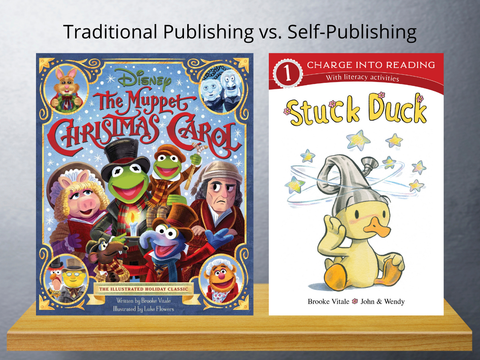
A children's book publisher is a traditional publisher with at least one imprint focused on the sales of children's books. Traditional publishers are publishing companies that acquire books for publication. The biggest thing to understand about traditional publisher is that an author does not hire a publisher, or simply decide to publish with a publisher. A traditional publisher chooses the author, and they are very selective about whose books they choose to publish.
In traditional publishing, the publisher takes responsibility for all aspects of book creation, from editing, design, and art creation to printing, distributing, and marketing. Because they are assuming the financial risk, publishers need to know that they can build a brand around an author. Traditional publishers are not interested in one-and-done authors, nor are they interested in authors who don't have a clear voice. While it's possible to branch out later in a career, authors just beginning their careers would be best to focus on a single type of book, and to seek out publishers who specialize in that kind of book.
While some traditional publishers have both adult and children's book publishing arms, others have only one. Children's book publishers may not publish across all children's book genres, so it is important when considering children's book submissions to research what each publisher actually publishes.
Pro Tip: A legitimate children's book publisher will never ask you to spend a dime. Traditional publishers pay authors, not the other way around. Any "publisher" asking for money will be either hybrid press or vanity press. These contracts are called contributory contracts, and often come either with an immediate acceptance of an unsolicited manuscript or a note stating that the editorial board must first review a book. I personally recommend not signing any contract that asks an author for money.
 Related articleWhat Is an Imprint in Publishing and How to Create OneA detailed look at the definition of a publishing imprint, why a publishing imprint is important and a step by step look at how to create a publishing imprint.Read the article →
What is an unsolicited manuscript?
An unsolicited manuscript is one that a publisher has not requested. In the publishing world, an unsolicited manuscript is similar to a cold call a salesman would make to a potential customer. The hope is that manuscript will be interesting enough to start a conversation.
What is the slush pile?
Unsolicited submissions typically go into what is called a “slush pile.” When I was an assistant at Sterling Publishing Company, that pile literally meant a cardboard box sitting next to my desk. Whenever a children’s book manuscript came in addressed to “children’s book editor” it got dropped in the box. But here’s the thing: so did almost every manuscript submission with an editor’s name on it. Why? Because if an editor didn’t recognize the name of the person submitting the manuscript, they didn’t give it priority. Which meant that it got thrown in with the rest. And it wasn’t the editor who read them all. It was the assistants, once a month over a pizza lunch!
 Related articleHow to Get a Book Published: 7 Steps to Publishing Success!Learn how to get a book published with this 7-step guide that walks authors through the process of securing a book deal with a traditional publisher.Read the article →
Pro Tip: Want to know a secret about that “slush pile” the assistants get? That pile gets read. Why? Because editorial assistants are hungry for their first acquisition. They aren’t getting proposals from agents, so they have to find their first books another way . . . like through the slush pile. (And yes, I acquired several books that way!)
How to avoid the slush pile
Trying to find a children's book publisher accepting unsolicited manuscripts is challenging. After all, most book publishers prefer to work with literary agents. But there are some ways to get an unsolicited manuscript directly on an editors desk:
- Connect with a children's book editor: Children's book editors will often open unsolicited submissions to authors they meet at writers' workshops. Some of the best workshops to check out include:
- SCBWI Annual Summer and Winter Conferences
- Rutgers University Council on Children's Literature One-on-One Plus Conference
- San Francisco Writer's Conference
- Gotham Writers Children's Lit Conference
- Philadelphia Writers' Conference
- Atlanta Writers Conference
- The Bread Loaf Writer's Conference
- Association of Writers and Writing Programs Conference
- The Muse and the Marketplace
- Santa Barbara Writer's Conference
- BYU Books for Young Readers Conference
- The Loft's Wordsmith
- Jackson Hole Writer's Conference
- Sewanee Writers' Conference
- Southampton Writers Conference
- Attend a Twitter pitch event: Editors sometimes participate in Twitter events such #PitMad. If the editor likes what they see, they will request your book.
- Reach out to editorial assistants: Editorial assistants are hungry to find their first books to acquire. Look for professional profiles on social media. Assistants will sometimes put out a call for specific types of books. If yours matches, that's your way in. Just make sure your book is actually in line with what is being requested.
- Get an agent: It is not easy to do, which is why most authors submit unsolicited manuscripts to publishers, but if you are writing a query letter anyway, why not try your hand at finding a literary agent. There are far more literary agents out there than there are editors, and editors are more likely to look at a book that comes from a literary agent.
 Related articleTop Children's Book Agents Accepting Submissions 2024 | Agent Query GuideLiterary agents are the gatekeepers to getting a manuscript acquired by a book publisher, and they are all looking for the next big book. Below are the top 35 children's book literary agencies accepting submissions. For illustrators seeking representation, there are several illustrator agencies listed as well.Read the article →
Top children's book publishers accepting submissions
- Holiday House is a publisher of children’s books only. They specialize in quality hardcovers, from picture books to young adult, both fiction and nonfiction.
- Phaidon Children's Books is a publisher of books for children ages 0-14. They specialize in board books and picture books.
- Creston Books is a publisher of children's books. They specialize in picture books, but also publish novels.
- Quirk Books is looking for high-concept stories for the young and young at heart.
- Chronicle Books publishes an eclectic mixture of traditional and innovative children's books. They are looking for projects that have a unique bent—be it in subject matter, writing style, or illustrative technique—and that will lend their list a distinctive flair. They are interested in fiction and nonfiction books for children of all ages, as well as board books, decks, activity kits, and other unusual or novelty formats.
- Cedar Grove Publishing is a small publisher of children’s fiction. They are seeking children’s books, middle grade, and YA fiction.
Note: Cedar Grove Publishing accepts submissions only twice a year: May 1–June 15 and October 1–November 15.
- Levine Querido is focused on publishing the writing and artwork of authors and creators from underrepresented backgrounds, including people of color, members of the LGBTQ community, Latinx creators, indigenous artists and writers, creators with disabilities, members of minority religions, and more.
- Albert Whitman is seeking picture books, middle grade, and young adult.
- Charlesbridge publishes fiction and nonfiction board books, picture books, early readers, middle-grade fiction and nonfiction (ages 8–12), and young adult novels (ages 12+). Their nonfiction tends to focus on nature, science, math, social studies, biography, history, and the arts.
- Flashlight Press is seeking picture books under 1,000 words that deal with family or social situations.
- Sleeping Bear Press specializes in picture books and middle-grade novels in both fiction and non-fiction.
- Yehoo Press is seeking fun, enchanting, socially responsible picture books. In addition to picture books, they publish chapter books and middle grade books in simplified Chinese.
- TCK Publishing specializes in books for middle-schoolers, teens, and adults. They are actively seeking middle grade-grade fiction and YA that features sweeping themes that kids and young adults can relate to. Their ideal book is one that entertain and enchant not just kids, but also adults looking for an escape. All submissions must be at least 40,000 words.
- Astra Publishing House Astra Publishing House includes Astra House, dedicated to publishing the best non-fiction and fiction writers from the US as well as from around the world; the newly formed Astra Books for Young Readers featuring six children’s book imprints, Astra Young Readers (formerly Boyds Mills Press), Calkins Creek, Hippo Park, Kane Press, mineditionUS, and Wordsong; and Astra Magazine, a new international literary magazine. Currently only one imprint is accepting unsolicited submissions,Kane Press .
- Clavis Publishing is accepting board books and picture books. They ask that submissions be limited to one book.
- Tilbury House is accepting nonfiction picture books for ages 2–12, as well as nonfiction chapter books and graphic novels for ages 8–12 and nonfiction YA for ages 12+. Picture books should be between 500 and 800 words, and all books should be curriculum related.
- Magination Press is seeking books related to social-emotional learning, mental health and wellness, and psychological topics for children and teens. Potential authors should be able to display an expertise in a mental health profession.
- Flowerpot Press is seeking STEAM-related titles for children 12 and under.
- KidsCan Press is seeking nonrhyming picture books for ages 3–8, nonfiction for ages 5–14, early fiction for ages 6–9, and graphic novels (fiction and nonfiction) for all ages. Authors must be 18 to submit. Preference is given to Canadian authors.
- Tundra Books is seeking picture books, middle grade, and Y books Creators must be from underrepresented communities, including identifying as Black, Indigenous, a person of color, or LGBTSQI2S+. Authors who have a disability or have ever had refugee status are also invited to submit books. Note: Tundra does not accept rhyming picture books.
- Cicada Books is seeking activity, picture books, and nonfiction that is a little out of the ordinary and very beautiful.
- Owlkids Books is seeking picture books of under 900 words for ages 3–8, nonfiction for ages 5–14, early fiction for ages 6–9, and graphic novels for all ages.
- Annick Press is currently accepting submissions of picture books, middle grade fiction, YA fiction, and non-fiction for kids of all ages. Their stories feature contemporary themes (even if the setting is historical) and aim to instill kids with the joy of reading.
- August House is seeking single-story manuscripts that feature traditional folktales. They are not looking for original stories written in fable or fairy-tale style.
- Second Story Press is a Canadian feminist press seeking picture books, but not rhyming books or books with anthropomorphized animals. Second Story Press is only seeking Canadian authors.
- Jessica Kingsley Publishers is seeking books that tackle complex or sensitive issues, like bereavement, anger, and depression, making them accessible for young readers.
- Arbordale Publishing is looking for fiction or narrative nonfiction stories with science or math woven into the story. Theyprefer fiction over nonfiction. In every manuscript they look for a "cuddle factor" that will make parents and children want to read it together.
- Levine Querido is in search of will be characterized by great storytelling, undeniably powerful and beautiful artwork, and a fearless commitment to telling deep truths. They are looking for authentic emotion and ideas or perspectives they haven't seen before.
- Marble Press publishes juvenile, literary, and commercial fiction books, picture books, early-middle-grade books, (early readers), middle grade novels and graphic novels. They are interested in narrative nonfiction and books that challenge traditional forms.
How to submit an unsolicited manuscript
Research the children's book publisher
The companies above all accept children’s books in some form. Be sure to check out each one to see if it caters to the kind of book you’ve written.
Craft a query letter
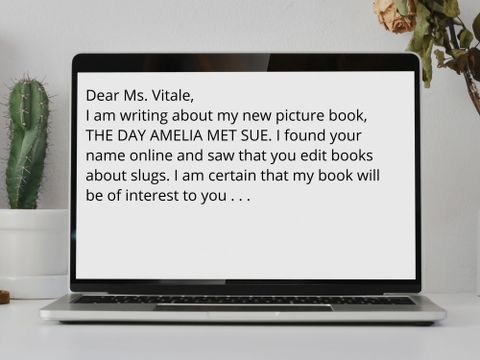
Before you submit a manuscript to a publisher, make sure to carefully craft a query letter that will grab their attention. When I was an editorial assistant at Sterling Publishing (and even as an editor at Penguin), we held pizza parties once a month to review the unsolicited manuscripts we had received. There were usually several hundred in the pile, and only an hour or two to get through them all. If a query letter didn't impress, we didn't even bother reading the book. So remember, the only way to get out of the slush pile is to have a query letter that grabs an editor's attention. That means no grammatical errors and a strong understanding of the children's book market and the manuscript's target audience.
 Related articleHow to Get Manuscript Requests by Writing a Killer Query LetterA step-by-step guide to writing a query letter that will get literary agents and editors requesting your manuscript. With query letter examples and templates.Read the article →
Follow the submission instructions
And remember, different publishers want different materials (and they want them delivered in different ways) so don’t assume the same approach will work for everyone. Read the company’s submissions guidelines carefully to ensure that you are giving them what they are asking for. Failure to do so may result in them tossing your submission without even reading it!
Pro Tip: Although all of the companies below accept unsolicited manuscripts, some have been known to temporarily close their submissions process, while others only accept during a specific window of time.
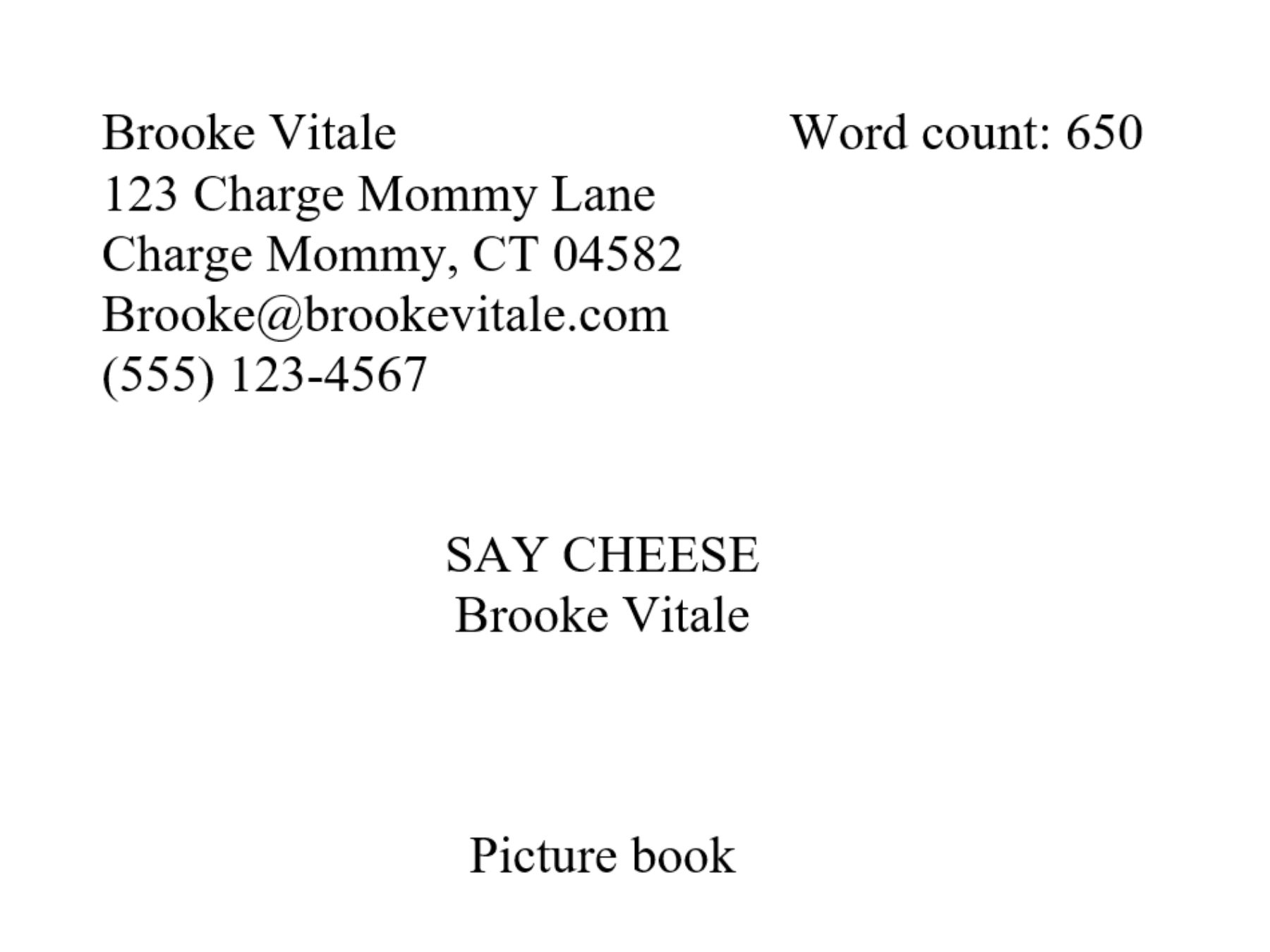 Related articleHow to Format a Book Manuscript: A Complete GuideA comprehensive guide to properly formatting a manuscript for submission to literary agents and editors, including a detailed breakdown of standard formatting choices, the creation of new chapters, and how to create a title page.Read the article →