How to Write a Children's Picture Book in Six Steps
Contents
Writing a picture book seems like it should be the easiest thing in the world. After all, it’s a book for kids. And it’s short! How hard could it be, right? And it’s true, writing a picture book is easy. But writing a GOOD children's picture book? That’s something else.
Writing a really great picture book—one that everyone will be talking about—means understanding children's picture books. It means reading a ton of picture books. It means getting the mechanics of a children's picture book is created. And for that, there are six essential elements an author needs to understand: book page count, target audience, word count, content, illustrations, and the top-selling themes for picture books.
So let’s dig in!
First up, let’s talk about the logistics
Page Count
If you’re planning to go to a traditional publisher, you need to know that a picture book page count is generally 32 pages (occasionally 24, 40 or 48 pages, but that’s rare). Those page counts are set in stone. There are no exceptions. Why? Because of the way a book is printed.
When a book runs through the presses, it gets printed on a giant sheet of paper that then gets folded multiple times. The ends are cut off, and you end up with a set of pages that is either 8 or 16 pages long called a signature (or a half-signature for 8 pages). Those signatures are then bound together to form your picture book. A signature cannot be a different length because the paper just wouldn’t fold the right way. Which means that to do a book of any other length is cost-prohibitive because too much paper would be wasted. For a demonstration of how a book gets made, check out this video!
As you start writing and paginating your book, keep that need for 32 pages in mind. If you get to a 34-page book, go back and start again. Find pages to combine to get to 32. If you’re coming in at 28 pages, try to find pages that can be separated out to get you up to 32.
Also remember as you work toward your page count that you’ll need to include space for a title page and a copyright page, so you’re really looking at 30 pages of story (or 29 if you want your story to start on a full spread).
A Note about Self-Publishing
If you plan to self-publish, there is more wiggle room on page count. Many offset printers (printers that allow you to print in bulk, rather than as books are printed) will allow you print in page multiples of 4, though it may cost you more to do so. (For more information on what an offset printer is, check out my blog: Book Printing: Print-On-Demand Printing vs. Offset Printing.)
Your other option for self-publishing is Print on Demand, a service that prints books as they are purchased. This is done through digital printing, which doesn’t work the same way as traditional printing.
The two big Print-on-Demand services are Amazon KDP (which has a minimum page count of 24 pages) and IngramSpark (which has a minimum page count of 16). KDP allows you to print in page multiples of 4, while IngramSpark allows you to print in multiples of 2. As part of your page count, both services include a barcode page at the back of the book .
The catch is that if you deliver a 32-page book file, you will end up with blank pages between the last page of your book and the barcode page (one blank page for IngramSpark, and 3 blank pages for KDP), so rather than printing a 32-page book, you will want to provide a 31-page file, leaving page 32 for the barcode. (Or a 23- or 27-page file, if you plan a 24 or 28-page book.) Want to see what this looks like? Check out How Can I Avoid Blank Pages in a Print-on-Demand Book.
All that being said, having the option of using fewer pages doesn’t mean you should. Industry standards exist for a reason, and book buyers expect and independently published book to line up with a traditionally published one, so it would still be in your best interest to stick to the traditional page counts.
Page Numbers and Page Turns
As you’re figuring out your page count, also keep in mind your page turns. Remember, with each spread, you want to give the reader a reason to turn the page. You’re looking for the logical breaks in the story, or moments when a thought turns or another action sequence begins. Where possible, you want to set your page turns at a moment that is compelling enough to make the reader want to turn the page to see what’s going to happen next. But to set that up right, you need to know where your pages sit.
It’s tempting to assume page numbers go 1-2, 3-4, and so on. But that’s actually not right. A book always starts on the right-hand side and always ends on a left-hand page, so page numbers on a spread go even-odd. (Pages 2-3, 4-5, and 6-7, not 1-2, 3-4, and 5-6).
*Note: If you are offset printing a self-ended book, your page 1 is actually hidden. Not on the right. Want to see what that looks like? Check out How to Lay out a Children's Book!
For more information on how to determine your page turns, visit A Template for Children's Book Layout and Pagination.
Target Audience
Primary Audience
Now that you understand how a book gets pieced together, let’s talk about who your book is for. The target audience for a picture book is kids ages 3-7. And while it’s true that older children often have picture books read to them in a classroom setting, they are rarely choosing to read those books on their own time. (That’s because children aged 8-10 have moved on to chapter books. Even if a child of that age likes reading picture books at home—or having them read to him—he is unlikely to want to be seen in public with one.) Want to know more about target age ranges for children’s books? Check out: How to Determine Your Book's Target Audience.
So what does it mean to have a book for kids aged 3–7? It means that you need to focus on things these children can understand and can relate to. Keep in mind what a young kids’ experience with the world is and what is interesting to them. A four-year-old isn’t going to want to read a book about a ten-year-old. They can’t relate to what that character is going through and probably won’t understand the book. Young children are still learning how the world works and wont usually comprehend more complex emotional stories. That’s why most picture books tend to be simplified. A book about bullying, for example, would likely focus on a protagonist stepping up to stop the bullying, not the actual physical and emotional abuse the bullied child experiences.
But more than being something they can understand, books for kids this age need to be compelling. They need to keep a child engaged and actively hold their interest.
If you’ve ever read to a kid, you know that they have notoriously short attention spans. If you don’t have a story that keeps their attention, they’re not going to want to read your book. Find a way to engage them, and keep them engaged. Take a look at this example from Don’t Let the Pigeon Drive the Bus, by Mo Willems, published by Hyperion.
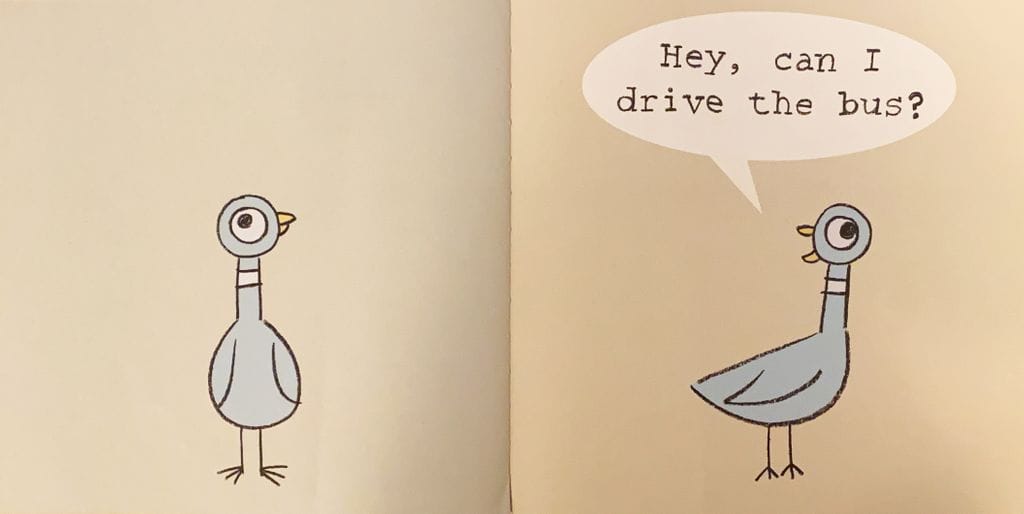
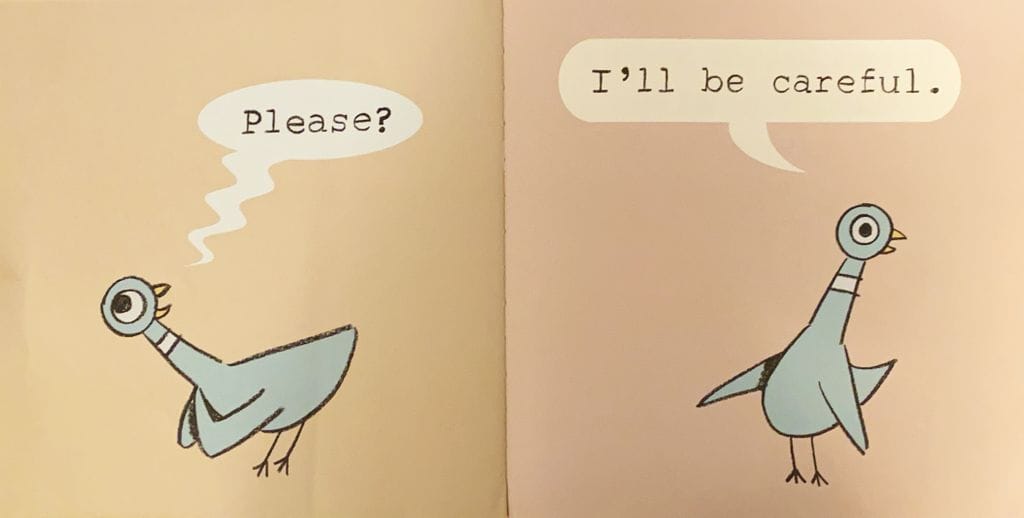
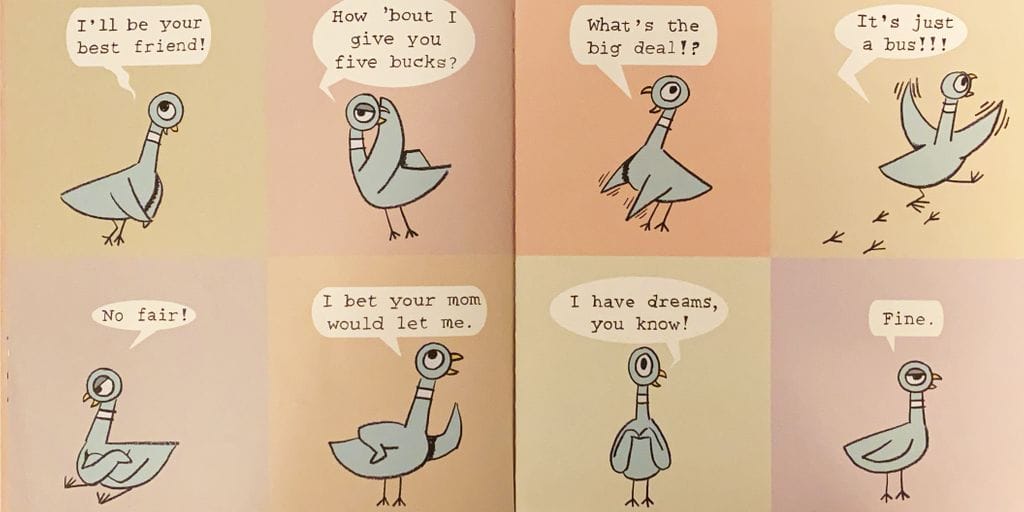
As you can see, the kid is being asked to engage with the book. They are encouraged to answer the pigeon and speak back to him. (And let me tell you, from experience, getting to yell at the book definitely keeps the kids engaged!)
Secondary audience
Unlike most other categories of books, picture books also have a secondary audience: whoever is actually reading. And as much as you need to engage the kid who the book is meant for, you also need to keep the interest of the adult who is reading. Trust me, as the mom of a three-year-old and a five-year-old, I can tell you that there are plenty of books on our shelves that my kids love and I dread reading. And let me tell you, those have a funny way of suddenly ending up anywhere other than their rooms!
For me, if I hate reading a book, it usually comes down to one of two reasons: it’s a bad story, or it’s just too long. Which brings me to . . .
Book Word Count
I’m sure you’ve heard the 1,000 word rule. If you haven’t, general publishing logic says that 1,000 words or less is the golden standard book word count for a picture book, and the sweet spot is really 500-700 words. Which raises the question, does your book have to be under 1,000 words? What do you do if you have a story that’s longer than that? The answer is, no, your book doesn’t have to be under 1,000 words. There are plenty of books that are longer than that, and they have done incredibly well.
Take a look at this example from The Day the Crayons Quit by Drew Daywalt. This book comes in at roughly 1,200 words, and was a huge bestseller. But it also struggled initially to find representation, which just goes to show that while the rule isn’t hard and fast, it does matter.
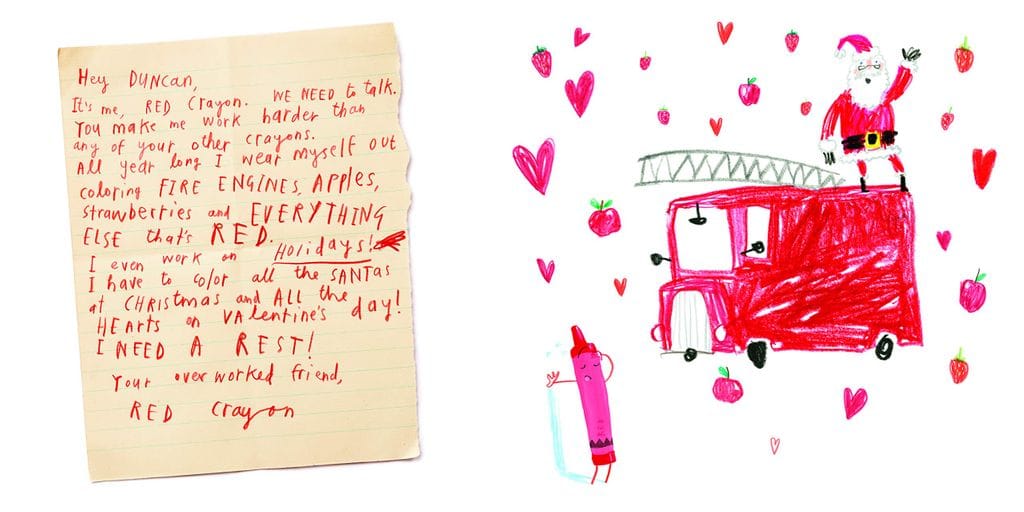
If you’re planning to go down the traditional publishing road, know that many agents do follow the 1,000 word rule. If your book is longer, they won’t even look at it. But if you plan to self-publish, you’ve got more wiggle room.
Here’s the catch. You still need to create a book a parent is willing to read. So if you’re going to be over that 1,000 words, your story needs to merit the long length. And the truth is, often it doesn’t. So do yourself a favor and take a long, hard look at your words. Are they all truly contributing to the story, or do you have extraneous material in there that could be cut and your story wouldn’t suffer? Are you using fifteen words to say something you could say in five? If you’ve written something and it’s coming in at 1,500 or 2,000 words, chance are there are things you don’t need in there. If you can’t find them yourself, ask someone who hasn’t looked at your story before to tell you what you can cut. More often than not, I’d be willing to bet you are either holding on to a scene that you feel a close connection to, but that you don’t really need, or you are dedicating a lot of text to physically describing a scene. (For more information on how to cut text, check out my blog: 5 Steps to Cut Text in a Picture Book.)
So, now that you know what goes into a picture book, let’s talk about ideas.
Top-Selling Themes for Picture Books
When it comes to writing for kids, you want to think about what would interest a kid in the target picture book age range. You probably have an idea that rings true to you, but a little guidance on what is currently working for the market never hurts.
Across the board, the best-selling picture book themes have always been bedtime, farm, and ABC books. Again, these are things kids can relate to. Kids understand bedtime because they have their own bedtime routines. Reading about something they do every day is something they understand. And anyone who has or interacts with kids could probably tell you that some of the first things we teach our children are what cows, pigs, and sheep say. We show them pictures of animals and tell them what they are and how they sound. We sing Old MacDonald until we run out of animals and then we start over again. So it’s no surprise there, either, that kids gravitate to stories that happen on a farm. And of course, kids love ABC books. We want to teach our kids to read, so we teach them their ABCs in any way we can—especially with ABC books.
Also high up in top-selling themes are holidays, in particular, Christmas, Easter, and Halloween, or books that can be loosely tied to the holiday. Again, kids can relate to these because they are events they celebrate with their families. But holidays also do well because there is a way to market them in-store. Whether you are in a Barnes and Noble or a Target, you’ll see aisles and tables dedicated to holiday items at the right time of year. They know people are coming in looking to buy that stuff, and they load up on it.
Take a look at this New York Times bestseller list from December 2020:
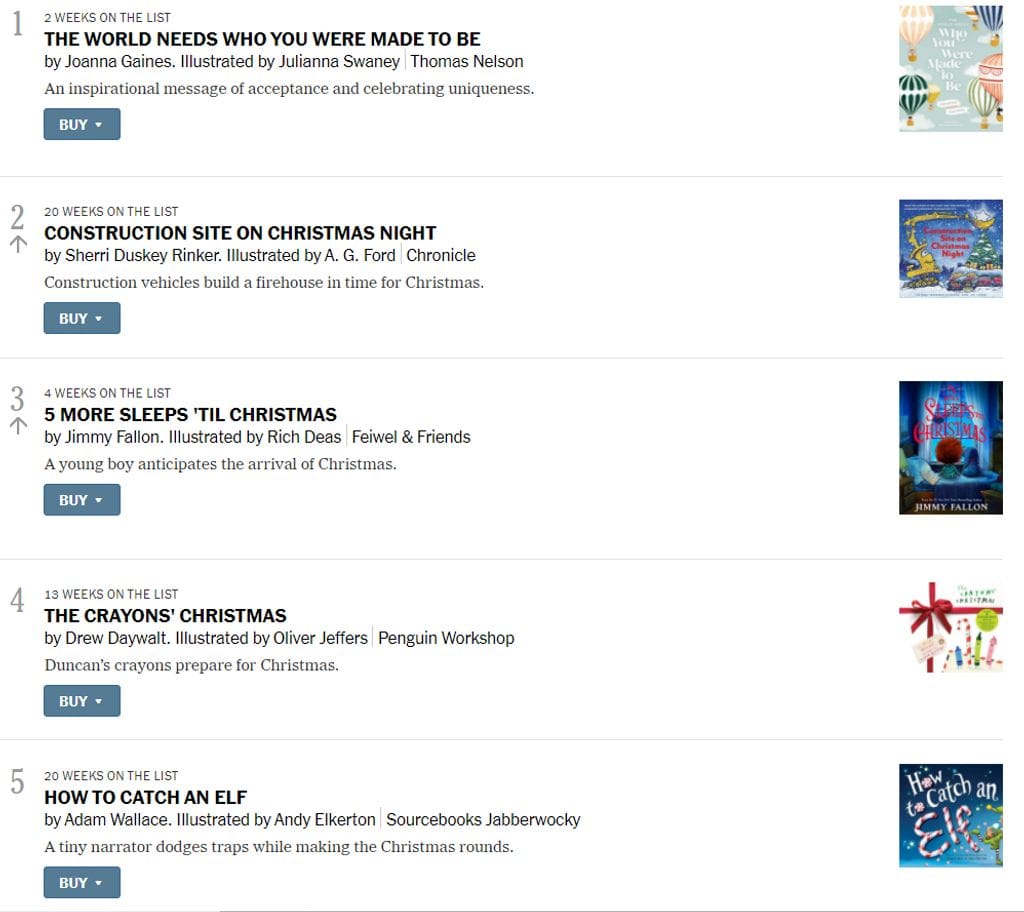
Recently, though, we’ve seen a rise in books related to smaller holidays. Graduation. Mother’s Day. Father’s Day. Again, these are promotional moments, and retailers are taking advantage of them. The good news on these holidays is that the books are not usually a direct tie-in. Graduation might just be a book about doing good things in the world. Mother’s day might be a book about a mom and her daughter. It doesn’t have to be focused specifically on Mother’s Day to make the cut.
Here's another bestseller list from May 2021:
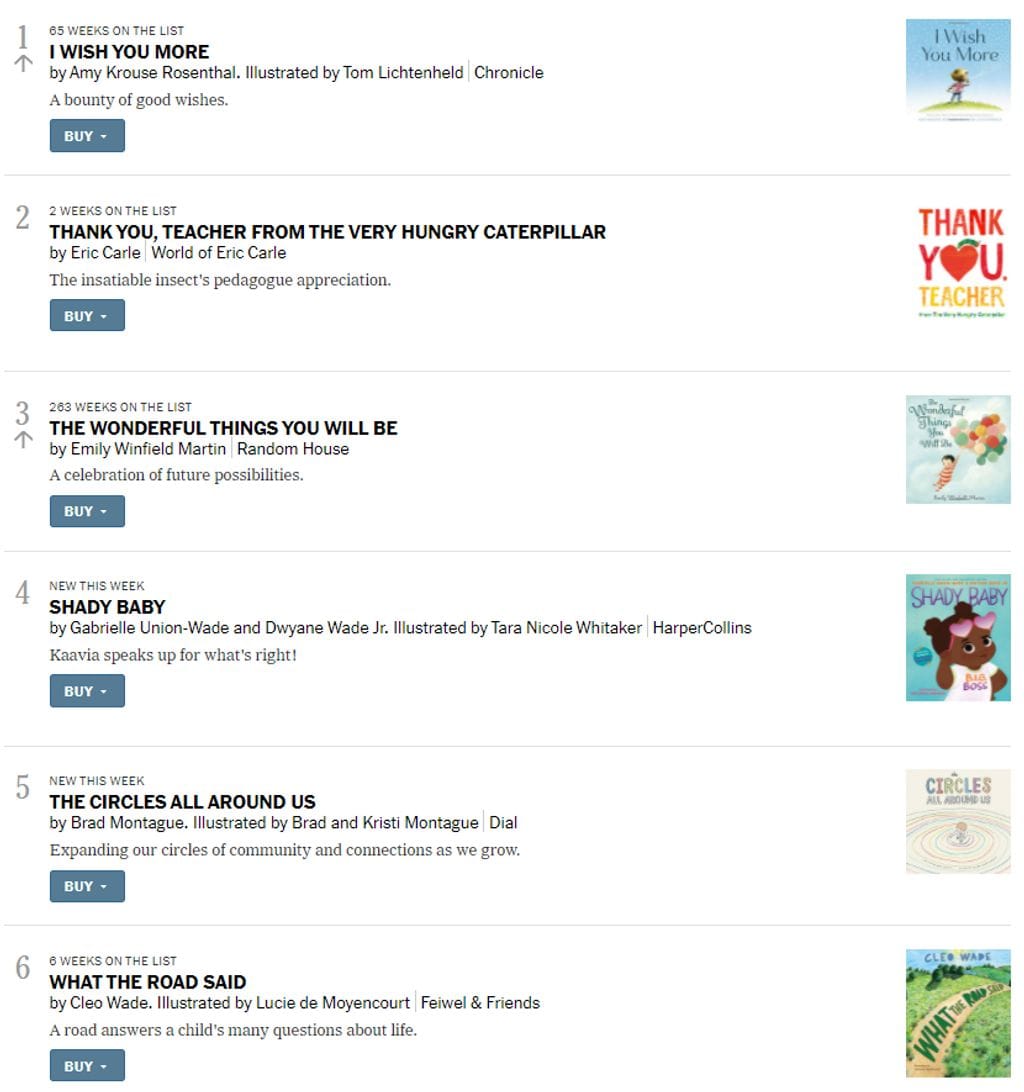
There’s a catch here, though. With traditional publishing, most publishers want a book each year tied to each of these themes. But they only want one, because they have a whole backlist to sell. So you’ve got to make sure yours stands out from the crowd. Self-publishing is the same. These books sell well, but there are lots of books out there on these themes. The trick is to come up with a new angle. Just going out there with a book about a farm isn’t going to make you stand out. Come up with something that makes your book different from all the other farm books, or ABC books, or bedtime books out there, and then do your best to really make what’s different about the book shine. Find a theme that works, but make it yours!
Beware Trends
It can be tempting to write on something that seems important to the world, but beware of coming into a trend too late. Do your research. See what else is out there. Ask friends. Ask writer’s groups.
From May 2020 to May 2021, I personally edited:
• 4 books about kids going to outer space
• 5 books about choosing a career and the different options
• 3 books about self-love, 6 about mindfulness, and 6 about being in touch with your feelings
• 6 books about the first day of school
• 6 books about Corona virus
• 15 books about kids traveling to different countries!
That’s one editor in one year, and I'm sure other editors were getting similar lists. So ask around. You might be surprised to find that something you think is a unique idea is actually one of two hundred books on the subject.
Let’s Talk Content
Now that you know what goes into making a book and how to pick a story idea, let's examine the actual content of a picture book, starting with the elephant in the room:
Can My Book Rhyme?
I’ve had a lot of people say to me recently, “I hear publishers don’t want rhyming books.” Let me quickly put that idea to rest. Publishers have nothing against rhyming books. In fact, the only issue with a rhyming book is that it is harder to sell international rights to it, but if you get a good agent, that will be their issue, not the publisher’s issue, because they’ll make sure you retain international rights! What publishers don’t want is bad rhyming books. Books with forced rhyme, books where the meter is off, books where works kids can’t understand are being used or the grammar is terrible just to make a rhyme work. There are tons of great rhyming books out there that have done phenomenally well.
Llama Llama Red Pajama by Anna Dewdney immediately comes to mind.
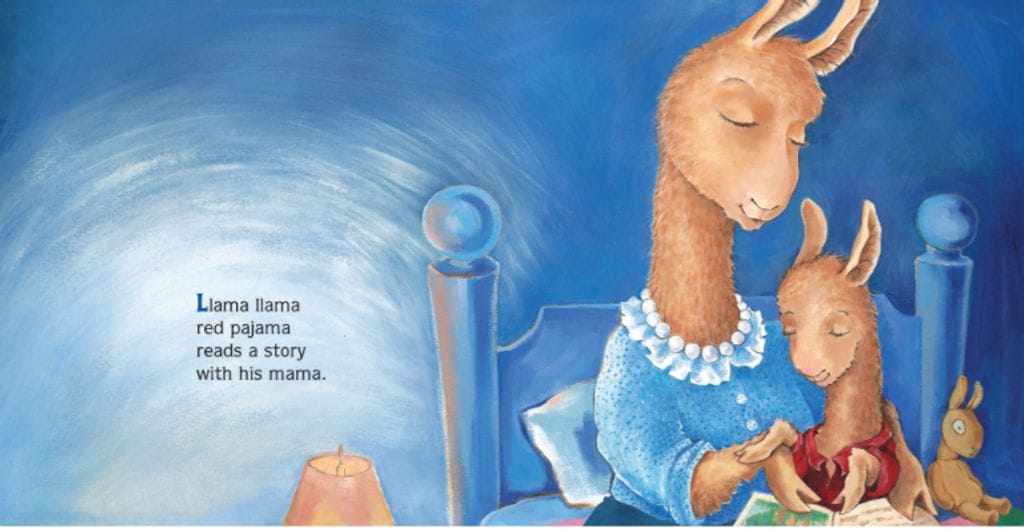
What that means is, if you want to write a rhyming book, by all means, go for it. Just make sure the rhyme works. And remember that sticking to a rhyme scheme works better for a simple story. The more complicated your story, the harder it is to get all your points across in rhyme. For more information on writing in rhyme, check out How to Write a Rhyming Children's Book.
Can I Use Big Words?
As you start writing, keep in mind the importance of using language little kids can understand. The good news about a picture book is that the young child enjoying the story isn’t actually reading the words. That makes it easier to use bigger words, because they aren’t beginning readers who have to figure out how to sound them out.
Kids know a lot more words that we give them credit for, and hearing a new one in a book is always a great opportunity for a learning experience, especially since there will be someone there to ask if they don’t understand. The odd big word here and there is fine if it is used in context! But make sure you’re not using big words just for the sake of using big words. And make sure you’re generally writing at the level a kid will understand without having to stop and ask questions. I say that because each time a kid has to ask what something means, they interrupt the flow of the story, making it that much more likely that they are going to lose interest.
Who Should a Picture Book Be About?
This comes down to what kids can understand and relate to. And the answer is that they can relate to themselves! That is why so many picture books are about children. Just keep in mind life experience. A four-year-old can’t relate to a ten-year-old’s life, so try to keep your protagonist in the same age range as your reader.
These days, publishing companies prefer to have picture book protagonists who are human. But for authors who intend to self-publish, the sky’s the limit: is your main character an animal? A monster? A vegetable? Whoever your story is about, have fun with it!
Should a Picture Book Be Written in Past Tense or Present Tense?
Most picture books are written in past tense. That is because they skip around in time. Present tense works well in books for older readers because we can get inside a narrator’s head and find out what we missed. But with picture books, that’s not usually an option. Present tense is great if the entire story is told without any time lags, but if you are jumping around at all, it will likely read better in past tense.
How About First Person versus Third Person?
Although there are absolutely exceptions, most picture books are written in third person. Why? Again, it comes down to the audience. Young children love to hear stories, but many don’t have the imagination yet to picture themselves in the story. Setting in first person makes the reader feel like a character. Their imaginations must immerse them in the story. Using third person allows them to enjoy a story as an observer, which they are more accustomed to doing. First person also limits what the reader can see and know to what their narrator sees and knows. Third person gives a bit more flexibility, as the whole world isn't seen solely through the narrator's eyes.
With your content down, there's just one piece left to consider . . .
How do illustrations factor into a picture book?
The big difference between a picture book and any other kind of book is that you don’t need to paint a visual picture in the reader’s mind of what’s going on with the text. That’s what your art is for. And that’s what you should use it for.
Don’t use your text to tell us what we’re going to be able to see on the page. If your character can be seen wearing a green hat, there’s no reason for you to tell us in your text that his hat is green. Now, on the other hand, if your character is chasing someone and they are identifying him in a crowd by his green hat, by all means tell us the hat is green. That’s a visual cue to the story that we can then use to find the character who is being chased on the page.
By the same token, your art shouldn’t simply reiterate the action that is taking place in your text. It should further the story and give us information not provided in the text. In a best case scenario, the two should compliment each other, each contributing different pieces of the story.
Take a look at this page from The Day the Crayons Came Home by Drew Daywalt:
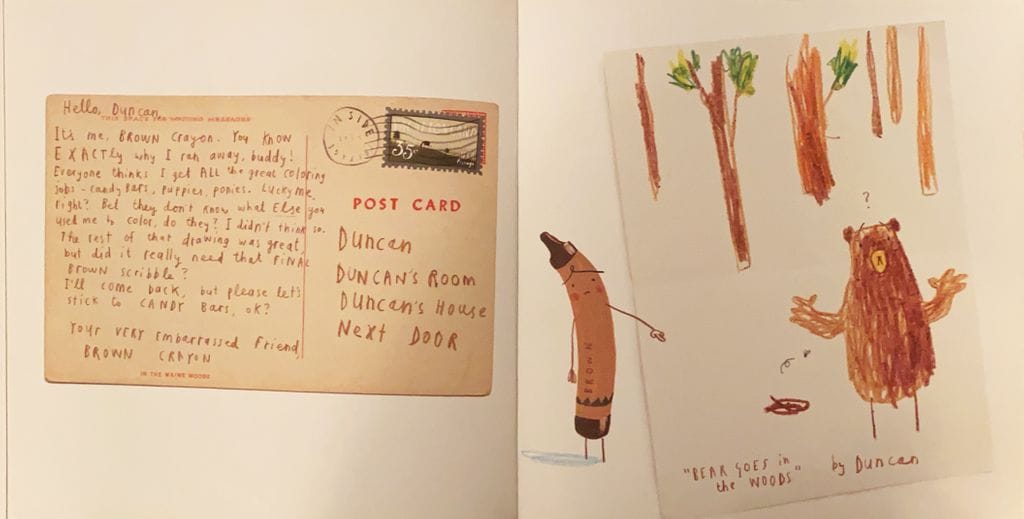
Here we see that the brown crayon is upset by something Duncan did, but he doesn’t explicitly tell us what. That’s left to the art.
Here’s another example from Clifford the Small Red Puppy by Norman Bridwell:
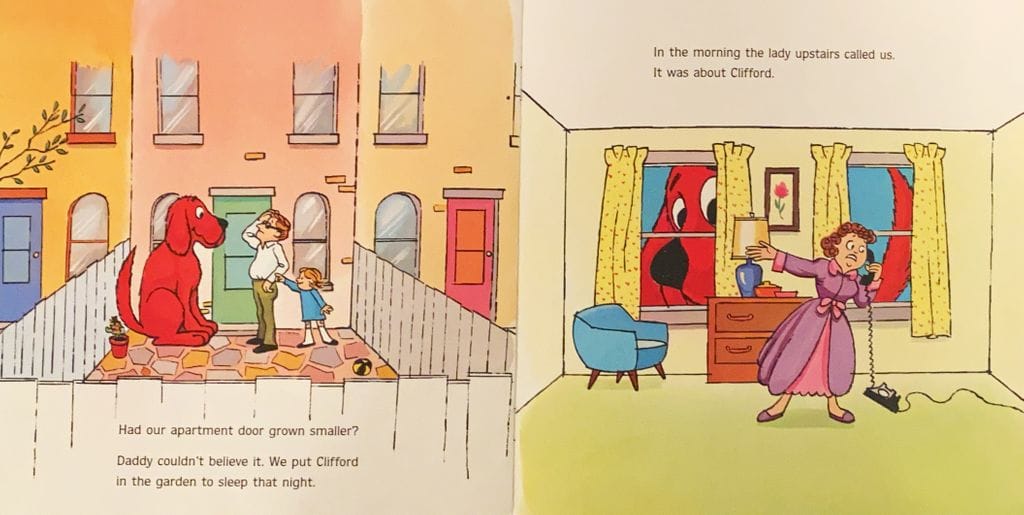
We can see that a phone call is happening and that there’s a problem with Clifford, but the fact that he’s grown to the second story of a building is left totally to the art!
Here’s one more example to look at: Chicken in School by Adam Lehrhaupt.
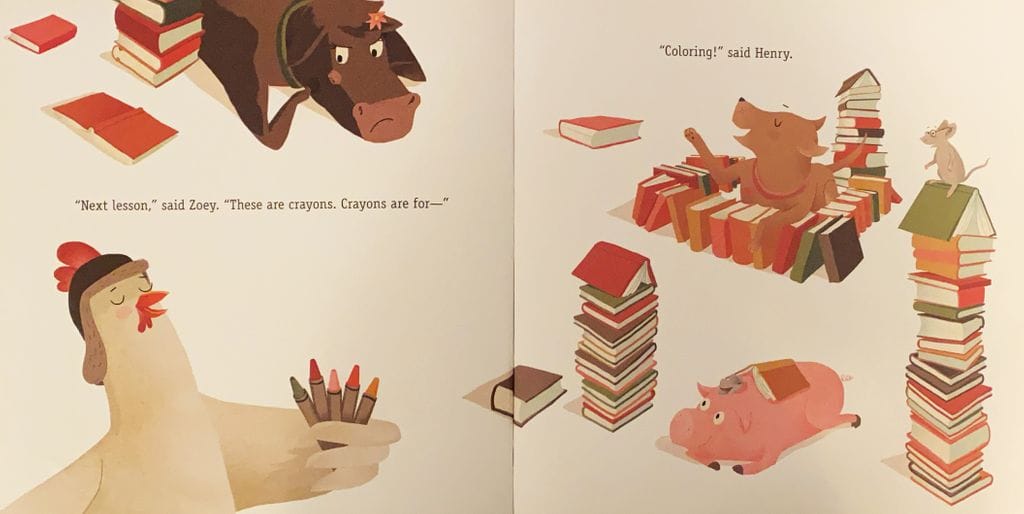
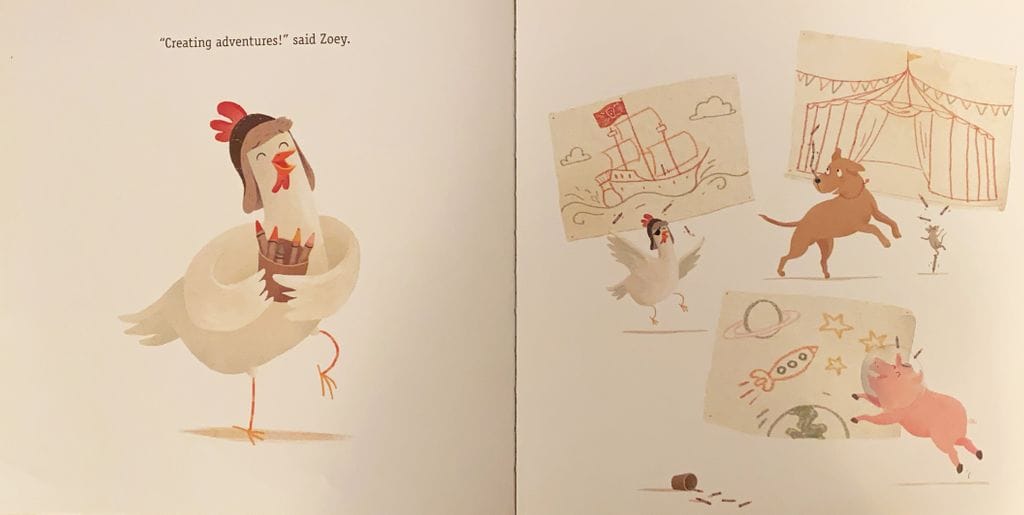
Here we can see Zoey the chicken saying that crayons are for creating adventures. But she doesn’t tell us what that means. She shows us with the art she drew!
Of course, here’s the catch. As great as the art is, your story needs to be able to stand by itself, without any art.
If you’re planning to go the traditional publishing route, you likely won’t have much say over your final illustrations, or over who illustrates your book. Unfortunately, that is the sad reality of selling a picture book to a publishing house. They will buy your manuscript and then hire the illustrator that they think best compliments the book. What that means is, please, unless you happen to be a talented author AND illustrator, when you are querying agents or publishers with your book, do not send it with art samples or art that you hired someone else to create. Agents and authors want to know that your book is good, and they want to be able to attach an illustrator to your book that fills THEIR vision for your story. If you send a book in with illustrations attached and the person reading it doesn’t like the illustrations, it can leave a bad taste in their mouth for your whole story. Focus instead on giving them a strong story that’s so good that they can visualize what’s happening as they read. If your story is strong enough that an agent or an editor can envision the art as they read, then you’re in a great place.
That doesn’t mean your vision for the illustrations isn’t important. And that’s what art notes are for. As you paginate your book, think about what you’d like to see on each page and add it under the text, especially if you feel there is something important the art needs to convey. (I usually set it off in italics below, with a note that says it’s art. That way someone can skip over reading that part if they want to.) When querying an agent or a publisher, I wouldn’t recommend sending art notes for every page. But if there’s something that the agent NEEDS to know—an art note that makes the story make sense, and without which the story doesn’t work—then by all means add it!
If you’re planning self-publish, your art notes will need to be more detailed. You’re hiring the illustrator and it’s your money on the line, so you’ll want to give them as many details as you can, especially if you have a particular vison for how the art will look. But do also trust that your illustrator is good at their job and will have a strong vision of their own. For more information on what goes into creating art, check out my blog, How to Illustrate a Children's Book?
If this is the route you take, I urge you, don’t start art until you have your text locked. I have seen too many books come my way for an edit with all art already done. At that point, there’s not much I can do. Any suggestions I have for improving a story have to stay within the confines of the existing art, which doesn’t leave much room for adjusting plot points if necessary. Get your text perfect first. Get your art notes set first. THEN bring someone in, once you’re sure nothing is going to change. (And find out if your illustrator is also a designer. If not, you’ll want to bring a designer on board first to set text and see how it fits on the page. The last thing you want is to get back final art and realize there is nowhere on the page to put your text because the illustrator didn’t think to leave open space.) For more information on what to do before hiring an illustrator, check out 4 Things To Do Before You Hire an Illustrator .
If you can capture all of these elements, you will be well on your way to writing a picture book.