What Is Iambic Meter: Stressed Syllables within Iambs
Contents
What is iambic meter?
Iambic meter is style of poetic verse in which every other beat—or syllable—is stressed. In iambic meter, each metrical foot is a called an iamb. This term comes from the Greek word iambos, which describes an unstressed syllable followed by a stressed syllable.
Below is an example of verse in iambic meter. The stressed beats appear in red, while the unstressed beats appear in black.
One day as I walked down the street, I spied a candy store so sweet.
What is a stressed beat?
In rhyme, stressed beats—or upbeats—are the syllables that get emphasized when reading. Unstressed beats—or downbeats—are the syllables that fall to the back and receive less emphasis when reading. All words contain natural stresses. When writing in rhyme, it is important to understand where those natural stresses fall in a word and to ensure that the naturally stressed syllables of the word align with the location of the stressed beats in a line of meter. To determine which syllable in a word is stressed, consider looking up the word in the dictionary. The syllable with the ‘ symbol before it is the stressed beat. Try saying the words apostrophe, helicopter, and cartoon aloud. Listen for where you naturally stress the word. The example below phonetically shows where the stressed beats or syllables are:

In the word apostrophe, the stress falls on the second syllable. In the word helicopter, the stress falls on the first syllable. In the word cartoon, the stress falls on the second syllable.
Remember, different accents can lead to different pronunciations, and therefore different stressed beats. A great example is the word tire, which can be read as one syllable or two, depending on the reader’s dialect and pronunciation. When in doubt, always check a word in the dictionary to confirm where the stressed beat truly falls.
What is iambic dimeter?
Iambic dimeter is a line of poetry written with two iambs, or metrical feet. Iambic dimeter typically contains four syllables per line, though it is possible to contain a fifth syllable if one line starts on an extra downbeat. On rare occasions, iambic dimeter will contain 3 syllables: two stressed beats and a single unstressed beat.
Take a look at this example of iambic dimeter from Three Ways to Be Brave by Karla Clark, illustrated by Jeff Östberg, published by Penguin Workshop.

Below is another iambic dimeter example:
The ball flies far; It hits a car. Then rolls away, It’s time to play!
What is iambic trimeter?
Iambic trimeter is a line of poetry written with three iambs. Iambic trimeter typically contains six syllables per line, though it is possible to contain a seventh syllable if one line starts on an extra downbeat.
Below is an example of iambic trimeter:
A boy went to the mall, To buy a rubber ball. But then he saw a cat, And I guess . . . that is that!
What is iambic tetrameter?
Iambic tetrameter is a line of poetry written with four iambs. Iambic tetrameter is one of the most popular rhyming patterns in children’s picture books, and can be found in books such as Llama Llama Red Pajama by Anna Dewdney, published by Viking.
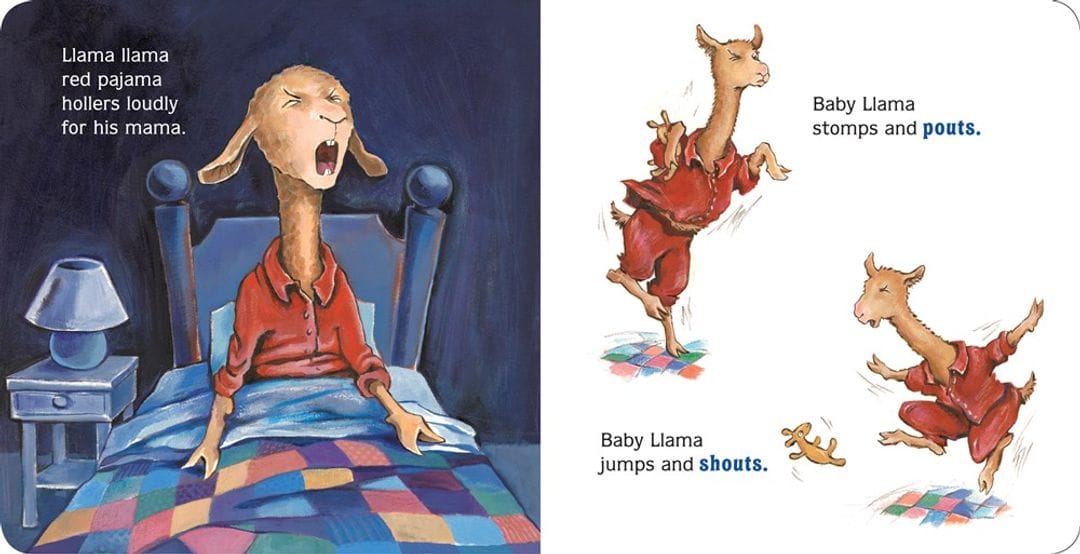
Iambic tetrameter typically contains eight syllables per line. Take a look at another example fromPeriwinkle Smith in Stuck Duck by Brooke Vitale, illustrated by John & Wendy, published byCharge Mommy Books .
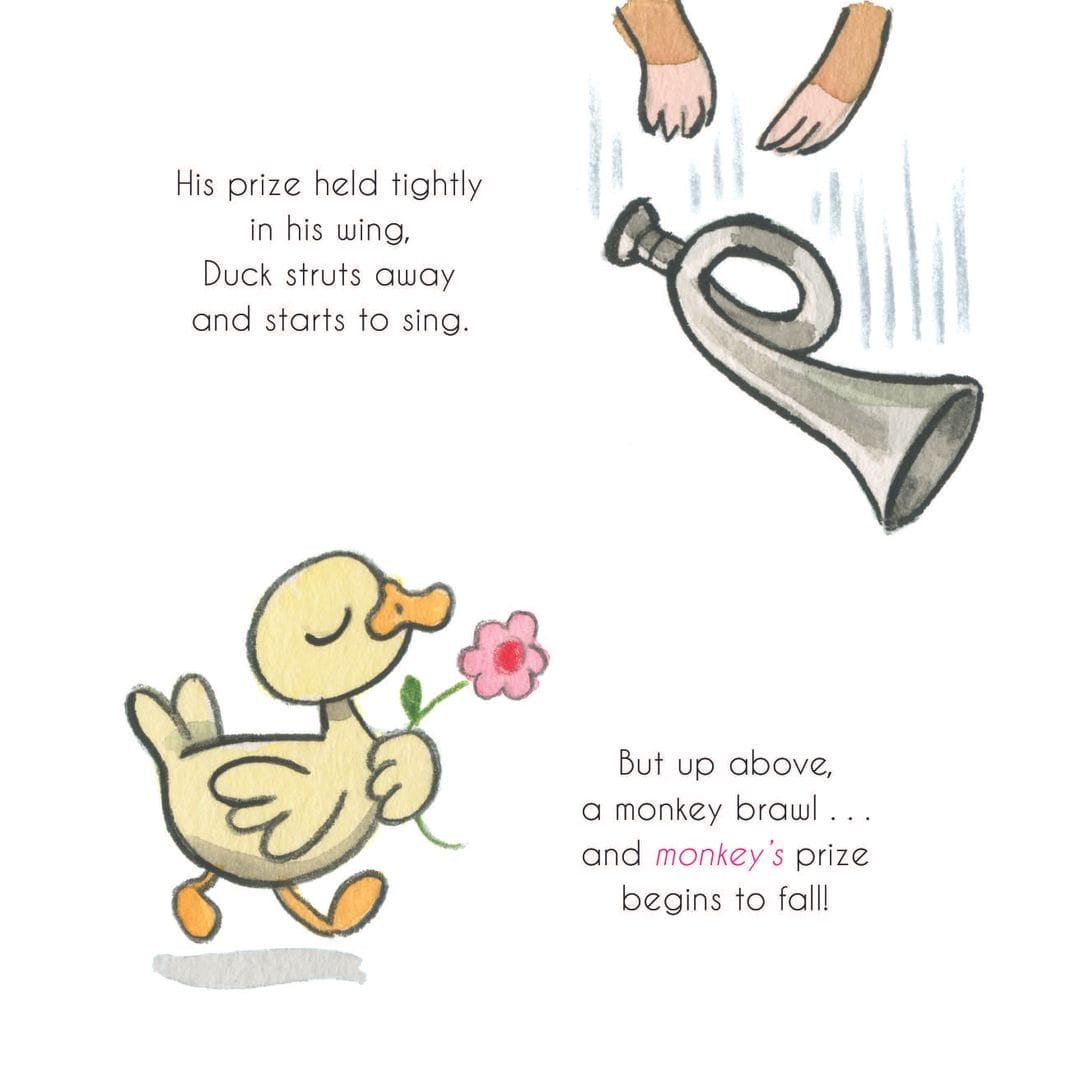
Here, each line contains four stressed beats and four downbeats:
His prize held tightly in his wing, Duck struts away and starts to sing. But up above, a monkey brawl, And monkey’s prize begins to fall.
Pro Tip: The difference between iambic dimeter and iambic tetrameter isn’t always immediately obvious, especially when a line of iambic tetrameter is designed as two lines of text. To determine which kind of meter is being used, count how many stressed beats appear between rhyming words.
What is iambic pentameter?
Iambic pentameter is a line of poetry written with five iambs. Iambic pentameter typically contains ten syllables per line.
Below is an example of iambic pentameter:
The ball flies high and hits a far-off car. I watch, depressed, there’s no way I’ll make par! I have to go and get it from the street. I wonder, will they notice if I cheat?
What is iambic hexameter?
Iambic hexameter is a line of poetry written with six iambs. Iambic pentameter typically contains twelve syllables per line. This is a challenging meter to write in, and not one that most writers use.
What is iambic heptameter?
Iambic heptameter is a line of poetry written with seven iambs. Iambic pentameter typically contains fourteen syllables per line. This is another popular meter in children’s books, and is used in books such as Giraffes Can’t Dance, written by Giles Andreae, illustrated by Guy Parker-Rees, published by Scholastic.
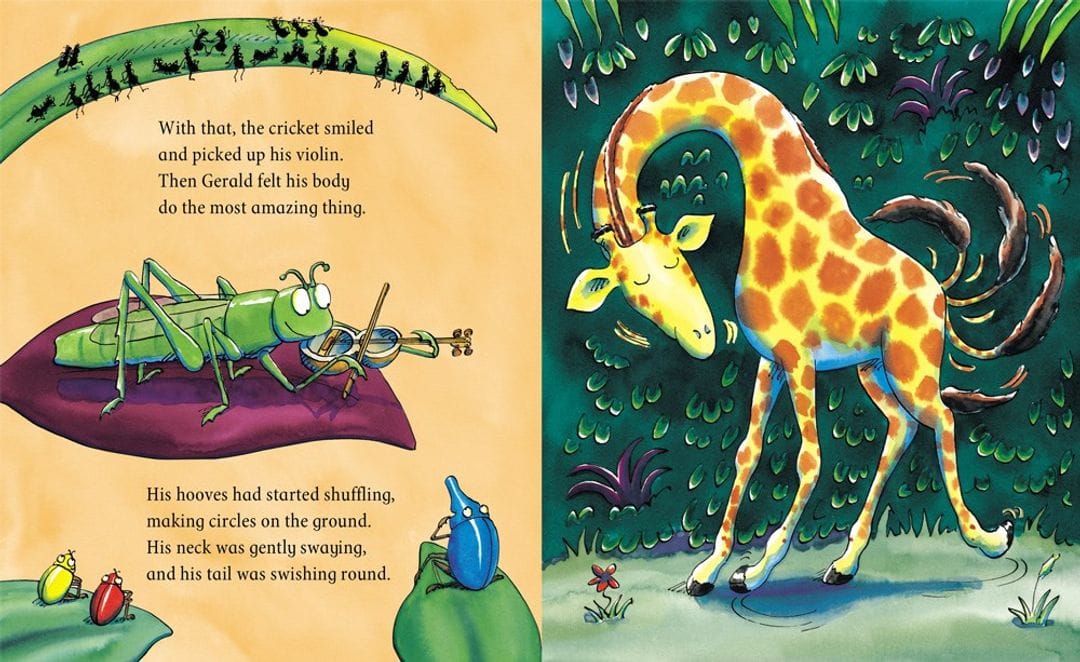
Below is another iambic heptameter example:
As Sally pulled the basket down from high up on the shelf, She wondered what had made her act so little like herself. To look through things forgotten was a thing she never did, But on this day she had to see the things she once had hid.
Pro Tip: In picture books, iambic heptameter is often visually broken into 2 lines, with four stressed beats on the first line and three stressed beats on the second line. Alternately, the line may be broken after the fourth downbeat, as in the page above from Giraffes Can’t Dance to enable the next line to being on a stressed beat. This is done to make text better fit the page. In either situation, the verse turns into a quatrain (four lines) with lines 2 and 4 rhyming. The important thing when breaking heptameter in this way is to be consistent about where the line breaks each time.
Does iambic meter have to rhyme?
Children’s books typically rhyme. It is because editing children’s books is my specialty that my examples above are in rhyme. But iambic meter is not only for children’s books, and many poets write in iambic meter without working in rhyme.
Take a look, for example, at one of the most famous works in all of literature: the opening lines of Romeo and Juliet by William Shakespeare.
Two houses, both alike in dignity, In fair Verona, where we lay our scene. From ancient grudge break to new mutiny, Where civil blood makes civil hands unclean. From forth the fatal loins of these two foes, A pair of star cross’d lovers take their lives.
These lines are written in iambic pentameter, but do not rhyme. The key here is that they follow the pattern of stressed and unstressed beats for successful iambic meter.
 Related articleWhat Is Anapestic Meter: Dactylic Meter & Stressed SyllablesA guide to the different types of anapestic meter, including dactylic meter, anapestic tetrameter, and stressed syllables with color-coded examples.Read the article →
 Related articleHow To Write a Rhyming Children's Book in Perfect Rhyme!Rhyming children's books, whether in iambic meter or anapestic meter, are hard to master. Learn how to write a rhyming picture book in perfect rhyme.Read the article →