Parts of a Book: Front Matter, Body, and Back Matter Explained
Contents
What are the parts of a book?
Regardless of genre, books are divided into three parts: front matter, body, and back matter. The front matter, body, and back matter make up what is known as the book block. In a paperback book, the book block is all the pages that fall between the front and back cover. In a hardcover book, the book block is all the pages that fall between the book end sheets. Before you lay out your book, make sure you understand the components of front matter, body, and back matter. Let’s break it down, piece by piece, to make sure every part of your book is where it belongs.
Pro Tip: The only exception to this rule is a picture book. Not all picture books contain back matter, as some picture books end when the story is over.
What is front matter?
Front matter is the opening pages of a book—anything that comes before the story starts. For some books, this will consist only of title page and copyright page, while for other books the front matter will be more robust. Front matter offers a reader their first impression of a book, so it’s important to make sure it looks right—and professional.
The following components may appear in front matter of a book, depending on the book's genre:
Half-title page
A half-title page is a page that ONLY contains a book title (and sometimes a piece of art). The half-title does not include a publisher name or imprint name, and it does not include an author name or illustrator name. The half-title page is frequently used in picture books so that the story itself can start on a full spread.
When a half title is used, it typically appears as the first page of the book. Below is an example of a half-title page from Slushy, Slurpy City Snow published by Charge Mommy Books.

© David Hillman | Charge Mommy Books LLC | Brooke Vitale
Copyright page
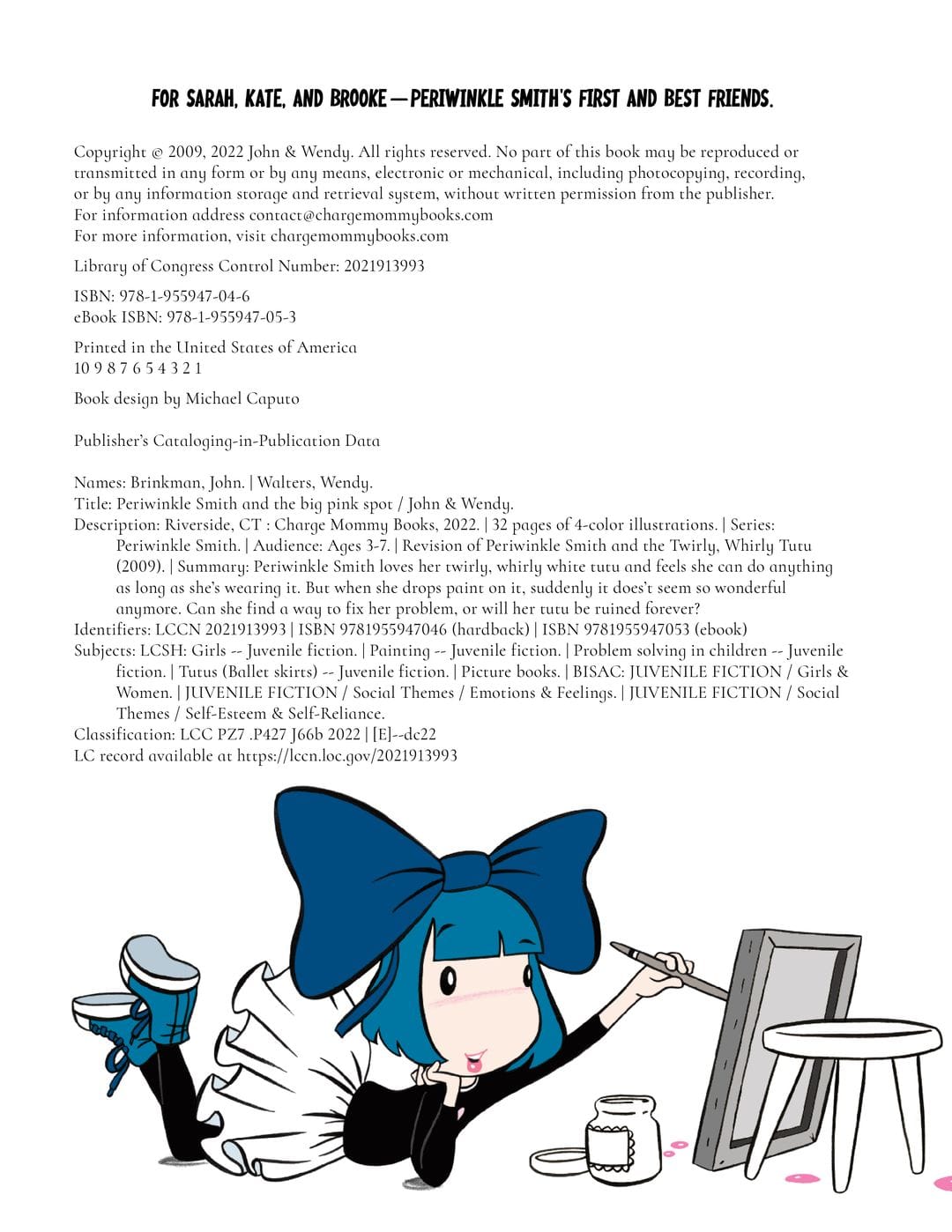
A copyright page lists a book’s logistical elements: book ISBN, copyright holders, book edition, first date of manufacture, CIP (Cataloging-in-Publication) Data or a Library of Congress Control Number (LCCN), and more. But a copyright page does more than just assert an author's rights. It also provides valuable information about a book including how to get in touch with a publisher, any third-party copyrights or permissions, and any necessary disclaimers.
In a picture book, the copyright page traditionally appears on the first left-hand page of a book (page 2), and sits opposite either the title page or the first page of the story.
For more information on what goes on a copyright page, or for a free downloadable copyright template, check out my article A Guide to the Copyright Page and Copyright Registration. Below is an copyright page example from Stuck Duck, published by Charge Mommy Books, written by Brooke Vitale, and illustrated by the great John & Wendy. Pick up a copy of Stuck Duck today.
Title page
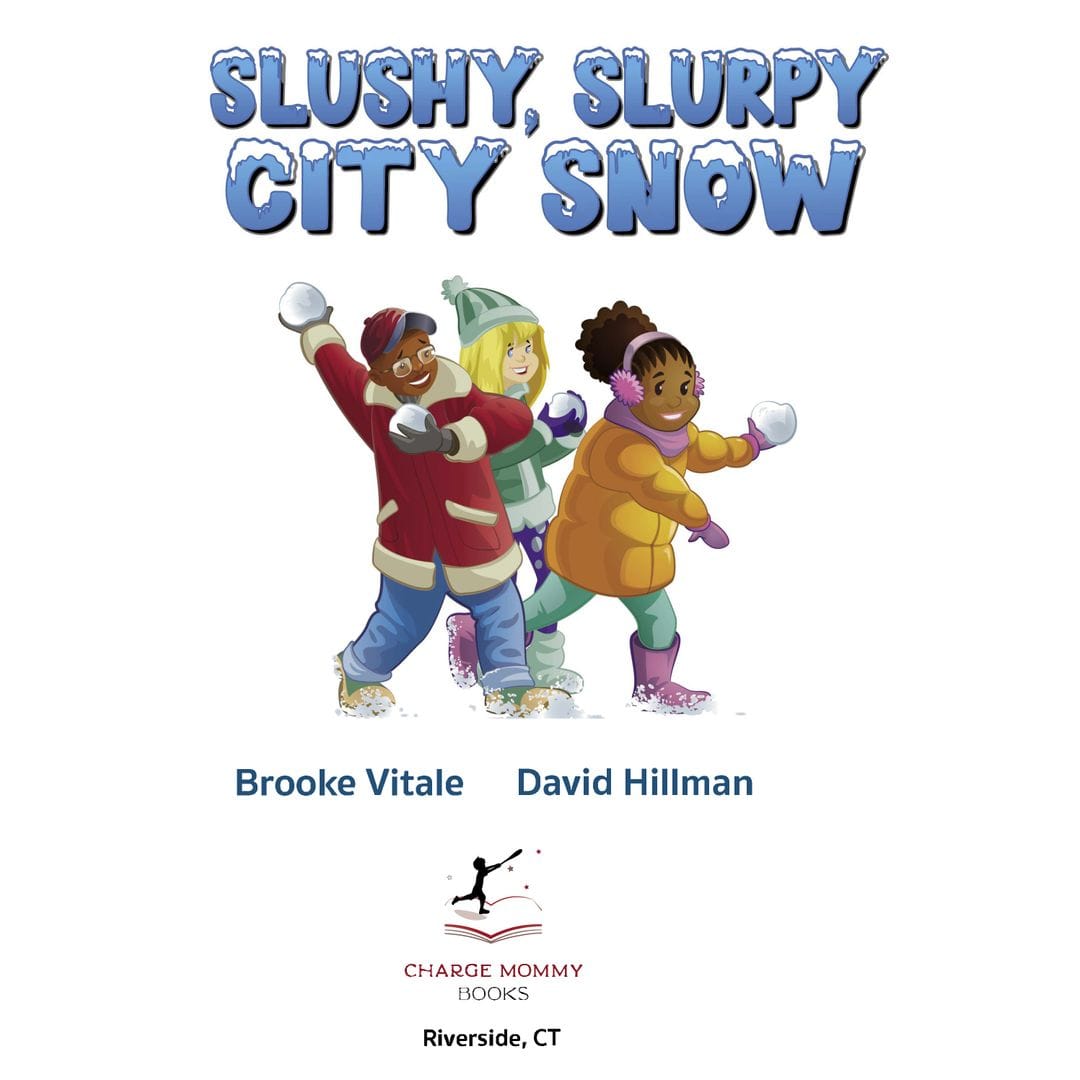
The title page is exactly as it sounds. It is a page that lists the title of the book. But it does more than that. A title page also lists the author, illustrator, and publisher of a book. If the publisher has a logo (also known as a colophon) this also goes on the title page.
For books that have been registered with the Library of Congress and contain either CIP data or P-CIP data, the title page will also list the city where the publisher is located.
For books that use a half-title page, the title page traditionally appears on page 3 of the book, opposite the copyright page. For books that do not use a half-title page, the title page appears on page 1 of the book. Here is an example of a book title page from Slushy, Slurpy City Snow, published by Charge Mommy Books, written by Brooke Vitale and illustrated by David Hillman.
© David Hillman | Charge Mommy Books LLC | Brooke Vitale
Dedication page
The dedication page is a place for the author and illustrator to call out the person (or people) they are dedicating the book to, and why.
For a picture book with a half-title page, the dedication is usually included at the top of the copyright page. For a picture book that begins with a title page, the dedication may sit on the copyright page, or on a page of its own opposite the copyright page. Below is an example of a book dedication that has been placed on the copyright page.
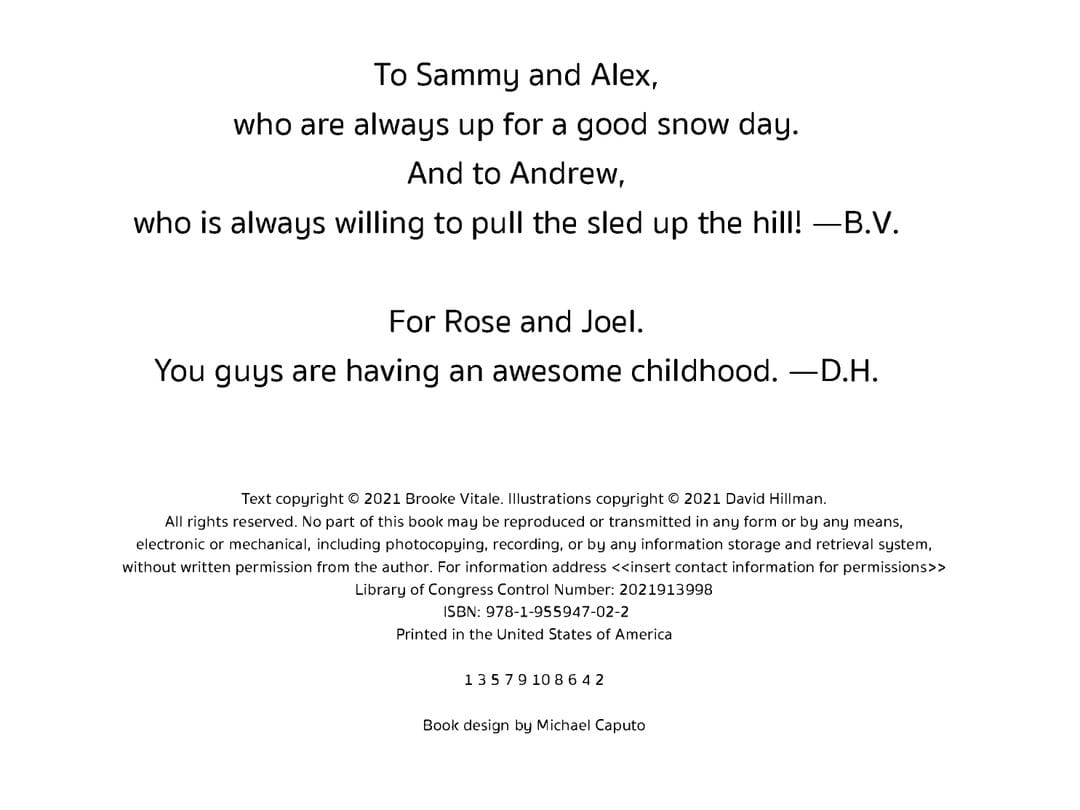
Table of contents
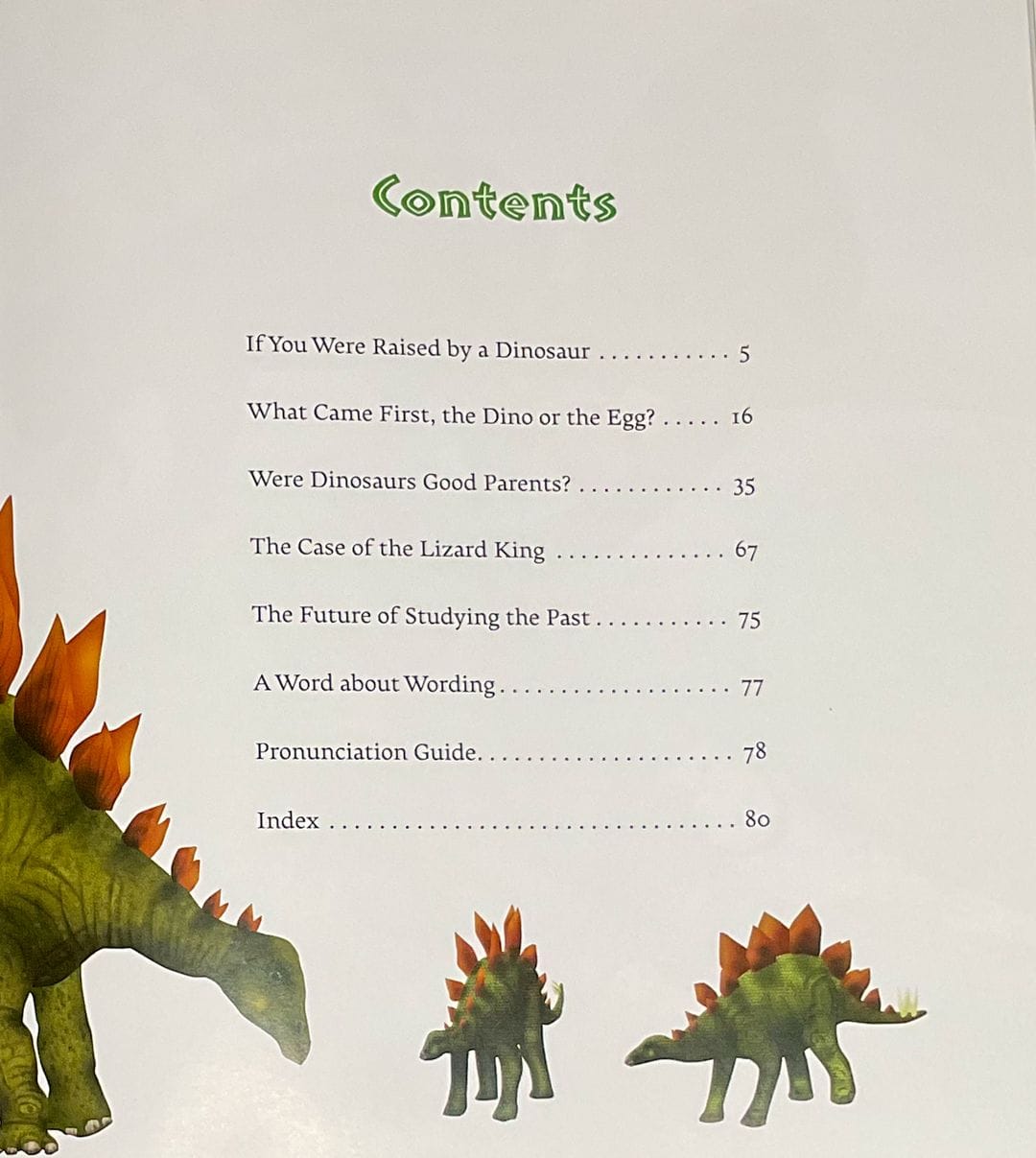
The table of contents (often referred to simply as the contents page) is a listing of all of the chapters or sections in a book. This should include any front matter such as a preface or foreword, and any back matter, including an index, glossary, acknowledgements, or end notes.
Picture books rarely employ a table of contents, unless they are nonfiction books. (This is in part because picture books are not typically broken into sections and in part because picture books usually don’t have page numbers.)
Older books, including middle grade, YA, and adult novels list each chapter number or chapter name along with the page they start on.
Nonfiction books may be broken into main subjects with subsections listed below. Below is a sample table of contents from If You Were Raised by a Dinosaur published by Imagine Publishing.
Foreword
A foreword is an introduction to a book by someone other than the author. This may include a celebrity or a respected figure in the field the book covers. The foreword usually speaks to the writer’s relationship with the author or to their relationship with the story itself.
While forewords occasionally appear in picture books, they are rather rare. Below is foreword written by George Adamson for the book A Lion Called Christian.

Preface
The preface is an introduction to the book, written by the author. It often provides context as to how the book idea came to the author, or why they wrote this book. In the case of a nonfiction book, the preface may speak to what has been updated from a previous draft.
While prefaces occasionally appear in picture books, they are rare. Prefaces are more common in books for middle-grade readers and above.
Epigraph
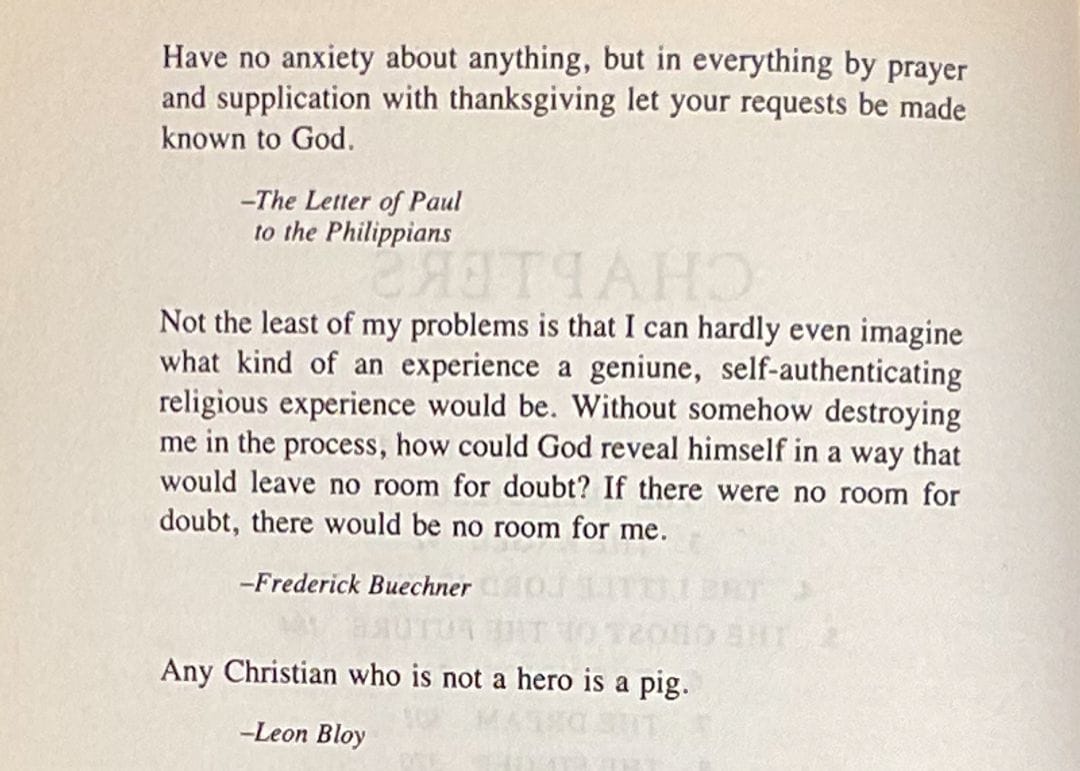
The epigraph is a short quote that appears at the opening of the book. This may be something created specifically for the book, or it may be a quote from a famous source. The epigraph traditionally helps set the tone for the book and is the last thing to appear before diving into the body of the book. Below is an epigraph from the book A Prayer for Owen Meany published by William, Morrow, & Co and written by John Irving. The quotes directly relate to the plot and message of the story.
What is the body of a book?
The book body is the heart of a book. It is all the content between the front matter and back matter. In a work of fiction, it is the story. In a nonfiction book, it refers to all of the chapters dedicated to the topic at hand. But even the body of the work can be broken into smaller parts.
Prologue
A prologue comes before the first chapter of a story. It sits separately from the bulk of the book and serves to provide context, tone, and any necessary background information. The purpose of a prologue is to intrigue the reader and draw them into the story.
For a picture book, prologues are very rare.
Main body
For a work of fiction, the main body is the actual story. For nonfiction, it is each of the chapters broken out in the table of contents.
Epilogue
The epilogue is a conclusion that come at the end of a story. This is a scene that wraps up the story in a satisfying manner or that sets the stage for the next book in a series.
What is back matter?
Back matter (also called end matter) is the closing pages of a book—anything that comes after the story ends, or after the bulk of a nonfiction book is wrapped up. Some books have no back matter. Others include many sections of back matter, including an index, a glossary, an appendix, or a chronology. Authors use back matter to offer additional, ancillary information about the book, the creation of the book, or the story. Unlike front matter, which is traditionally arranged in the same order for all books, back matter can often be arranged in any order. So what goes into back matter? Let’s take a look.
Afterword
The afterword is a note that comes after the story is over. It often covers the author’s process or discusses how the book came into being. While common in books for middle grade readers and older, and in nonfiction, it is not commonly used in picture books.
Book Glossary
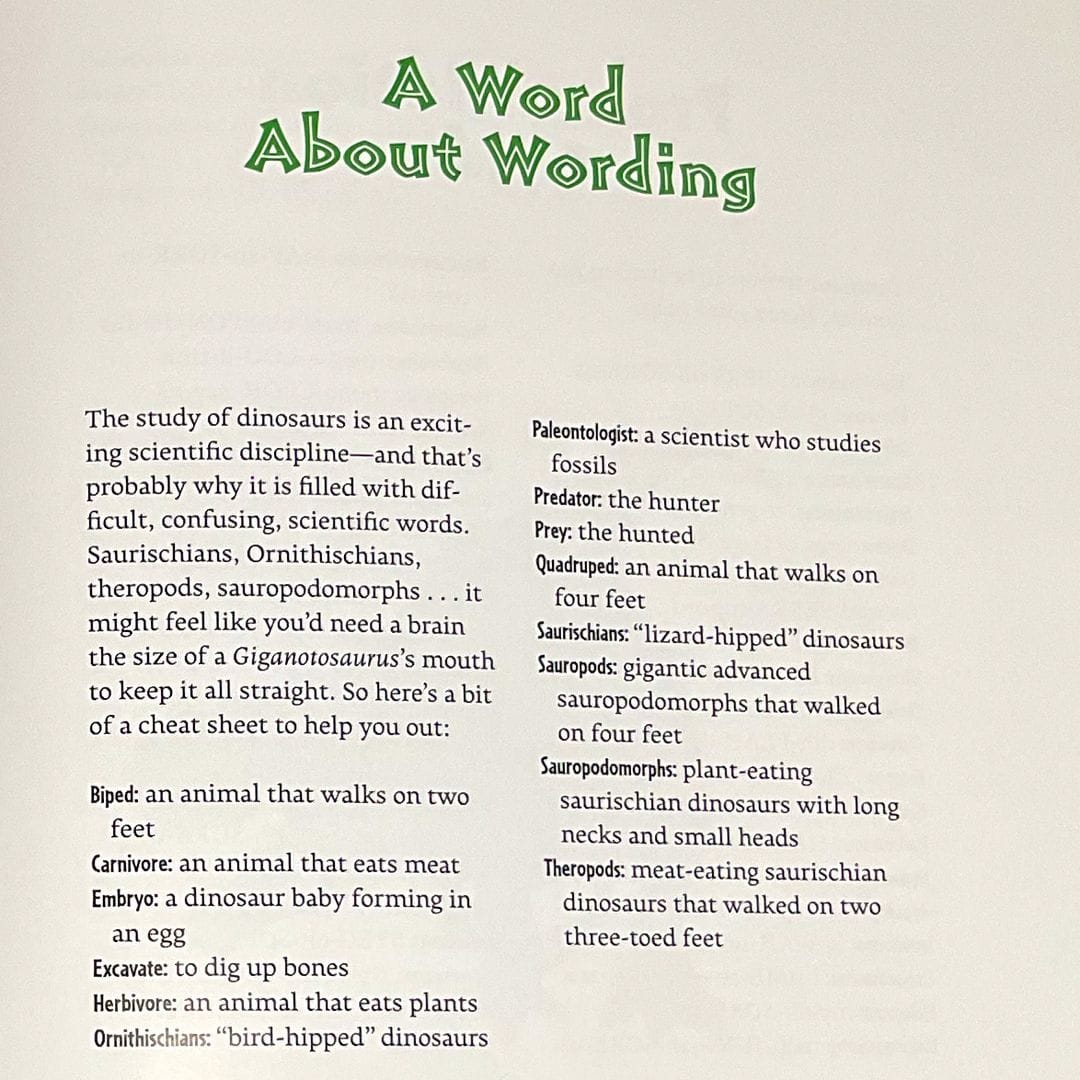
A book glossary is a list of the key terms or concepts in the book alongside a full definition for the terms. The glossary usually appears in alphabetical order. Below is a sample book glossary from If You Were Raised by a Dinosaur, published by Imagine Publishing.
Book discussion questions
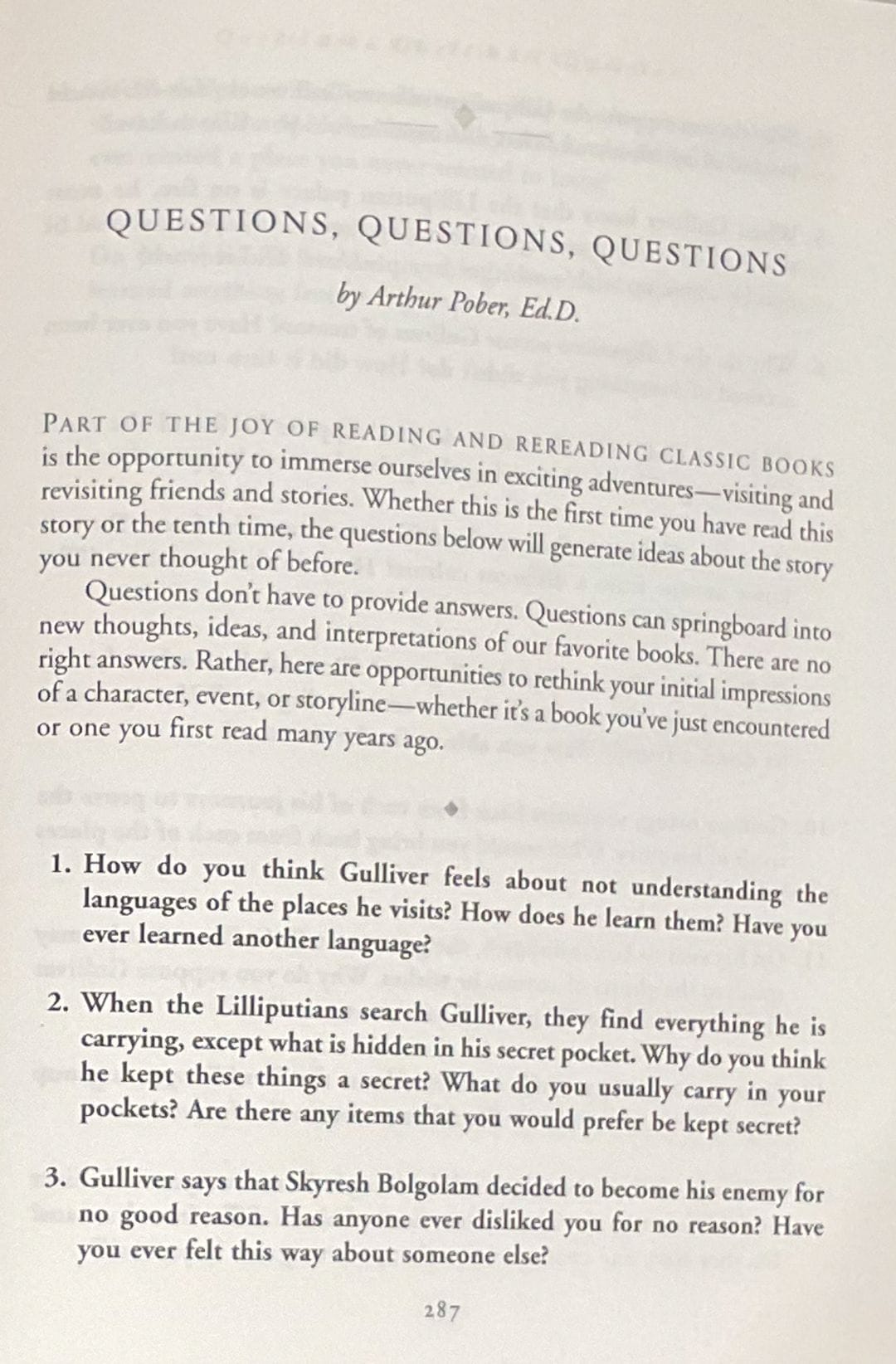
Book discussion questions are the author’s opportunity to encourage further reflection on a story. These are often intended for use in a classroom or book club setting. Below is an example of book discussion questions written by educator Arthur Pober for the Classic Starts book series, published by Sterling Publishing.
Book appendix
The book appendix is usually used in nonfiction books. This is the author’s chance to include information that was too detailed to put in the body of the book, such as detailed studies or long mathematical equations. Appendices include information that is not essential to understanding the book, but that can allow a reader to obtain a deeper understanding of the material.
Chronology
A story timeline, or chronology, is a listing of the sequence of events in a story. This may be a timeline for the events in the book itself, or in the series of books, or it may be a timeline of events that occurred prior to the beginning of the book. Timelines are most often used in fantasy stories or historical novels where there are many story elements to keep track of.
Character guide
A character guide is a listing of all the characters in a book, often with a focus on their relationships to each other or familial relationships. Such a guide may also include a pronunciation for character names, particularly if they are made up names. Character guides often appear in fantasy or historical novels where there are many characters to keep track of.
Additional information
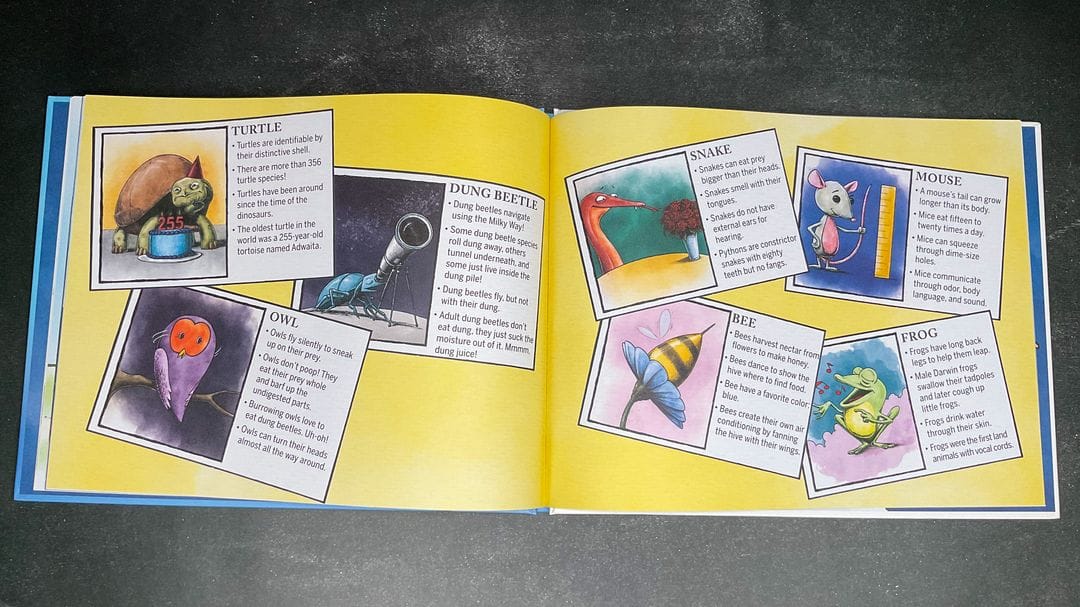
The inclusion of additional information is particularly popular now in picture books. It is not uncommon to find publishers including pages of nonfiction facts on the topic of the book. This allows even works of fiction to dive deeper into the educational market and focus on topics of importance such as conservation, environmentalism, or protecting our animals. Below is one example of how to display additional information in a picture book.
© Todd Sturgell | Sourcebooks
Book acknowledgements
The book acknowledgements are the author’s place to thank anyone who contributed to the book. This may include an author’s editor or designer, their book agent, their beta readers, research partners, friends, family, or anyone else who the author feels they owe a debt of thanks to.
In a work of fiction, the book acknowledgements usually appear right after the last chapter of a book (or after the afterword if one is included.) In a work of nonfiction, they appear after other ancillary materials such as a glossary, an index, and an appendix.
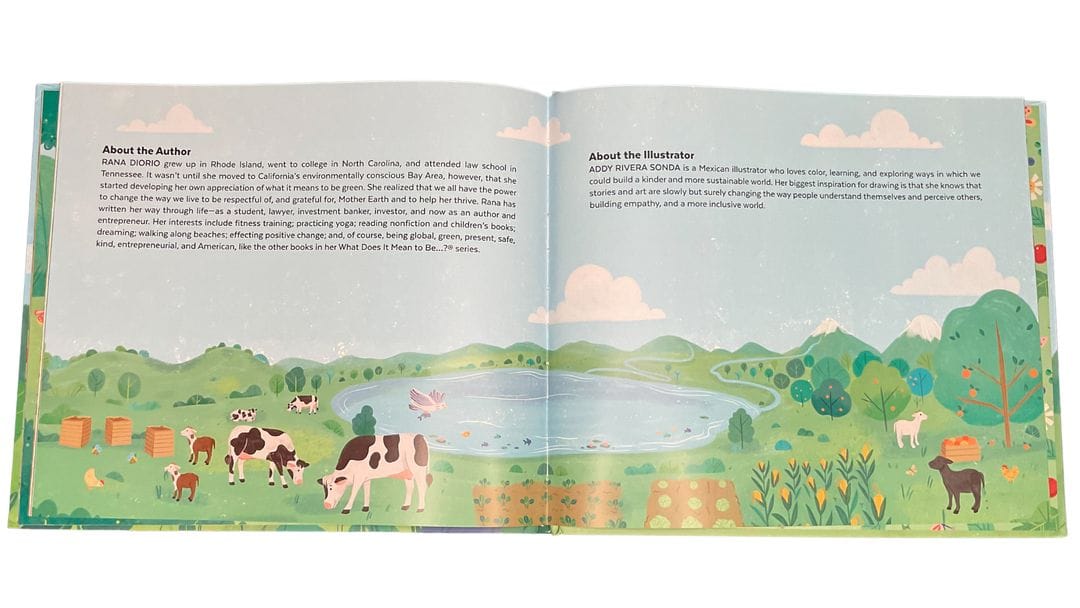
About the author
The about the author section is the author’s chance to tell the reader a bit about them. This may include their bio or information on the other books they have written.
In a hardcover picture book with a dust jacket, the about the author usually goes on the back flap of the dust jacket, along with an about the illustrator.
The about the author page may also include contact information for an author and/or illustrator including a website and social media handles. Below is an example about the author from the picture book What It Means To Be Green, written by Rana Diorio and published by Sourcebooks.
Book accolades
The book accolades page is a place for the author to showcase their other work and any positive reviews their other work has received. For book with many reviews, snippets of the top 2-3 are usually included for each book.
Bibliography
A bibliography is an author’s chance to site the resources used in compiling a book. The bibliography is rarely used in a work of fiction but almost always used in a work of nonfiction.
Index
An index is a section used primarily in a nonfiction work. It includes all of the key terms or concepts in the book alongside a listing of all the pages on which the term is mentioned. The index appears in alphabetical order. The index is usually the last thing to appear in a book.
What are the other parts of a book?
Book cover
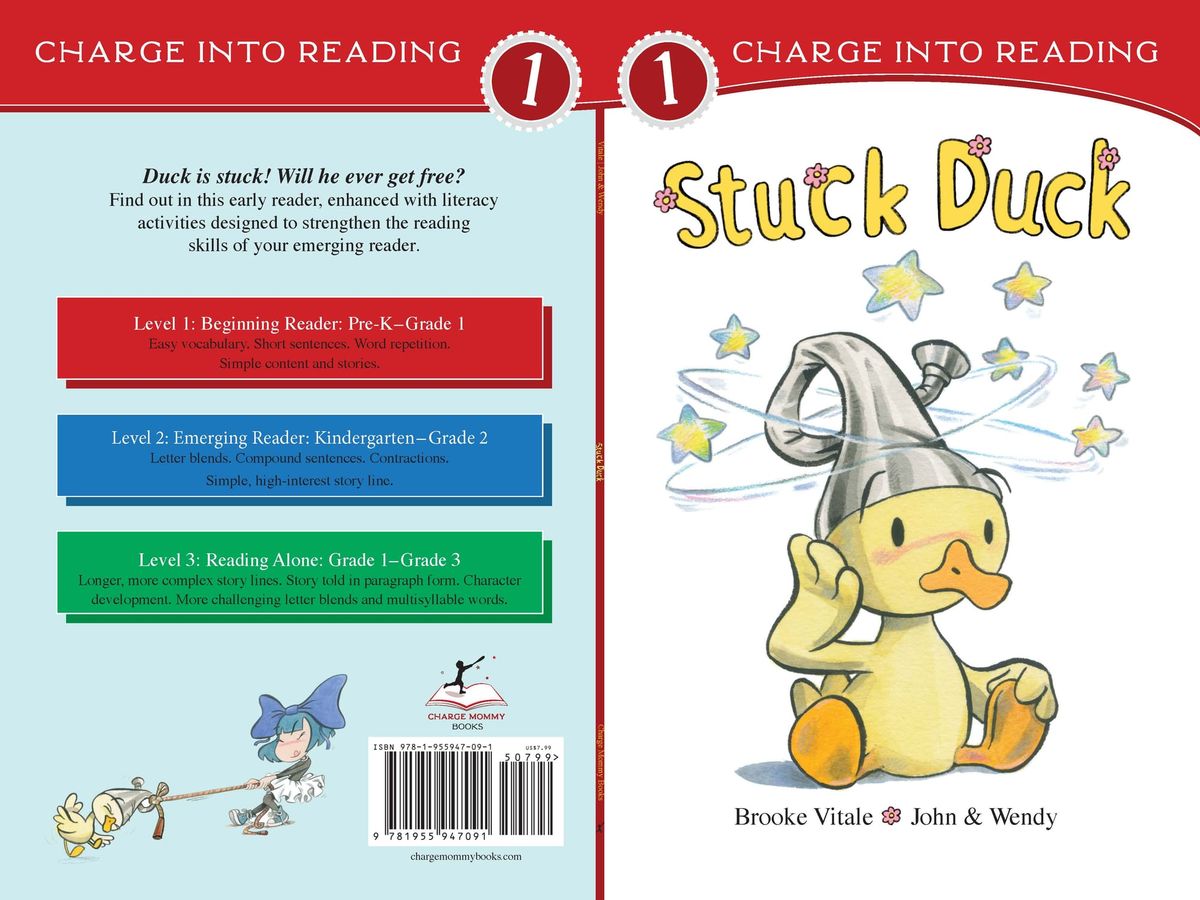
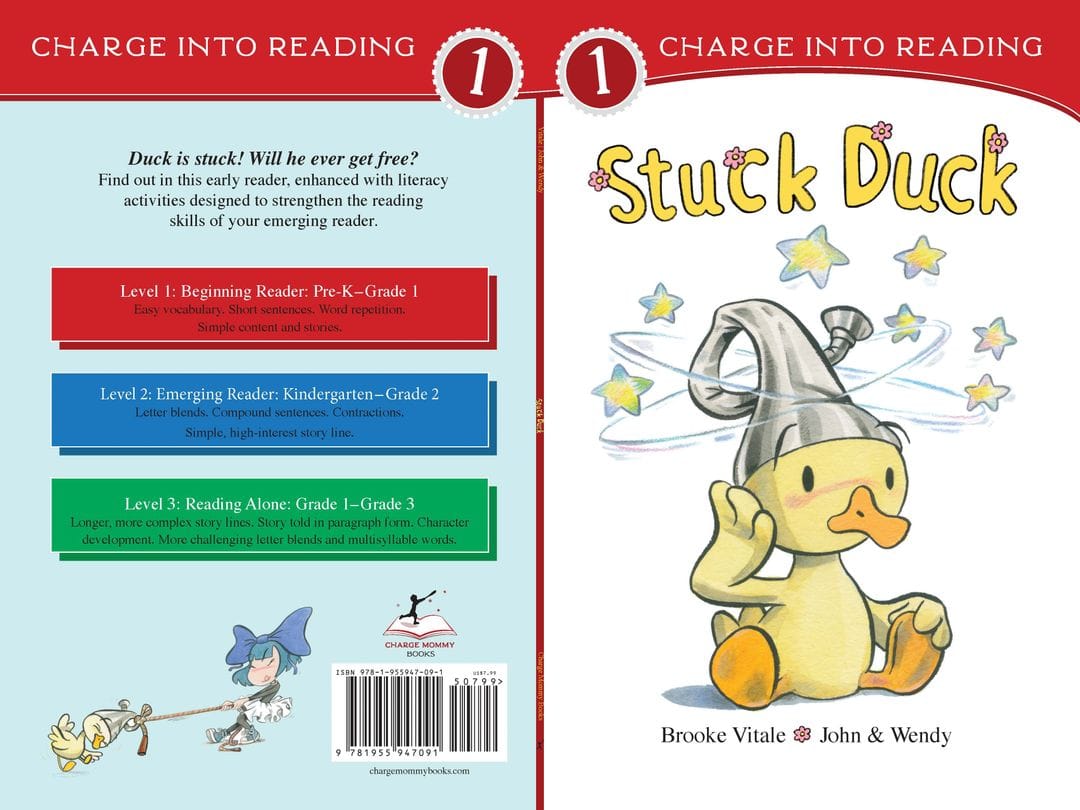
Now that you know what goes INSIDE the book, how about what goes on the OUTSIDE of the book: the book cover, which can be broken into three parts. Below is a the book cover of Stuck Duck, an early reader book published by Charge Mommy Books, written by Brooke Vitale and illustrated by John & Wendy. Stuck Duck was the first Charge Into Reading book to drop one page at a time on Instagram @chargemommybooks, along with associated literacy activities. (New stories start every month.) It is now available for purchase on Amazon and includes 7 pages of literacy activities.
© Brooke Vitale | Charge Mommy Books LLC | John & Wendy
Book front cover
The book front cover is meant to entice a reader, typically with an image that readers will find appealing. In addition to the cover art, a book cover includes the book title, author’s name, and illustrator’s name.
Book spine
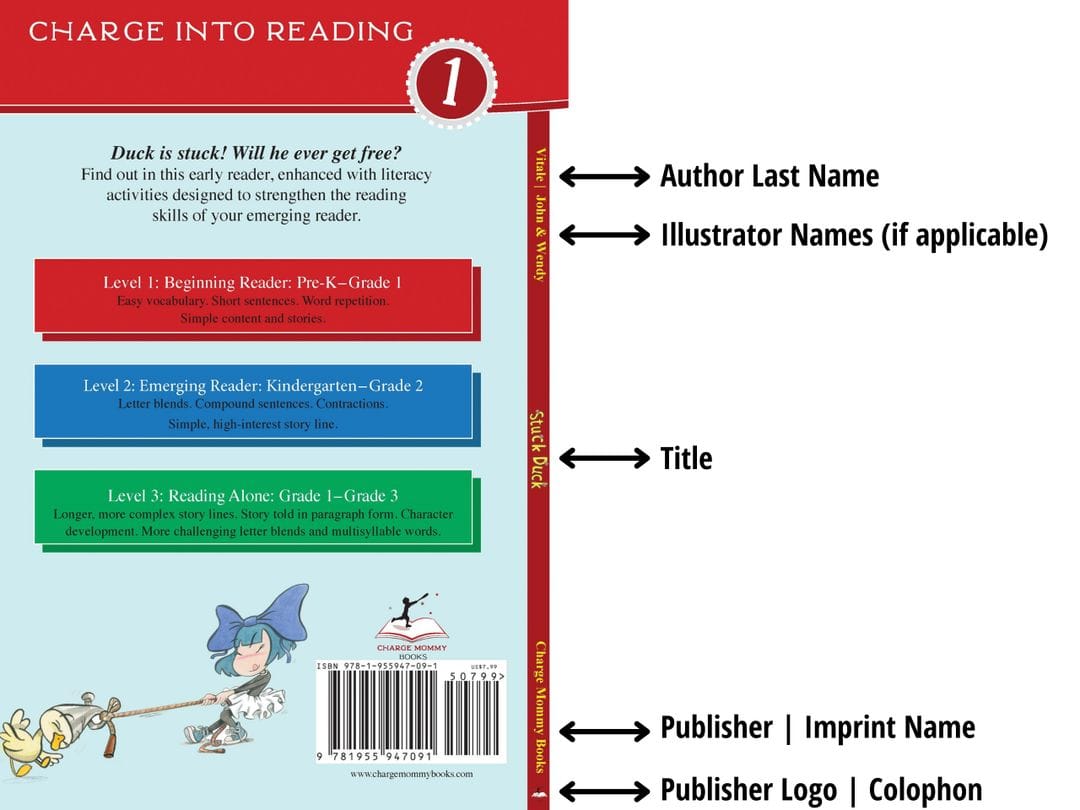
The book spine is the portion of a book cover that is visible when a book is on a bookshelf. It is attached at joints to the front and back cover, and includes the following information from top to bottom:
- Author last name
- Illustrator last name (if applicable)
- Title
- Publisher or imprint name
- Publisher logo, or colophon
Take a look at the book spine design from Stuck Duck, published by Charge Mommy Books, written by Brooke Vitale and illustrated by John & Wendy. The book spine design example is laid out to see the direction text should face.
© Brooke Vitale | Charge Mommy Books LLC | John & Wendy
Book back cover
If a book cover is what lures a reader in, the back cover of a book is what convinces them to buy a book. A book back cover is an author's place to tell a reader what makes this story a must-read. It includes the book summary, snippets of positive book reviews, the publisher or imprint name, a barcode, and an ISBN. For more information on what goes on a back cover, check out my article How to Create a Children’s Book Back Cover that Sells.
Dust jacket
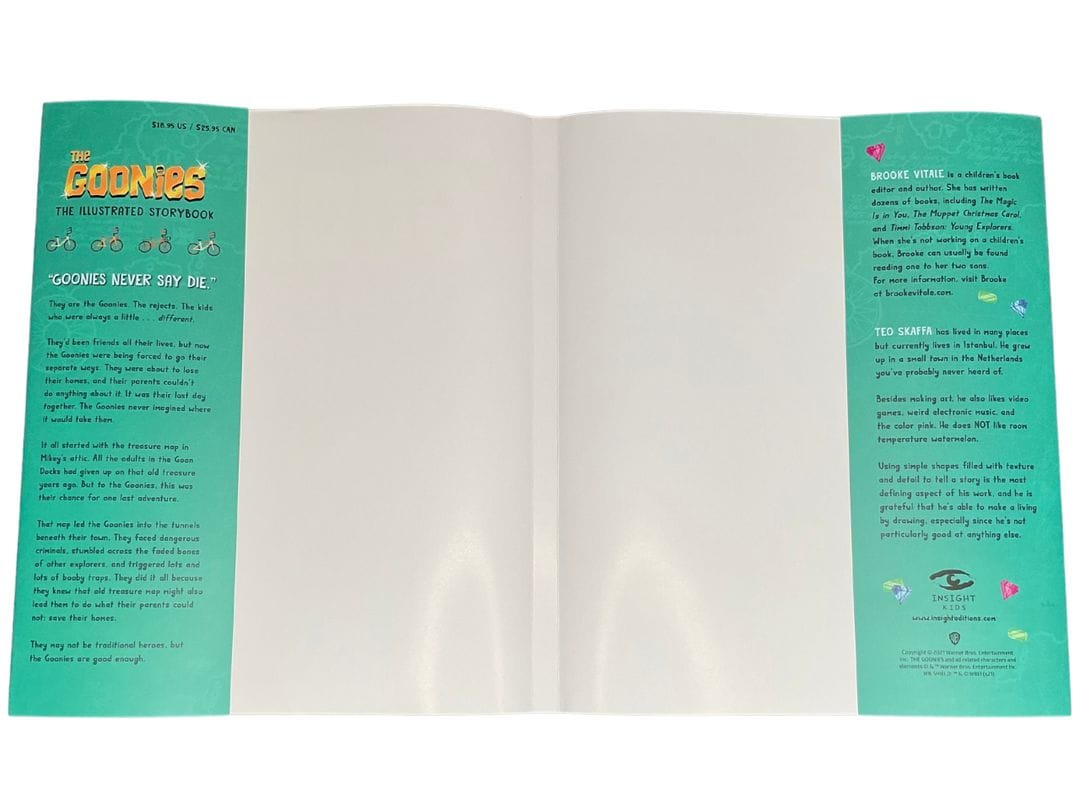
Hardcover books often come with dust jackets. The dust jacket is a removable paper cover that wraps around the case of the book. It is used to protect the book from dust, and offers additional real estate for sales copy.
Below is the dust jacket from the children's book The Goonies, published by Insight Editions, written by Brooke Vitale and illustrated by Teo Skaffa. If you are a fan of the movie, you can pick up a copy of The Goonies: The Illustrated Storybook on Amazon.
Traditionally speaking, a dust jacket includes the book price and book summary on the front flap and the author bio (illustrator if applicable) and publisher or imprint name and logo on the back flap. Below is an example of the dust jacket flaps.
For more information on dust jackets, check out my article, The Importance of a Dust Jacket on a Children’s Book.
Book end sheets
Book end sheets, or endpapers, are the pages that hold the cover of a hardback book to the interior pages. For a hardcover book, especially a picture book, it is essential to be aware of and make a plan for the book end sheets, as they play an integral part in the book layout. For more information on how end sheets affect book layout and where the end papers fit in a book, check out my article, Book End sheets: The Glue that Holds a Hardcover Book Together. Below is an example of endpapers from Charge Mommy Book's picture book Slushy, Slurpy City Snow written by Brooke Vitale.

© David Hillman | Charge Mommy Books LLC