How to Find an Illustrator: Hire an Illustrator in 10 Steps
Contents
1. Finish the children's book
It's tempting with a children's book to dive right into illustrations, but doing so before a children's book manuscript is ready is often a recipe for disaster. Before starting illustrations, make sure a children's book editor has reviewed the manuscript. For tips on how to find a children's book editor, check out How to Hire a Book Editor. The editor's job is to find plot holes and other problems with a story and offer ways to fix them. But a developmental edit is almost impossible to do well with final book illustrations in place. A children's book editor cannot suggest making any substantial story edits, because each change will mean illustration revision, and more money spent. And as an author, there’s nothing worse than spending money to create illustrations that can't be used. Except maybe knowing that a story could be improved, but you’re locked into a wrong choice because your illustrations are done. So do yourself a favor: hold off on starting book illustrations. Instead, hire a children's book editor and make sure the manuscript is locked and perfect.
2. Finish the children's book storyboard
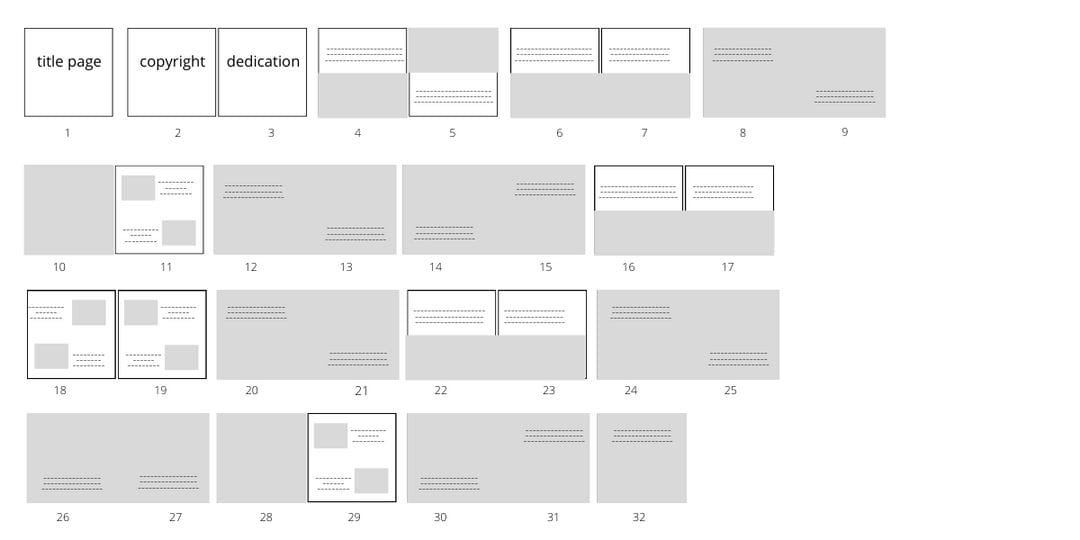
Illustrators will take their cues from an author. Most artists want to be told what to draw, so take the time to come up with clear art notes. Make sure to include whether the art should be full-bleed or spot illustrations. Many authors find it useful, including me, to create a rough storyboard outlining page turns and art size. For more information on the stages of illustration, check out my article: How to Illustrate a Children's Book. While you’re at it, think about what’s really happening on the page. Do you have two pages in a row where the setting really hasn’t changed? Make the art a spread instead so you don’t end up with two images side-by-side that look virtually the same. Think of your art like you would your manuscript. In text, page turns come at scene changes. Art should be the same. If you’re creating a new piece of art, make sure it’s showing something new! Going through this process will not only help you refine your manuscript, but it will also help you figure out how many pieces of art you need (which you will have to know to get an illustration quote). For more tips on how to pace your book, check out A Template for Children's Book Layout and Pagination.
3. Pick a children's book size
Book trim size is one of the most important things to decide before illustrating a book. Without knowing book dimensions, an author runs the very real risk of getting back art that does not fit the desired page size. Before book illustrations begin, make sure an illustrator knows the exact trim size needed, including page bleed. (Page bleed is extra art drawn beyond the book trim size to ensure that there is no white space on a page if paper shifts during the book printing process). Offset book printers can print to just about any trim size, but print on demand companies such as Amazon print on demand (Amazon Kindle Direct Publishing) don’t offer as many choices. Check the book size options on whatever print on demand service you plan to use. If you plan to publish a children's book through more than one print on demand company, try to choose a book trim size that is available on both platforms so that you don’t have to redesign (or reillustrate!) for each book edition. For available options, check out my article The Best Book Trim Sizes For a Children's Book.
4. Provide a children's book layout template
Children's book illustrations are important, but so is the text layout. Imagine getting back beautiful illustrations, only to find that there’s no room for text. Before starting story art, I recommend hiring a children's book designer. The designer will create a book design template, showing how art and text fit together on the page. The design template will be a jumping off point for the illustrator, enabling them to see where space needs to be left for text. Below is a sample book design template:
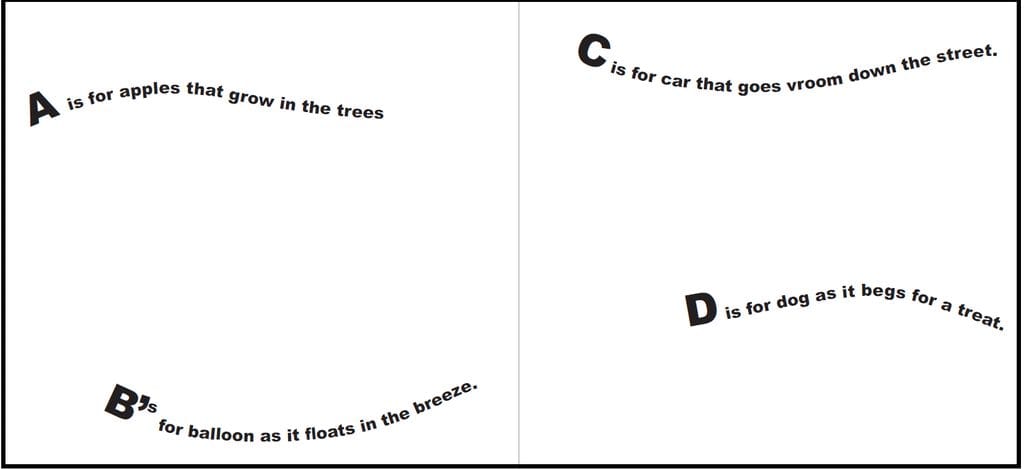
In an ideal world, the book designer and illustrator will work together, going back and forth at each stage of art to ensure that the illustrations and text fit together, and that nothing important is falling in the book gutter. Once final art is ready, the designer will prepare files to be submitted to the book printer or print on demand service.
Note: In addition to a book design template, it is also important to provide an illustrator with a book cover template. Ask the offset book printer you are using for a book cover template, or visit the print on demand publisher's website for specific book cover size information. The cover of a hardcover is larger than the interior page size. Giving the correct page dimensions to the illustrator is the surest way to ensure book covers are printed properly. If there will be a book dust jacket, be sure to ask the printer for a dust jacket template as well.
5. Pick an art style
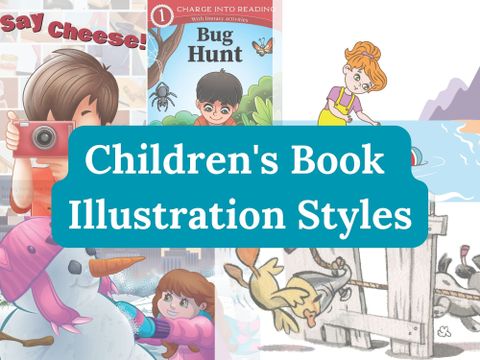
Once your manuscript is ready to be illustrated, or even while it's being edited, do some research on art styles. Are you looking for watercolor art? Something bright and bold and cartoony? Do you need something that can be created in full-color, or someone who can do black-and-white line art? Do you need layered digital art that can be reused for marketing purposes? Try to find titles that look like what you're visualizing. Knowing what you want will help you narrow down illustrators when the time comes.
6. Set an Illustration budget
Before hiring an illustrator for a children's book, put together a book budget so you know what you can afford in terms of illustration cost. (I would recommend doing a break-even analysis to see how many books need to be sold to recoup illustration costs at different fee levels.) Illustration costs could be as little as $1,000 or as high as $10,000 (or more!). Illustration rates will vary wildly depending on the experience and location of a children's book illustrator. It is not uncommon for illustration costs to decrease if an illustrator resides in a country where the cost of living is less expensive. But you can also expect to pay a higher illustration price when hiring an illustrator with a lot of experience, or those who are represented by illustration agencies. So go into negotiations knowing what you can really afford to spend.
7. Find an illustrator
The truth is, there's no good way to know how much an illustrator will charge without asking, though some may list rates on their portfolio. So the first step is to find an illustrator that you love. As the founder of Charge Mommy Books, I have hired dozens of illustrators, and I've come across them in several ways. Some I've approached on Facebook and Instagram because I've seen their work and admired it. Others I've approached because I have worked with them previously as an editor and liked their work. Personally, I am fond of using Upwork to find an illustrator. I like how the platform works, and I find it easy to weed out the illustrators that don't feel right for me while keeping track of those that do. It also saves me the time of researching multiple platforms for that one perfect illustrator. But it's not for everyone. So what are some other resources for finding illustrators? Below are a few of the many websites available to find an illustrator:
- Advocate Art Inc. is an agency specializing in children's book illustrations. The illustrators here have all been vetted by agents who have deemed their work professional. Illustrators on Advocate Art have agents who will be involved in negotiating terms of the contract.
- Reedsy is an online publishing platform to find professionals across a variety of specialties, including editorial, design, and illustration. The illustrators at Reedsy have all been vetted and must show that they have industry experience. This is a great source for finding seasoned pros, though be aware that with experience often comes higher costs.
- SCBWI stands for the Society of Children's Book Writers and Illustrators. This is a highly respected group within the children's book industry, but it is a pay-to-join site, meaning that the illustrators showing their portfolios may or may not have experience.
- Children's Illustrators offers a collection of agency-represented illustrators to peruse. Several reputable agencies showcase their artists on this platform.
- Hire an Illustrator is an online collection of illustrator portfolios, showcasing both agented illustrators and those without agents. Illustrators pay a fee of $1 to be included on the site.
- Deviant Art is an online social network for artists. Art includes illustrations, sculptures, pixel art, films, and more. With more than 61 million registered members, it can be a challenge to find what you're looking for, but a rewarding challenge if you do find that right illustrator.
- Behance is another online social network for artists. There's a lot to see here, but an easy-to-follow search bar helps narrow down the possibilities.
- Instagram is an online social network based on images. Artists regularly post their work here and tag it, so try searching for a particular topic you're interested in having illustrated.
- Facebook groups are a great resource for finding illustrators. Illustrator groups in particular are a good place to scan for art that catches your eye.
Note: many authors warn against sites like Upwork and Fiverr, as the artists there are not vetted, and there have been many cases of illustrators simply delivering clipart pulled from the Internet. Should you choose one of those sources, follow the guidelines below for ensuring the art is original.
In looking for an illustrator, especially when posting in Facebook groups, be sure to tell potential illustrators what you are looking for. Site art that looks like what you want, explain how many pieces of art you need, and list your budget. This will minimize bids from people who do not match what you are looking for.
8. Commission illustrators to do sample illustrations
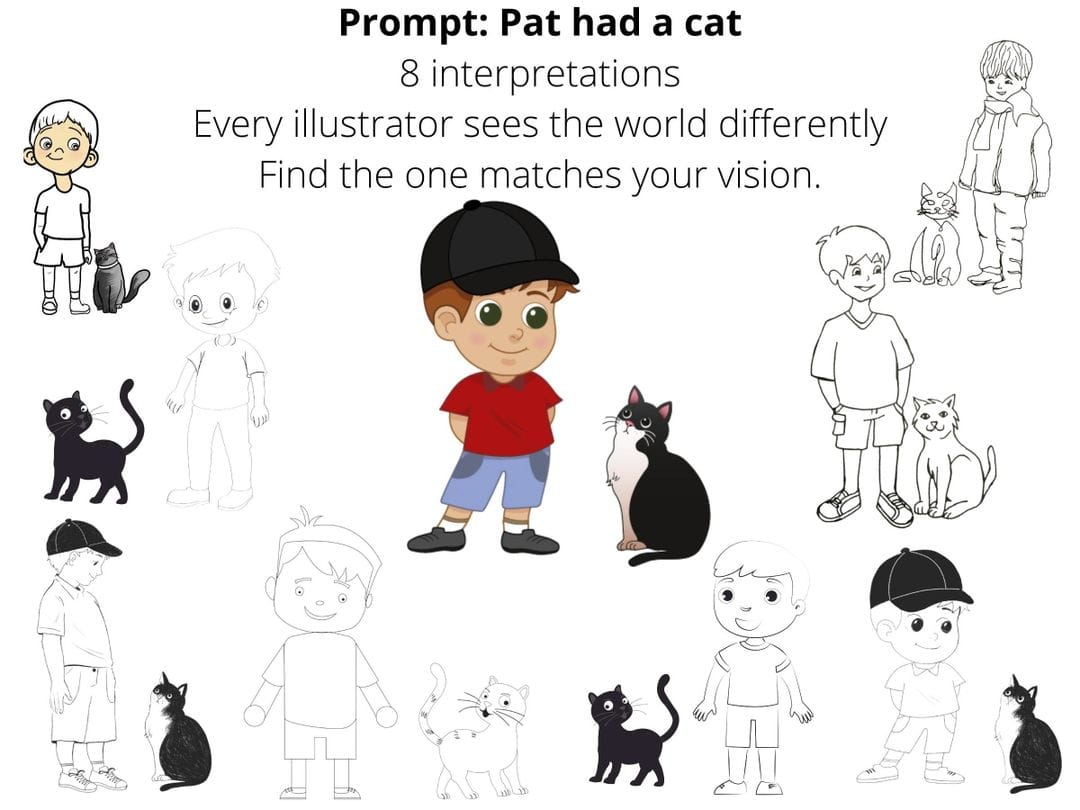
No matter how great an illustrator looks on paper, you still need to make sure that they are a good fit for your children's book. Once you've narrowed down the list of illustrators you think you may want to work with, hire them to do a sample illustration. This can be a character sketch, full page, or spread of your children's book. (Be prepared to pay them for this work, but know that if you hire the illustrator, the sample art can be used in your final book.)
Provide the illustrator with context
Tell the potential illustrator what you want the art to look like. If you are comfortable with it, give them the children's book manuscript to read or at least a piece of it. Explain whether you want the art to be a full page, a full spread, or just a character sketch. Make sure the children's book illustrator has all the information they need to successfully create the sketch. And make sure you get a sketch, not just final art. Odds are, the first round of sketches you get will rule out some of your potential illustrators. And that's fine. The point of the sample process is to find the illustrators who see your vision and cut out the ones who don't. So try out several illustrators and only keep going with those you like. Unsure about sending along your manuscript? Check out How Can I Protect My Book Idea from Being Stolen?
Ask for a revised sketch
Even if you love what you get, ask for a change anyway. Why? Because asking for an arbitrary change (or an important change) is a great way to make sure that the art is original. Something pulled off the Internet won't be easily changed, so asking for a change will prove that the illustrator CAN make changes. It's also a great way to test how an illustrator reacts to requests for change. If you get pushback at this stage, it won't bode well for future collaboration.
Get final art
Once you're happy with the sketch, move on to final art. Sometimes what looks great in sketch won't translate well to final art, so make sure you're happy with how the final art looks. Then weigh the various samples you've received to decide which illustrator is the right fit for you.
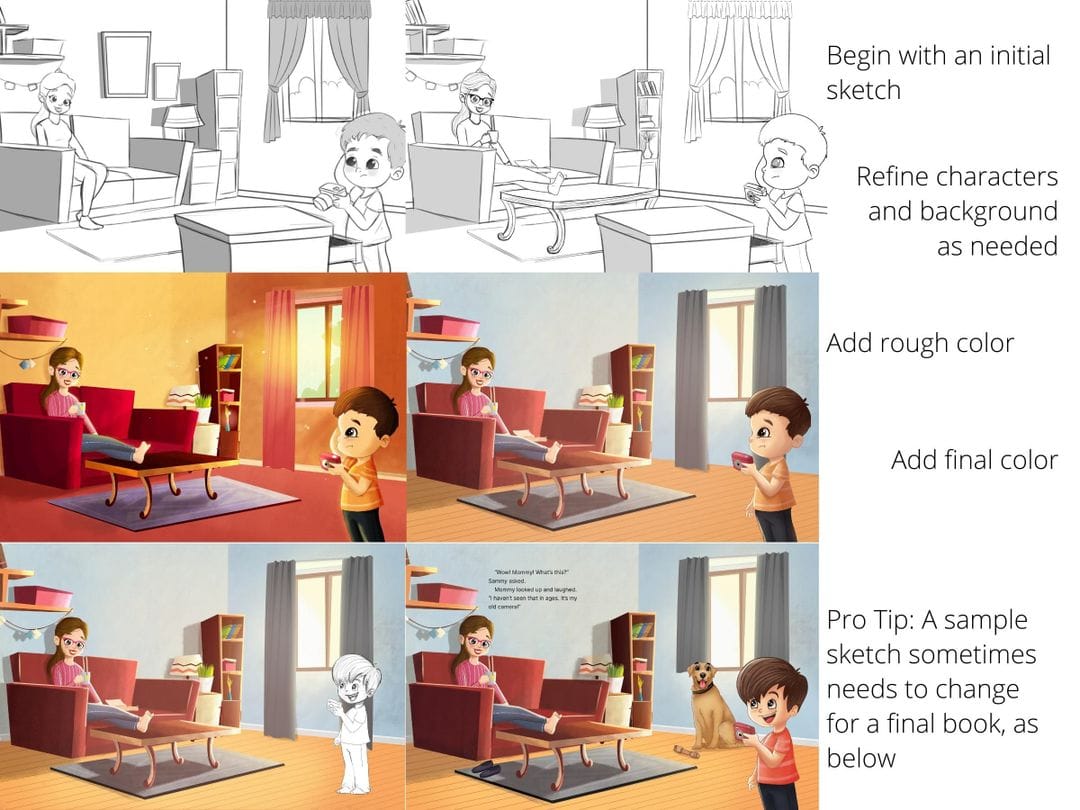
Below is an example of the sample illustration process for my new picture book Say Cheese, available today at Charge Mommy Books online shop. The first sketch I received was cute, but I needed changes. The boy needed to be looking at the mom, and my art director suggested giving Mom glasses and a cup of tea. We also added a coffee table for Mom to prop her feet on so she would look more relaxed. The second illustration reflects these changes. I liked how the art looked, so we moved to color. When I received the color, however, I hated how it looked. I provided the illustrator with a revised color palette and we further refined the room. I was pleased with the final color I received back and hired the illustrator to do the rest of the book.
This piece of art should have been the final page for the book. Except that when I received sketches for the rest of the book, the boy didn't match the sample illustration. I preferred the new illustration, so we had to replace the boy in the approved sketch. The last image represents the final page from Say Cheese, including minor tweaks such as shortening the blinds and adding a dog. Remember when commissioning a sample illustration that it is just that. A sample. You are not locked into that art for the final book if it turns out not to match the final product. But do be prepared to pay for changes.
9. Negotiate with an illustrator
Fee and payment schedule
Set out the fee for the illustrations (including whether there will be a royalty paid), how many pieces are being created (and what kind of art: spreads, single pages, or spot art), and how many revisions you are allowed to make to the art without incurring extra costs. Also iron out when you are expected to pay (standard would be broken out between on signing of contract, on delivery of sketches, and on delivery and acceptance of final art), dates that the illustrator is expected to deliver each stage of art, and any repercussions for failing to deliver on time.
Rights
Discuss with the illustrator what rights you have. Will the illustrator retain copyright or will it be assigned to you? If the illustrator retains copyright, are you expected to file for copyright in their name? (For more information on copyright, visit A Guide to the Copyright Page and Copyright Registration). Do you have the right to use the illustrations in marketing materials (bookmarks, stickers, posters, etc.), or only in the printed book? Do you have the rights to use in eBooks? Do you have the rights to sell versions of your book in other countries (called World rights) or only in the country where you live? Do you have any merchandising rights around the art? (For example, can you make shirts with the characters on them?) Can you use the art in part (take out just a character or use just a background) and can you make changes to the art, or can it only be used exactly as delivered? It is important to nail all of this down NOW so that you aren't going back to the illustrator for extra rights down the road. (It's not uncommon for authors to fail to secure the rights to use art in marketing materials, which results in higher fees later.) Just know that the more rights you want, the more you will likely have to pay.
Illustrator copies
Make sure you discuss whether the illustrator will get free copies of the book, if they can sell those copies, and what kind of discount they can buy additional copies for.
File delivery
Discuss how illustration files will be delivered. Will the illustrator provide layered photoshop or illustrator files, or will you receive flattened PDFs or JPEGs? I recommend hiring an illustrator who will provide layered files that a book designer adjust as needed to create a prefect book layout. Having these files will also give you greater flexibility to use the book illustrations in whole or in part for marketing materials.
10. Sign an illustration contract
Most illustrators will have their own illustration contract template laying out the terms of your agreement. Once you've got everything squared away, you are ready to sign the contract and get started on the illustrations!