Top Children's Book Agents Accepting Submissions 2024 | Agent Query Guide

Contents
Literary agents are the gatekeepers to getting a manuscript acquired by a book publisher, and they are all looking for the next big book. Below are the top 35 children's book literary agencies accepting submissions. For illustrators seeking representation, there are several illustrator agencies listed as well. Each of the children's book agents are looking for different things, so take your time to see which literary agent is the right fit for you. Finding a literary agent is only one piece of the puzzle. Learn how to impress children's book agents by following my guide on how to get a literary agent.
Top literary agencies accepting children's book submissions
- Martin Literary Management is a full service literary and media management agency representing adult fiction and nonfiction, children's books, including picture books, middle grade, and YA fiction and nonfiction.
- Writers House represents writers of fiction and non-fiction, for both adult and juvenile books, as well as illustrators. Their literary agents work with literary and commercial fiction, women's fiction, science fiction/fantasy, narrative non-fiction, history, memoirs, biographies, psychology, science, parenting, cookbooks, how-to, self-help, business, finance, YA and juvenile fiction/non-fiction and picture books.
- Trident Media Group (TMG) is a prominent literary agency in New York City dedicated to championing authors throughout their careers. Their diverse group of agents are skilled in all genres of fiction and nonfiction.
- The Jennifer De Chiara Literary Agency is a New York City-based full-service literary agency founded in 2001 and named one of the top 25 literary agencies in the country by Writer’s Digest. The agency represents children’s literature for all ages – picture books, middle-grade, and YA novels.
- Upstart Crow Literary specializes in representing children’s book across all categories: picture books, chapter books, middle-grade, and YA. Each of their agents have an editorial background in children’s book publishing.
- JVNLA is an agency that has never identified with the ordinary. Their list includes award-winning writers from every genre.
- Stimola Literary Studio is a full-service literary agency devoted to representing authors and illustrators who bring unique and substantive contributions to the industry. They were founded to nurture an excellence in children’s literature, with clients who create books for preschool through adult readers in fiction and non-fiction genres.
- Stonesong is a dynamic, forward-thinking, yet traditional literary agency whose agents represent a wide range of authors, genres, and books, with particular strength in lifestyle, nonfiction, health and wellness, personal development, popular culture, illustrated books, business, humor, and culinary, and with a strong presence in children's, middle grade, YA fiction and nonfiction.
- Sheldon Fogelman Agency, Inc. specializes in children's books of all genres, from picture books through YA literature. The agency represents both authors and illustrators.
- Andrea Brown Literary Agency is a mid-size literary agency specializing in children's literature of all kinds. They are seeking long-term relationships with writers and illustrators whose careers they can develop and whose talent they can foster.
- Folio Jr., a division of Folio Literary Management, is devoted exclusively to the representation of today's stellar children's book authors and artists.
- Pippin Properties, Inc. is an agency devoted primarily to picture books, middle-grade, graphic novels, and YA novels. Pippin represents both authors and illustrators.
- Full Circle Literary is a full-service literary agency representing a diverse and inclusive family of authors & artists whose books break barriers and stand the test of time. Founded and owned by Women of Color, Full Circle has a longstanding commitment to inclusion in publishing.
- Nelson Literary Agency is a full-service agency representing picture books, middle-grade, and YA.
- InkWell is one of the world’s leading literary agencies, proudly representing major literary prize winners as well as many of the world’s bestselling and best-loved authors.
- New Leaf Literary & Media is a full-service management and representation firm. Established in 2012 from a boutique literary agency New Leaf has since morphed into a one-stop shop for writers and artists.
- Curtis Brown, Ltd. is one of the world’s leading literary agencies, representing a wide variety of established and emerging authors. They represent children’s books in all genres.
- Jill Grinberg Literary Agency is accepting children’s fiction and nonfiction (picture books, chapter books, middle grade, YA). They are also accepting illustration-only submissions across all categories.
- The Bright Agency is a collective of specialist agents, working across all areas of children’s publishing, art licensing, and illustration for design and advertising, representing the best in global talent. Bright Children’s is dedicated to discovering, developing, and promoting exceptional creative talent across the spectrum of children’s publishing, including trade, commercial, and educational titles, and with literary content
- Painted Words is primarily an agent for children’s book artists. They are also seeking picture book and middle grade author submissions.
- KT Literary is a full-service literary agency, accepting submissions for picture books, early readers and chapter books, graphic novels, middle grade, young adult, general fiction, fantasy, science fiction, romance, and nonfiction.
- HG Literary represents all types of fiction and non-fiction, for both adults and children.
- Root Literary is accepting submissions from both authors and illustrators for a wide variety of genres including picture books, graphic novels, and general fiction. At this time, Root Literary is not actively seeking authors who only write picture books, but rather is seeking author/illustrators
- CYLE Young represents YA, middle grade, and chapter books, genre fiction (especially romance, Amish romance, love stories), and speculative (sci-fi and fantasy), picture books and board books, non-fiction (parenting, leadership, ministry, and self-help), movie and screenplays.
- Great Dog Literary is currently accepting submissions across all genres including children’s and adult fiction and nonfiction.
- The CAT Agency primarily represents artists and author/illustrators, with a strong focus on picture books, graphic novels, and middle-grade series.
- Greenhouse Literary represents authors writing books for children and young adults. At this time, Greenhouse Literary is not actively seeking only author/illustrators, not authors who only write picture books.
- The Bent Agency represents a broad array of books, including commercial and literary fiction and non-fiction, as well as books and graphic novels for children and young adults.
- LGR Literary represents authors across every category of fiction, non-fiction, and books for young readers.
- BookEnds Jr. represents all genres of children's books including young adult, middle grade, graphic novels, picture books, board books, illustration, contemporary fiction, romance, science fiction, fantasy, historical fiction, horror, thrillers, mystery, science, biographies, history, current events, social issues, and narrative nonfiction.
- Prospect Agency values literature that surprises, breaks conventions, transports the reader to a new world, but never forgets the basics of storytelling: strong characters and a gripping narrative. Agency specialties include Romance, Women's fiction, Literary fiction, Fantasy and sci-fi, Mysteries and thrillers, Young adult / children's literature, and Picture book writers and illustrators.
- Ladderbird is a boutique literary agency with a passion for bringing marginalized voices to the forefront. Ladderbird is only accepting new clients from diverse backgrounds, especially BIPOC, disabled, LGBTQIA+, and all others who have been systemically excluded in literature.
- Belcastro Agency is accepting submissions across all children's and adult fiction genres.
- P.S. Literary Agency represents both fiction and non-fiction in a variety of categories.
- JABberwocky Literary Agency is interested in a broad range of fiction and non-fiction intended for general audiences.
How to get a literary agent in 8 steps
Before reaching out to a children's book agent, do your research on how to best to sell yourself and the manuscript. Let's dive in
Step 1: Learn the target market
Before you can get a children's book agent, you first need to write a book! And in order to do that, you need to understand the market you hope to publish into. Which means . . . research, research, and more research.
 Related articleChildren's Book Target Audience: Age Range, Page Counts, & ThemesWriting a children's book can be challenging, but so can figuring out which book format category it falls into. Is your book a picture book? An early reader? A chapter book? Figure it out with this easy-to-use cheat sheet!Read the article →
But what kind of research?
Learn the book genre
The best writers are those who have already read a LOT of books in their genre. That’s because they understand the specifics of what makes a book in that genre read right. And that varies from genre to genre. A romance novel does not have the same needs and does not follow the same formula as a historical fiction. Neither of those are the same as a cookbook, an economics book, or a children’s book.
 Related articleChildren's Book Ideas: 150+ Prompts to Write a Picture BookA great children's book starts with a great idea. Learn the best children's book themes, then get writing with 7 story generator ideas and 150+ story prompts.Read the article →
So first things first, go spend some time at a bookstore or a library. Pick out books in your area and start reading. A lot. Take note of the story structure. Pay attention to word count and page count. Are books in your genre typically written in first person or third person? Past tense or present tense? All of this goes into crafting a book that fits the market.
 Related articleBook Genres: 85 Genres & Subgenres of Fiction & NonfictionA book genre list with definitions, categorizations, & examples of the 33 top book genres across fiction and nonfiction, with a look at their 52 subgenres.Read the article →
See what’s selling
Take a look at the best-seller lists. Do the books have anything in common? Below is an excerpt from a recent New York Times Best Seller list for Middle Grade:
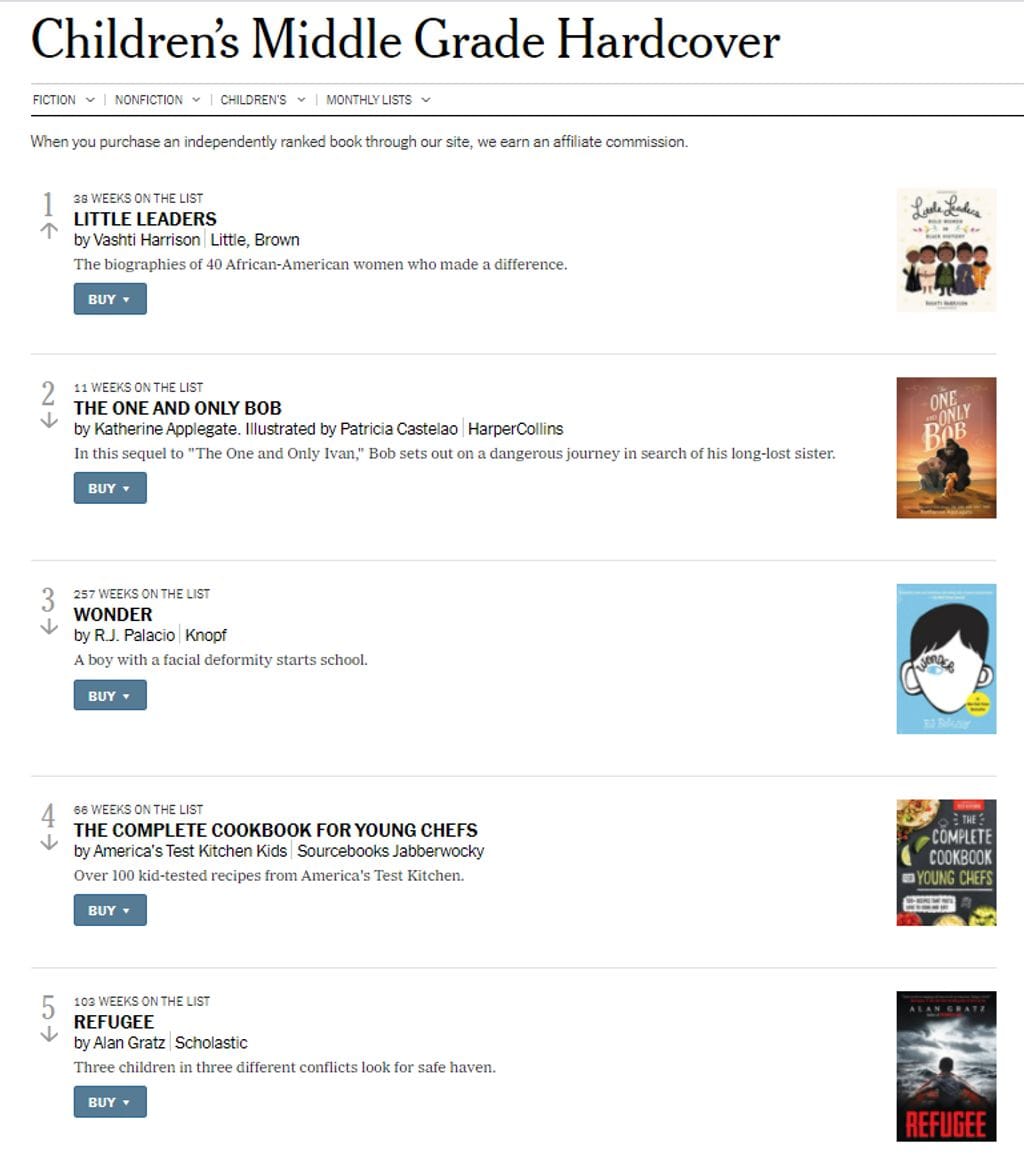
Take a look at the books. Do they have anything in common? What's new to the list and what's been hot for a long time? Each book notes how long it has been on the list, which may help you find clues to trends. Remember, though, books take a long time to get published, so there’s a good chance that what’s trending now may not be trending by the time your book is published, but it never hurts to find out what’s doing well.
The New York Times Best Seller lists can be found here. The lists are divided by genre and go back many weeks, so you can dig around and see how they are changing over time.
Step 2: Write a book (maybe more than one!)
Unless you’re pitching a nonfiction book, literary agents aren’t looking to buy based on a book proposal. They want to see what an author's actual writing looks like and get a sense of a story's plot.
Picture book agents want to see the whole book.
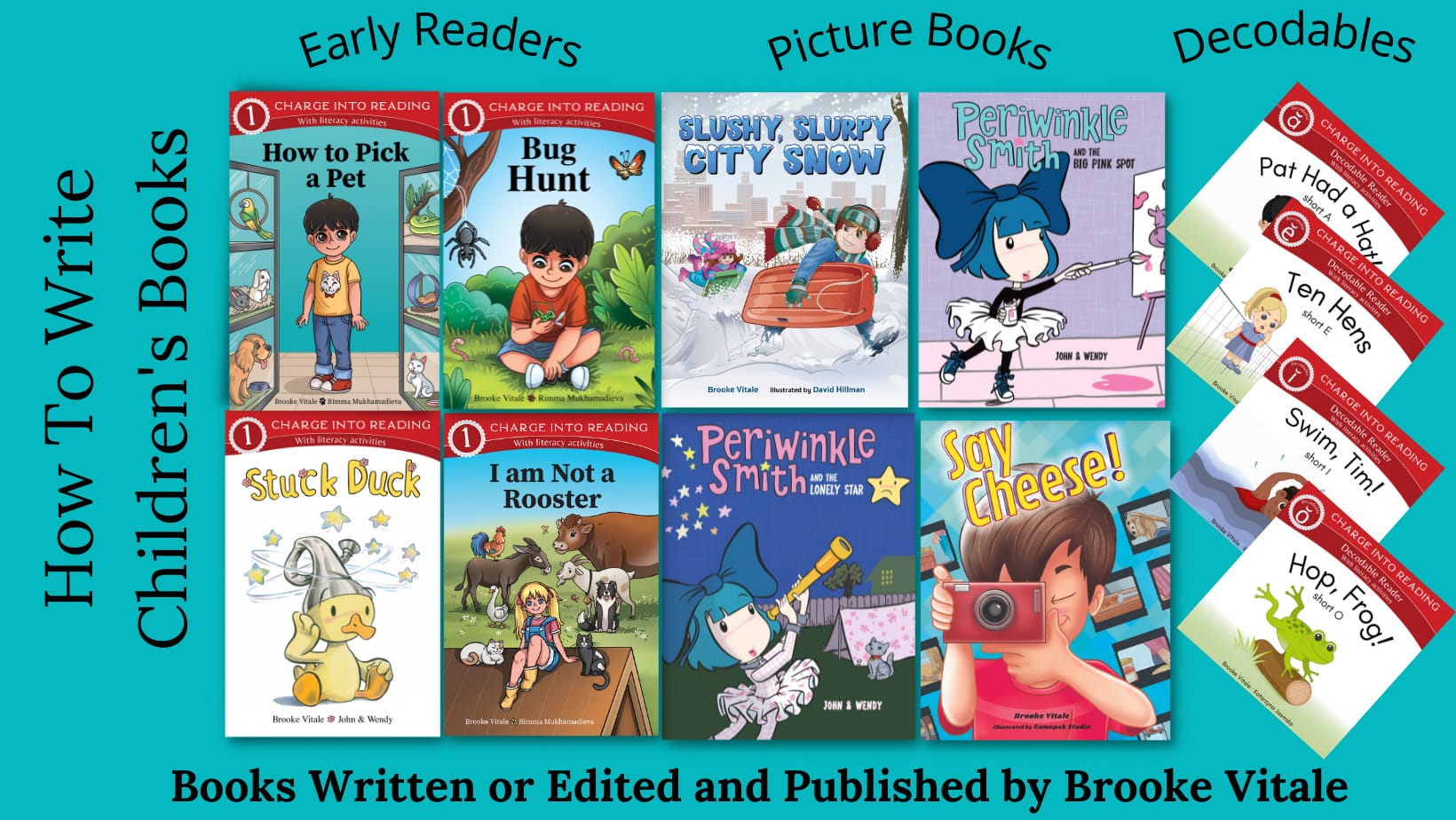 Related articleHow to Write a Children's Book: A 15-Step Author's GuideThis easy-to-follow guide will lead children's book authors through every step of writing a children's book from idea generation to final manuscript.Read the article →
For longer books (like chapter books, middle-grade, and YA), literary agents usually want a synopsis of the book and a set number of sample pages. But if they’re interested, they’ll want to see the full book, so make sure it’s ready before you submit. And remember this: literary agents want to know they can build a brand around an author. That means they need to know that an author has more than one book in them. For longer books, synopses of future books will often be enough, but picture books agents will often ask to see what else has been written, so make sure at least three books are ready to go before querying agents.
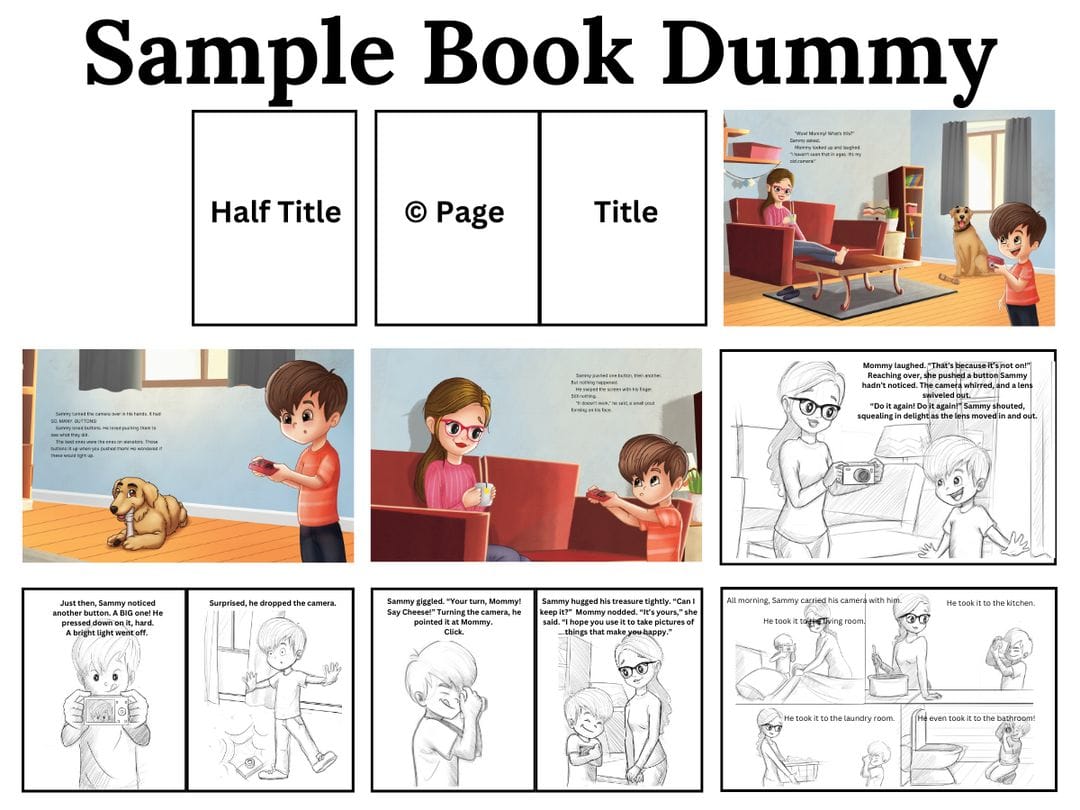
Pro Tip: If you're pitching as an author/illustrator, be prepared to show more than just a manuscript. Agents will want to see a complete book dummy. That means your entire book, roughly sketched out with text in place. Ideally, a minimum of three images will be drawn to completion to give the agents a sense of your finished art style. Below is an example of what a book dummy might look like.
Step 3: Edit the book
Whether it’s self editing, hiring a developmental editor to review a book, or getting into a writers' workshop, make sure any book being submitted to a literary agent is polished and buttoned up. An author only gets one chance to impress an agent, and a messy book with a lot of plot holes or poorly developed characters won’t do the trick. So take the time and put in the work to ensure that any book submission is PERFECT!
 Related articleHow to Find a Book Editor: 5 Steps to Hire the Right EditorThis 5-step process will teach you how to hire the best editor for YOUR book. Whether a children's book or novel, get your book ready to publish or query.Read the article →
Step 4: Find the right literary agents for you
Before you start looking for a literary agent, know that not all agents represent all kinds of books. And not all agents will be the right fit for every author. Just like no two books are the same, no two children's book agents are looking for the same thing. Take the time to find children's book agents whose wish lists match the kind of book you’re writing.
Take, for example, agent Carey Blankenship-Kramer from Belcastro Agency. Her wishlist calls out the following:
- HORROR. Horror, horror, horror! If you have something remotely spooky, Carey wants to see it.
- Neurodiversity rep. As someone with ADHD, anxiety, and depression, neurodiversity is extremely important to Carey.
- Dragons! Or anything with mythological creatures.
- Carey is not accepting stories where the animals die. I’m so sorry, I am weak and cannot handle it.
Sending a sweet story to an agent who wants creepy stories won’t get you far. In fact, it may get you a quick no when you submit a manuscript later that does match what the agent is looking for.
Digging through lists of picture book agents takes time, and unfortunately, it’s not something that can be automated or that anyone else can do for you. You need to see who feels like a good fit for you!
Pro Tip: Many agencies these days use QueryManager to manage submissions. Getting to know this program will be immensely helpful in choosing the agents you hope to query and submitting your manuscript(s).
So, where to start looking? With the above list of children's book agents accepting manuscript submissions! But if you still need more help, check out the following:
Book acknowledgements
Although not typical in picture books, longer books usually have book acknowledgements. The acknowledgements page is where an author thanks everyone who helped on their journey. And one of the people authors have a tendency to thank here are their book agents! When you’re in the bookstore reading the competition, check out those acknowledgement pages. Chances are you’ll be able to build a strong list of potential children's book agents.
Attend conferences
One way to learn about the genre you’re writing in is to attend writers' conferences. But those meetings offer more than just learning opportunities. They also offer networking opportunities. It’s not uncommon to find children's book publishers or literary agents speaking on conference panels or reviewing an author's work. And even children's book agents who aren’t accepting submissions will usually open proposals to authors they meet at conferences. So get networking!
The Best Writer's Conferences
Looking for conferences that will give you access to agents and editors? Check out the following conferences, sure to give you that coveted "invitation to submit."
- SCBWI Annual Summer and Winter Conferences
- Rutgers University Council on Children's Literature One-on-One Plus Conference
- San Francisco Writer's Conference
- Gotham Writers Children's Lit Conference
- Philadelphia Writers' Conference
- Atlanta Writers Conference
- The Bread Loaf Writer's Conference
- Association of Writers and Writing Programs Conference
- The Muse and the Marketplace
- Santa Barbara Writer's Conference
- BYU Books for Young Readers Conference
- The Loft's Wordsmith
- Jackson Hole Writer's Conference
- Sewanee Writers' Conference
- Southampton Writers Conference
Step 5: Vet the literary agents
Once an author has a shortlist of children's book agents to reach out to, it’s time to start thoroughly looking into each of them. Are they accepting submissions? Does their wish list really fit the book? Have other authors reviewed the agents? What has their experience been? Who else has the literary agent represented? Are they responsible for books you enjoyed, or ones you only found mediocre?
Remember as you look for literary agents that a book agent takes a cut of your sale to a publisher. A real literary agent won’t charge a “reading fee.” They only get paid if they sell the book!
Step 6: Write a killer query letter
The query letter is an author's chance to get a book agent interested. Think of the query letter like an elevator pitch. If what an author is selling doesn’t grab a literary agent from go, the chances are slim that that they’ll even look at the manuscript.
Personalize a query letter
No literary agent wants to get a query letter than says “Dear Agent.” Use the agent's name and tell them why you chose THEM. If you met them at writers' workshop, or if you were referred by someone, make sure to tell the agent that.
Tell the agent how your story ends
The book summary is the key to a query letter. It’s what will make an literary agent decide if they want to read further. But unlike a book blurb, where the author is trying to lure the reader in, a book agent needs to know that an author can see a story all the way through. That the ending is worth the length of the book. So be sure to include the ending as part of the book summary.
Don’t forget to sell yourself
Publishing is a business, and literary agents need to be able to sell you, so help them out. Have a large social media following? Let them know. Are you an expert in a field relevant to their book? Let the agent know. Do you have contacts that can help promote the book? Let them know. Anything you can bring to the table to help sell books is something the agent needs to know!
 Related articleHow to Get Manuscript Requests by Writing a Killer Query LetterA step-by-step guide to writing a query letter that will get literary agents and editors requesting your manuscript. With query letter examples and templates.Read the article →
Step 7: Read the submission guidelines
Every literary agent wants books submitted in a different way. Some want a paper submission, some want an email, and still others use a form through their website. When it comes to submitting material, an agent may want just your first three pages, your first 3,000 words, or your first three chapters!
Each book agent (or agency website) will lay out the terms of manuscript submission. Pay close attention and be sure to follow all the requirements for book submission. Not doing so is the surest way to alienate an literary agent before they even read your book! (While you’re at it, take note of how long agents say it will take to respond. If you haven’t heard back within that window of time, there is nothing wrong with following up.)
Pro Tip: In addition to the way in which each agency wants a book submitted, pay attention to how many books may be submitted. Some agencies call out that submitting multiple books will negate all submissions. Others allow multiple submissions, but not more than one per day.
And remember, finding more than one children's book agent to reach out to is totally fine. In fact, you should reach out to multiple children's agents. The odds of the first agent you choose wanting to represent you are slim. The wider a net you cast, the more likely you are to find someone who wants to take on you and your book!
Pro Tip: Reaching out to multiple agencies is fine, but reaching out to multiple agents at the same agency is not. Agents don't want to be fighting for the same author, so identify which agent within an agency is the best fit for your book and submit only to that agent.
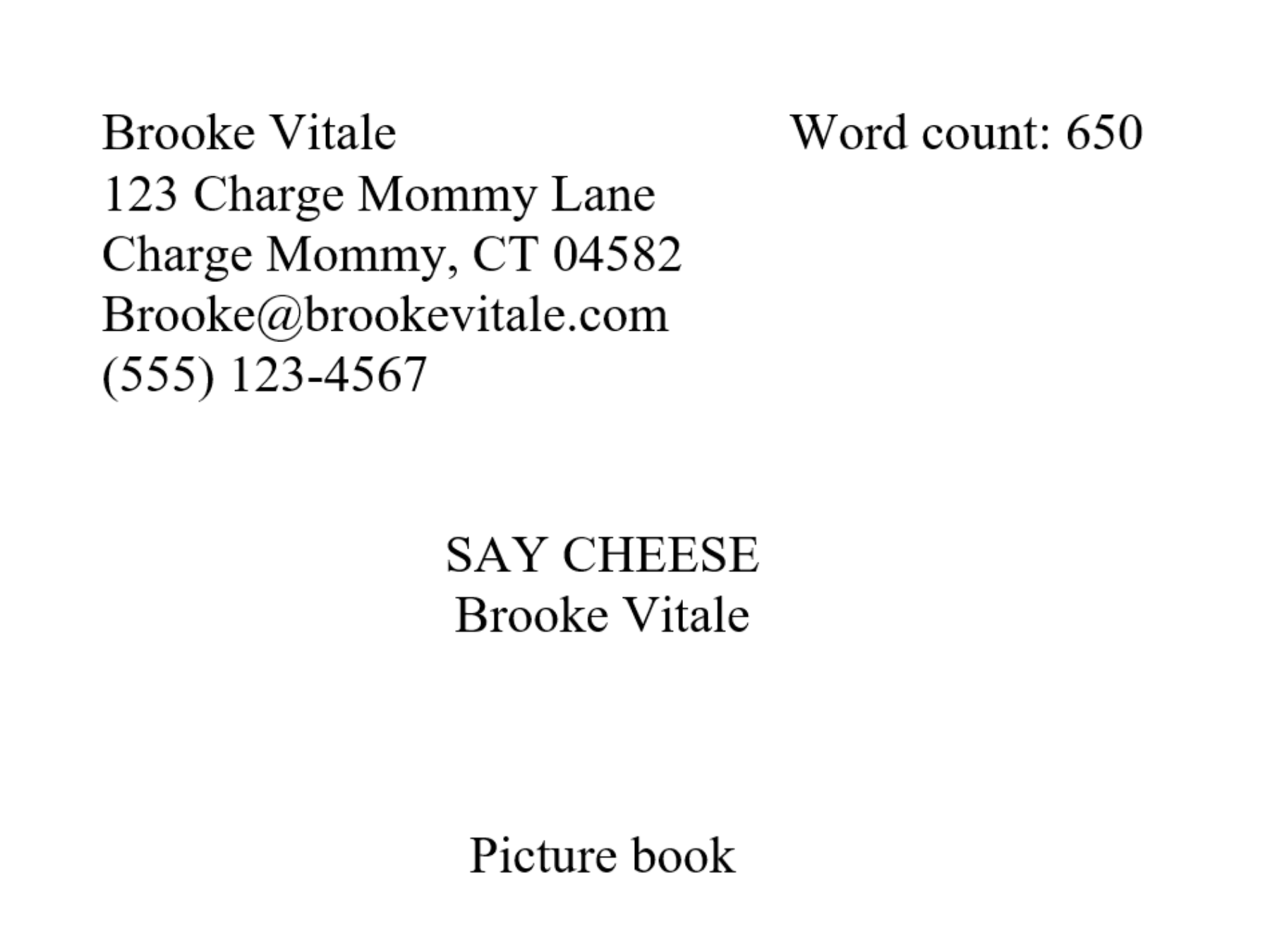 Related articleHow to Format a Book Manuscript: A Complete GuideA comprehensive guide to properly formatting a manuscript for submission to literary agents and editors, including a detailed breakdown of standard formatting choices, the creation of new chapters, and how to create a title page.Read the article →
Step 8: Wait for the right offer
If one picture book agent wants to sign you, chances are there may be other children's book agents out there who just haven't read the manuscript yet. Don’t leave a literary agent who wants to sign you hanging too long, but don’t jump at the first book agent, either. Give yourself some time to see who else is interested.
As you built your wish list of picture book agents, you probably had some you felt better about than others. If you go with the first person who expresses interest, you may end up missing out on the one you really wanted!
Pro Tip: getting an literary agent is hard. It can take months, and the odds are, you WILL get rejections along the way. Maybe a lot of them. Take them in stride, and keep pushing on. If your book is good, someone will send eventually send you an acceptance letter!