How to Get a Book Published: 7 Steps to Publishing Success!
Contents
1. Understand the publishing process
Publishing a book comes with a lot of different options, and different authors have different views of what it means to be “published.” For some, this means being picked up by a traditional publishing company, and for others it simply means having a book available for purchase. When it comes to publishing a book, there are three primary paths to getting a book published: traditional publishing, hybrid or vanity publishing, and self-publishing.
What is traditional publishing?
Traditional publishing means that a publishing company chooses to acquire and publish a book. They pay an author an advance and royalties in exchange for the right to sell their book. Traditional publishers cover all costs of the publishing process and do not expect authors to pay anything. This is what most authors mean when they talk about “being published.”
What is hybrid or vanity publishing?
Hybrid or vanity publishing comes at a cost to the author. Often listed as a “contributory contract,” these are companies that will help to publish a book. Some may actually get a book on store shelves and help market it, while others will do no more than help get a book put together and published to Amazon or through Ingram’s catalog. These companies go by a variety of different names including hybrid publishers, publishing services, and assisted publishing. The bottom line on them is that they all charge authors to publish a book.
What is self-publishing?
Self-publishing is the act of an author publishing a book on their own, without the help of a traditional publisher or publishing service. Although an author may choose to hire professionals to help along the way, all decisions are ultimately made by the author, and all expenses are paid from the author's own pocket.
This article will focus on how to publish a book through a traditional book publisher. If you are writing a children's book and are considering self-publishing as a path, check out my article How to Master Self-Publishing a Children's Book in 10 Steps.
Who are the Big 5 book publishers?
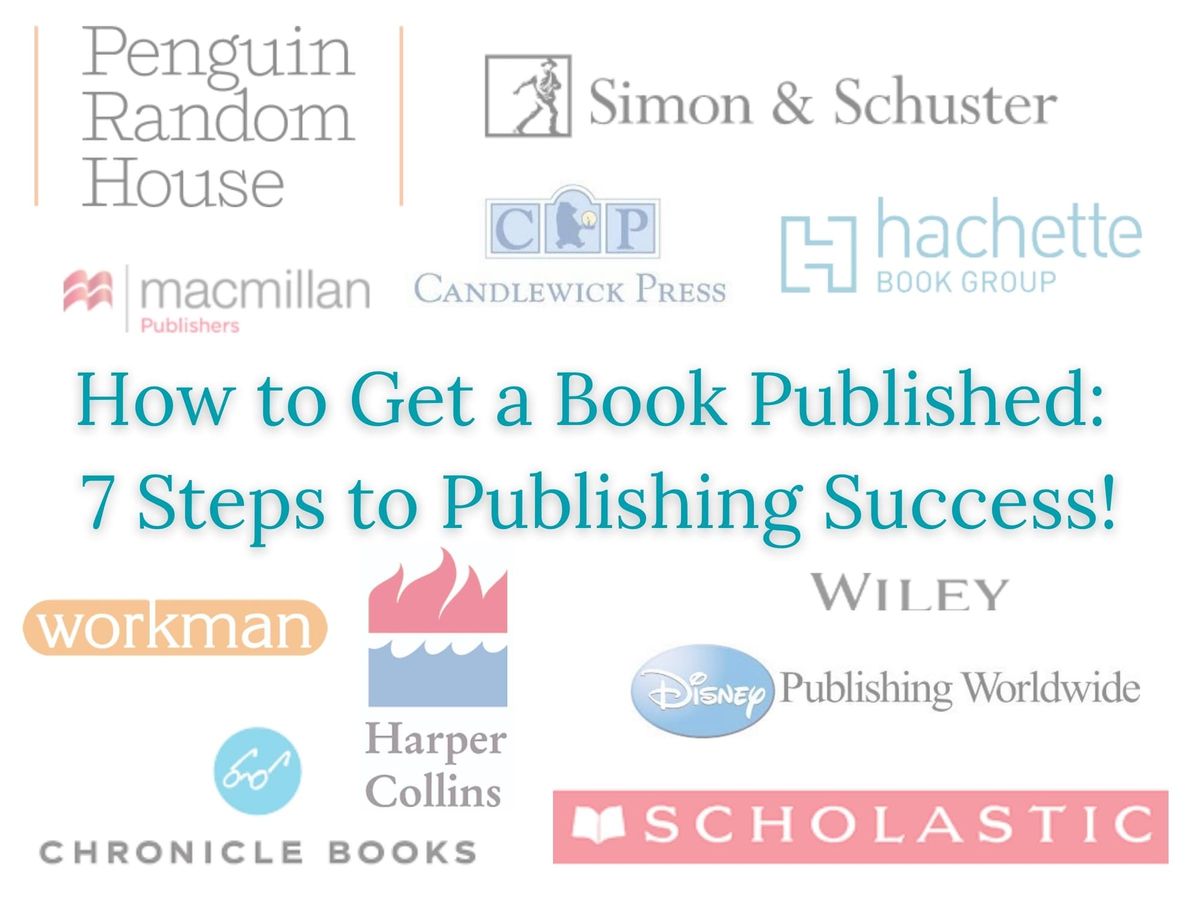
Often when discussing traditional publishing, the term “The Big 5” gets thrown around. This used to be the big 6, and may soon be the big 4, but for now, The Big 5 refers to the top 5 publishing companies: Penguin Random House, HarperCollins, Simon & Schuster, Hachette, and Macmillan.
But remember, just because getting a book published by the Big 5 is exciting doesn’t necessarily make it the best option. There are dozens of fantastic book publishers out there, and they will all get your books on store shelves. The one big difference? The smaller the publisher, the harder they will push your book. The Big 5 publish a LOT of books every year. But they can only put a strong marketing push a select few, known as the “lead titles.” A smaller publishing company, with fewer books, may be able to dedicate far more resources to your book, resulting in greater sales in the long run.
Some of the other big-name publishers include:
• Candlewick
• Houghton Mifflin Harcourt
• Chronicle
• Scholastic
• Sterling
• Wiley
• Disney Publishing Worldwide
• Workman
• Abrams
And these are just a few of the big ones. There are so many more out there, so while hoping for a Big 5 book is fine, don’t rule out your other options.
2. Determine your genre
All too often, authors aren’t quite sure what genre they are writing in. The trouble is, most traditional publishers publish into specific genres. And not all publishers publishing the same genres. One of the first things an author must do is determine what genre their book falls into. Figuring this out helps narrow the scope of potential book publishers—and literary agents.
Best-selling fiction genres
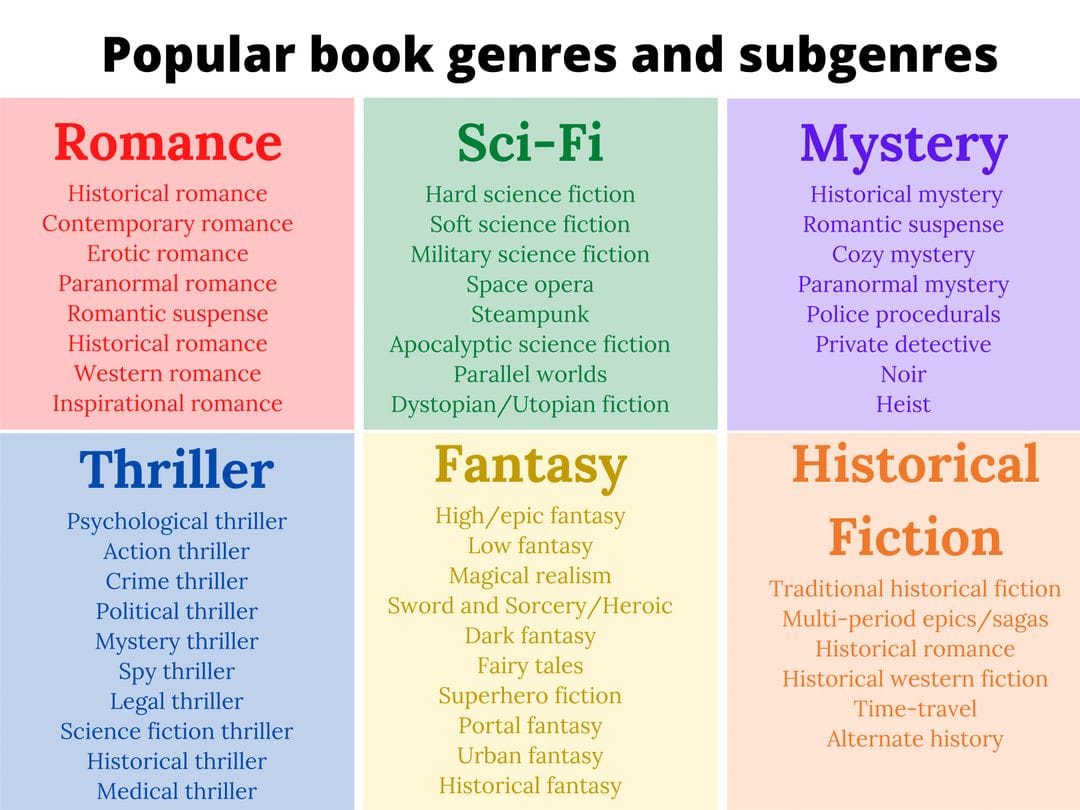
Some genres sell better than others. In fiction, these are typically known as “commercial fiction” because of their commercial appeal. These genres include:
• Romance
• Science fiction
• Fantasy
• Thriller
• Mystery
• Crime
• Romance and erotica
• Historical fiction
• Young adult
• Picture books (which don’t tend to be as genre specific)
Within each of these genres are a variety of popular sub-genres, as outlined below.
Best-selling nonfiction genres
• Business
• Memoir
• Self-help
• Health
• Advice/relationships
• Personal development
But genre also matters because not all genres are well accepted in the traditional publishing world.
The genres that can be hard to get published include:
• Poetry, short stories, and anthologies. Selling a book in this genre typically requires an author to already have a strong a following.
• Experimental fiction. Publishers tend to pass on books that don’t fit into a pre-defined category found at the bookstore. The trouble is, if booksellers don’t know where to place a book, they can’t sell it.
• Nonfiction written by non-subject-matter experts. When it comes to nonfiction, publishers want to know authors have the expertise to back up any claims being made.
• Children’s books that are the wrong length. Children’s books follow very specific conventions on length. Going against them is a surefire way to get a rejection.
Research the market
At the end of the day, book publishing is a business. Publishers need to publish books they can sell. And books that they can sell a lot of copies of. Which means they need books with commercial appeal.
Before you even begin writing, research the market. Read as many books as you can in the genre you plan to write in. Learn the conventions of your chosen genre. And see what is selling and what isn’t. Which books within those genres are topping the best-seller lists week after week? What makes them great? What do they have in common? Use what you learn to hone your craft and your book and make it something that will appeal to the masses. And remember, publishers want to see that you understand your genre, but they don’t want a rip-off of an existing book. Always make sure the books you pitch have an original spark.
3. Finish writing and get feedback
Self-editing
Once you know the book market and are sure what genre you are writing into, it is time to finish writing that book. Remember that a first draft is rarely a good draft. The key at the beginning is simply to get the words on the page. Once a draft is done, then it is time to begin self-editing. Self-editing is when an author corrects their own mistakes in a manuscript, revises the structure, and perfects word-choice. This is your chance to finesse the language.
Self-editing may be single round of review or it may be twenty. There is no right or wrong amount of time to put into a book. For tips on how to self-edit, check out my article, How to Self-Edit: Editing Tips to Improve Your Writing.
Get beta readers
The truth is, an author can only take a book so far alone. As the author, it can be impossible to see the problems with a manuscript. Information lives in your head that doesn’t exist anywhere else, and scenes that make sense to you might be a complete mystery to an outside reader. Which is why it is imperative to get multiple eyes on a book. But—and this is a big but—don’t go to your friends and family. These people love you, and they will likely think anything you do is fantastic. Which means they can’t be objective. You’re looking for someone who doesn’t love you and will tell you the truth.
Beta readers are a good option, though they can be challenging to find. Try joining online writing communities to find fellow writers who work in your genre. These are the people who are facing the same challenges as you and who know the genre-specific elements that belong in your book. If you can afford to and have one nearby, try going to a writer’s conference. These are a great place to meet fellow writers, and sometimes even to meet literary agents or editors who will allow you to submit your book to them. Writing conferences are also great place to practice your book pitch and see if it resonates with potential readers.
For children’s books, one excellent resource for finding fellow writers is SCBWI, but you may also have local writers’ groups, may be able to form an online critique group, or may find readers at a writer's workshop.
With their feedback in hand, self-edit again.
Get a professional editor
This isn’t a must, but it’s also not a bad idea. When it comes to pitching literary agents and editors, you have one shot to impress. Hiring a professional editor to go over your book before you submit is great way to clean a book up and make sure it’s truly ready for submission.
Look for a professional editor that comes from a traditional publishing background, either as an editor or an agent. These are the people who know the market, know what publishers are looking for, and can best help shape your book to make it suitable for publication. For information on how find an editor, check out my article, How to Find a Book Editor: 5 Steps to Hire the Right Editor. If you are working on a children's book, you can check out my editorial services and if you want to understand more about the children's book editing process and what a children's book editor does at a traditional publishing company, check out About Professional Children’s Book Editor Brooke Vitale.
Format the manuscript
Manuscript submissions follow particular guidelines, and agents and publishers need to know you are paying attention. Make sure your manuscript is properly formatted and ready to deliver to anyone who requests it. For tips on formatting a manuscript, check out my article, How to Format a Book Manuscript.
4. Find book publishers and agents
In order to get a book published, you need to find someone who wants to publish it. And that means finding either a literary agent or a book publisher. Remember when researching book publishers and literary agents that not every publishing company publishes every book genre. And not ever literary agent reps every book genre. Getting a book publisher or literary agent means appealing to the ones that are looking for YOUR book.
How to find book publishers and literary agents
- Check acknowledgements pages: Most authors thank their agents in the acknowledgements. This is a great place to find the names of agents who are looking for books like yours.
- Read trade periodicals: Sources such as Publisher’s Weekly and Publisher’s Lunch are a great way to find out what agents and editors at publishing companies are ACTIVELY acquiring. An agent who frequently acquires in your genre may be a good choice to reach out to.
- Research book publishers: Pay attention to who is putting out books similar to your manuscript. Then visit each publisher’s website and see what they have just put out and what they have coming up. These are the companies that are most likely to acquire your book. But remember, publishers aren’t looking for books to cannibalize each other. If a publisher has recently released a book very similar to yours, they may not be looking for another.
- Attend writers’ conferences: It is not uncommon for literary agents and book editors to speak at writers’ conferences, or even offer manuscript critiques. Attending such events will give you the chance to network, and many agents and book editors will open submissions to anyone who saw them speak. For children’s books, the two best groups to look at for conferences are SCBWI and the Highlights Writers’ Retreat.
- Publishersmarketplace.com: Many literary agents have profiles here that list what they are looking for. The site requires a subscription but is one of the best resources to research what is being acquired.
- Querytracker.net: This resource is home to roughly 1,000 agent profile and over 200 book publisher profiles.
If you are looking for children’s book agents or looking for a how to get a literary agent step-by-step guide, check out my article, Top Children's Book Agents Accepting Submissions 2022 | Agent Query Guide. For a list of children’s book publishers accepting unsolicited manuscripts, check out my article, Top Children's Book Publishers Accepting Submissions.
Do you need a literary agent?
While there are some book publishers who accept unsolicited manuscripts, the bulk of them do not. In almost all cases, literary agents are the gatekeepers to the publishing houses. An agent’s job is to find the next big book. Which means reading every manuscript that comes in. A book editor’s job is to publish the next big book. But with so many books on their plates, they rarely have time to read every manuscript that comes in. Instead, they rely on agents to feed them the best of the best.
Agents also work to the benefit of authors. Because they have existing relationships with book editors and publishing companies, they are able to negotiate better deals. They know what terms to ask for and work to guarantee authors get the best deal possible.
Agents typically receive 15 percent commission on everything an author earns. If they do not sell the book, they get nothing.
Pro Tip: Any agent that asks an author for payment to represent them is not a real agent. Agents ONLY make money if they sell your book.
For more information on querying agents and book publishers, check out my article, How to Submit a Book Manuscript to Publishers and Literary Agents.
What are agents looking for in an author?
I’ve heard so many authors say “Don’t I need to already have a track record” for an agent to work with me. The answer is no. Most authors that reach out to literary agents are new authors. And that’s fine. An agent is trying to find exciting new voices. But agents do want to know that authors can help sell a book. Which means that having a strong author platform, social media presence, or avenue for sales will be a plus. Agents also want to know that they can build a relationship with an author. They are not looking for authors who only plan to write a single book. Instead, they want to that if they are putting in the effort to sell you, that there will be many books to sell.
Pro Tip: If you are querying picture books, plan to have at least three books ready to go. Send your strongest, but be ready if an agent asks to see what else you have.
5. Prepare your submission materials
Every literary agent wants different materials. Pay close attention and be sure to follow all the requirements for book submission. Not doing so is the surest way to alienate a literary agent before they even read your book! The four most common book submission materials include: query letter, synopsis, sample chapters, and nonfiction proposals.
Query letter
The query letter is an author's chance to get a book agent interested. Think of the query letter like an elevator pitch. If what an author is selling doesn’t grab a literary agent from go, the chances are slim that that they’ll even look at the manuscript.
Synopsis
The synopsis is primarily used in long fiction. The synopsis is a brief overview of the story, breaking down all the plot points. Synopses can get fairly detailed, but shouldn’t extend beyond a page or two. Above all, remember that an agent wants to know how a book ends!
Sample chapters
This is often the first 2-3 chapters of a fiction book, or a particularly strong chapter in nonfiction. Agents and book editors use sample chapters to evaluate your writing style and see if it feels like a good fit.
Nonfiction proposals
For nonfiction books, the proposal is a detailed outline of what will go into the book. The proposal breaks the book down chapter by chapter and subheading by subheading so that it is very clear where it is going. This can be between 20 and 30 pages, if not more.
Pro Tip: Nonfiction books do not need to be fully written at the time of submission, but it is a good idea to have children’s books and fiction completed in case the agent or book publisher asks to see the full manuscript.
How to write a query letter
The sole purpose of writing a query letter is to capture a literary agent's or editor's attention and convince them that your book is the next one they need to read. The challenge here is that editors and agents receive thousands of query letters. They read books with similar premises all the time. To stand out from the crowd means showing that you not only have a rock-solid idea for a book, but also a rock-solid understanding of the book market and how your book fits into it. The query letter is your one chance to impress a literary agent or editor, and failing to do so will mean ending up in the rejection pile.
The query letter consists of 6 main elements:
• Greeting and an explanation of why you chose that literary agent or publisher
• A statement of book title, genre, and word count
• Brief book summary
• One or two comparative titles
• A brief author bio including how you can help sell the book
• Acknowledgment if the book is a being submitted to multiple book publishers or literary agents.
For sample query letters and a detailed breakdown of how to write a query letter, check out my article, How to Get Manuscript Requests by Writing a Killer Query Letter.
6. Submit your manuscript
Before submitting, double check HOW agents and publishers want a book submitted. Some want a paper submission, some want an email, and still others use a form through their website. Each book agent (or agency website) will lay out the terms of manuscript submission. Follow them to the letter.
What to expect after book submission
Once a book has been submitted, one of three things can happen.
- An agent or publisher can send a rejection
- An agent or publisher can send a request for a full manuscript or ask to see what else you’ve written
- An agent or publisher can send an offer to represent you or buy your book.
Getting responses from literary agents and book publishers can take months, so don’t get discouraged if you don’t hear right away.
Top reasons a manuscript is rejected
- A book is submitted too early: Self-editing takes times. But often authors finish a draft of a book and are so proud of their work that they consider it finished. But without taking the time to self-edit and peer edit, odds are the book won’t be as polished as it could be. And an unpolished book is likely to get a hard no.
- A book hits a trend on the way out: It can be tempting to write a book that fits a current a trend, but chances are that trend will be over long before you can get a book published. Publishers know when trends are waning and are less likely to pick up books that they suspect will be past their prime even before they are released.
- A book lacks originality: Books need to have their own personality. They need to be able to stand out in a reader’s mind. A book that doesn’t feel original enough is going to be one an agent and a book publisher pass on.
- A book is too similar to something already represented or acquired: At some point, books that are too similar can begin to cannibalize one another’s sales. That’s fine when they are coming from different publishing companies. But agents don’t want to pick up books that will interfere with the sales of their existing clients’ books, and publishers don’t want to acquire books that might negatively impact the sales of another book on their list. Sometimes a no has nothing to do with the book at all and everything to do with what else the agent or editor is already working on.
- Poor grammar and typos: How a book is presented says a lot about an author. Make sure any manuscript you submit is free (or nearly free) of mistakes. You only get once chance to make a first impression.
How long should you keep querying?
For any author who truly wants to be traditionally published, I always suggest giving it between six months and a year to query. If over that period you receive multiple rejections, there may be something wrong with the manuscript. Some rejections may simply be form letters, but others will likely provide feedback on why the book is being rejected. In those cases, look for patterns in the rejections. See if there is a clear area for improvement in the story. If there is, revise again, and resubmit!
What does a literary agent do with an accepted manuscript?
An agent is responsible for sending your book out to publishers. They are responsible for negotiating a book deal. But literary agents are also book editors! Should you be lucky enough to get an agent, you can expect to go through another round (or several) of edits with them. Often agents like the bones of a book, but they still feel it needs to be finessed. Agents want to make sure your book is the absolute best it can be before submitting to editors, and they will work with you to make sure it gets there.
Can you query a self-published book?
You can send query letters for anything you want, but with very few exceptions, publishers don’t want to pick up books that have already been published. That may be because the book failed to find a market, in which case publishing the book is not worth their investment. On the other hand, if the self-published book did well, literary agents and publishers may worry that it has already sold through what it can. Readers won’t rebuy the book just because it’s now available through a traditional publisher. But in the case of a successful self-published book, agents and publishing companies may be interested in an author’s next book or next book in a series.
7. Get a book deal
Many authors who submit manuscripts to literary agents and book publishers will get rejected. But for those lucky ones who do get a book deal, there are a few things to remember.
What is a book advance
A book advance is the money an author gets paid upfront to buy a book. This money is an advance against royalties, meaning that no more money is earned until the money already paid is earned out. If juggling multiple book offers, look at the big picture. One publishing company may offer a higher advance with a smaller backend, while another book publisher will offer a lower advance but higher royalties. Consider how many books must be sold to earn out that advance and earn royalties before deciding.
Pick your editor and book publisher wisely
Assuming multiple offers come in, remember that the Big 5 publishers may not be the best for you. Books are acquired by editors who hope to have a long-standing relationship with an author. Which means that you have to LIKE the editor you work with, and have a good feeling about working with them. In the case of multiple offers, get to know the editors making the authors to see who you feel you can work with.
Getting a book published takes a long time. It takes a lot of work. And it takes a lot of patience. But if that is what you want, don’t give up. Keep trying. Keep improving your craft. And who knows. Maybe one day we’ll see you on that best-seller list!